
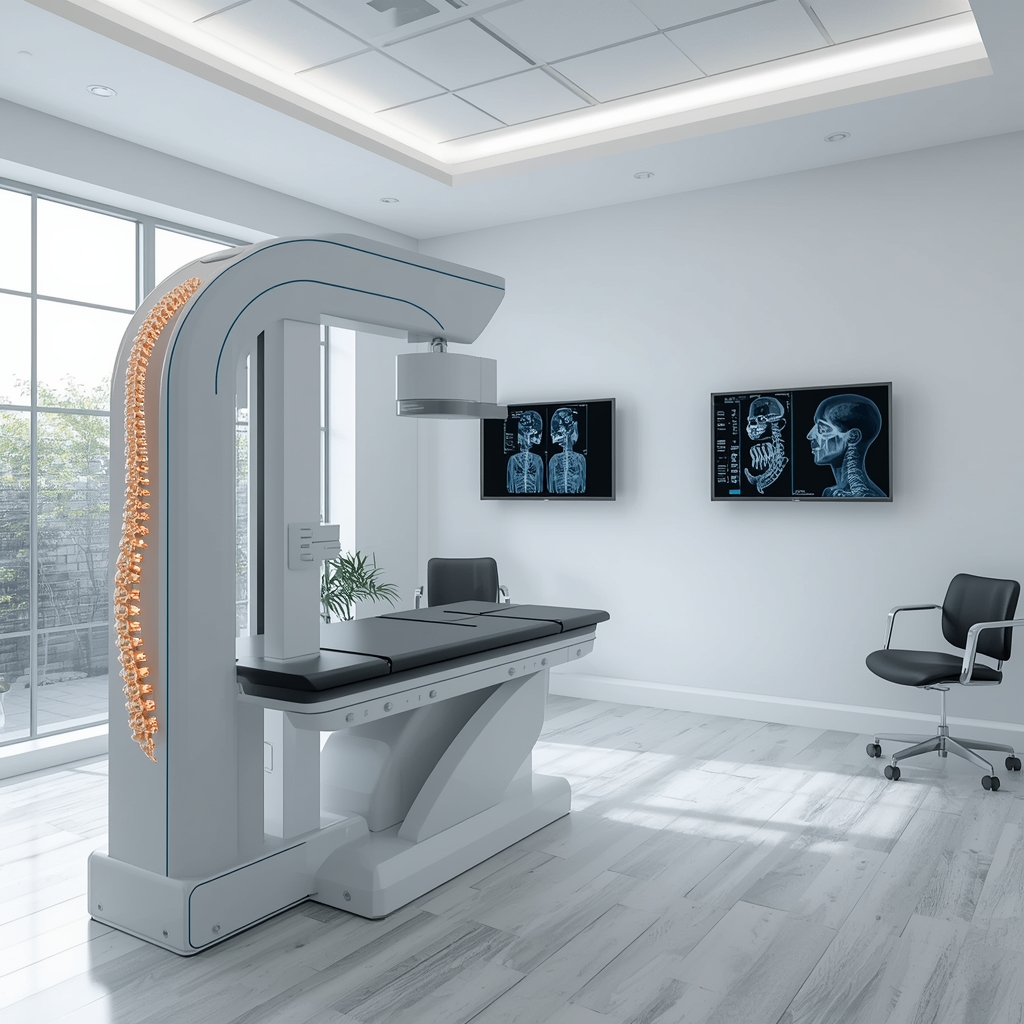
Emerging Trends in Spinal Imaging for Chiropractic Diagnostics
Recent years have seen significant advancements in spinal imaging technology, offering chiropractors more precise tools to assess musculoskeletal conditions. Traditional methods like X-rays and MRI scans remain foundational, but newer innovations are enhancing diagnostic accuracy and treatment planning. These developments align with broader trends in healthcare toward personalized, data-driven care. For example, 3D imaging and real-time motion analysis are becoming more accessible, allowing practitioners to evaluate spinal alignment and movement patterns with greater detail. Such tools help identify subtle misalignments or degenerative changes that might be missed with older techniques. As these technologies evolve, they are reshaping how chiropractors approach patient care, emphasizing early detection and targeted interventions. Staying informed about these trends is crucial for practitioners aiming to provide cutting-edge, evidence-based services.
3D Imaging and Real-Time Motion Analysis
Three-dimensional (3D) imaging is revolutionizing spinal diagnostics by providing dynamic, multi-angle views of the spine. Unlike static X-rays, 3D systems capture movement during functional activities, revealing how vertebrae interact under real-world conditions. This is particularly valuable for assessing conditions like scoliosis, herniated discs, or joint instability. Some systems integrate motion sensors to track spinal mobility in real time, offering insights into range of motion and potential compensatory patterns. Chiropractors can use this data to create more tailored adjustment plans, ensuring treatments address both structural and functional issues. Additionally, 3D imaging reduces the need for repeated scans, minimizing radiation exposure for patients. As this technology becomes more affordable, its adoption in chiropractic practices is likely to grow, improving diagnostic consistency and patient outcomes.
Artificial Intelligence in Image Interpretation
Artificial intelligence (AI) is increasingly being integrated into spinal imaging to enhance diagnostic speed and accuracy. AI algorithms can analyze medical images—such as X-rays, MRIs, and CT scans—to detect abnormalities like fractures, disc degeneration, or spinal stenosis. By learning from vast datasets, these systems identify patterns that may be subtle or overlooked by human reviewers. For chiropractors, this means faster, more reliable assessments, reducing the risk of missed diagnoses. AI also supports predictive modeling, helping practitioners anticipate potential issues based on a patient’s imaging data. However, it is not a replacement for clinical expertise but a tool to augment decision-making. As AI technology matures, its role in chiropractic diagnostics will likely expand, offering new opportunities for precision and efficiency in patient care.
Portable and Wearable Imaging Devices
Portable imaging technologies are making advanced diagnostics more accessible, even in non-traditional settings. Devices like handheld ultrasound machines and wearable sensors allow chiropractors to perform scans during office visits, eliminating the need for referrals to specialized imaging centers. These tools are particularly useful for monitoring treatment progress or assessing acute injuries on-site. For instance, portable MRI systems are being developed to provide high-resolution images without the bulk and cost of traditional machines. Wearable devices, such as smart braces with embedded sensors, can track spinal posture and movement over time, offering continuous data for long-term care. While these innovations improve convenience, they also require practitioners to stay updated on their proper use and interpretation. As adoption grows, portable imaging could become a standard part of chiropractic practice, enhancing both efficiency and patient engagement.
Integration with Electronic Health Records (EHRs)
The integration of advanced imaging systems with electronic health records (EHRs) is streamlining chiropractic workflows and improving data management. By linking imaging results directly to a patient’s EHR, practitioners can access comprehensive, up-to-date information during consultations. This reduces administrative burdens and ensures that diagnostic findings are readily available for follow-up care. For example, 3D imaging data can be stored and reviewed alongside a patient’s medical history, treatment plans, and progress notes. Such integration also facilitates communication between chiropractors and other healthcare providers, promoting a more coordinated approach to patient care. As EHR systems evolve, their compatibility with imaging technologies will likely expand, enabling more seamless data sharing and better-informed clinical decisions. This trend underscores the growing importance of technology in modern chiropractic practice.
Future Directions and Challenges
Looking ahead, spinal imaging technology is poised to become even more sophisticated, with potential breakthroughs in non-invasive diagnostics and predictive analytics. Innovations like quantum imaging or biometric sensors could further enhance the precision of spinal assessments. However, challenges remain, including the cost of new technologies, the need for practitioner training, and ensuring data security in digital health systems. Regulatory frameworks may also evolve to address the ethical and practical implications of these advancements. Chiropractors must balance embracing innovation with maintaining clinical judgment, ensuring technologies serve patient needs rather than replace human expertise. As the field progresses, ongoing education and collaboration between technologists and healthcare providers will be essential to maximize the benefits of these tools. The future of chiropractic diagnostics will likely be defined by its ability to adapt to these changes while prioritizing patient safety and care quality.















