
Recent Advances in Spinal Imaging and Their Impact on Chiropractic Diagnostics
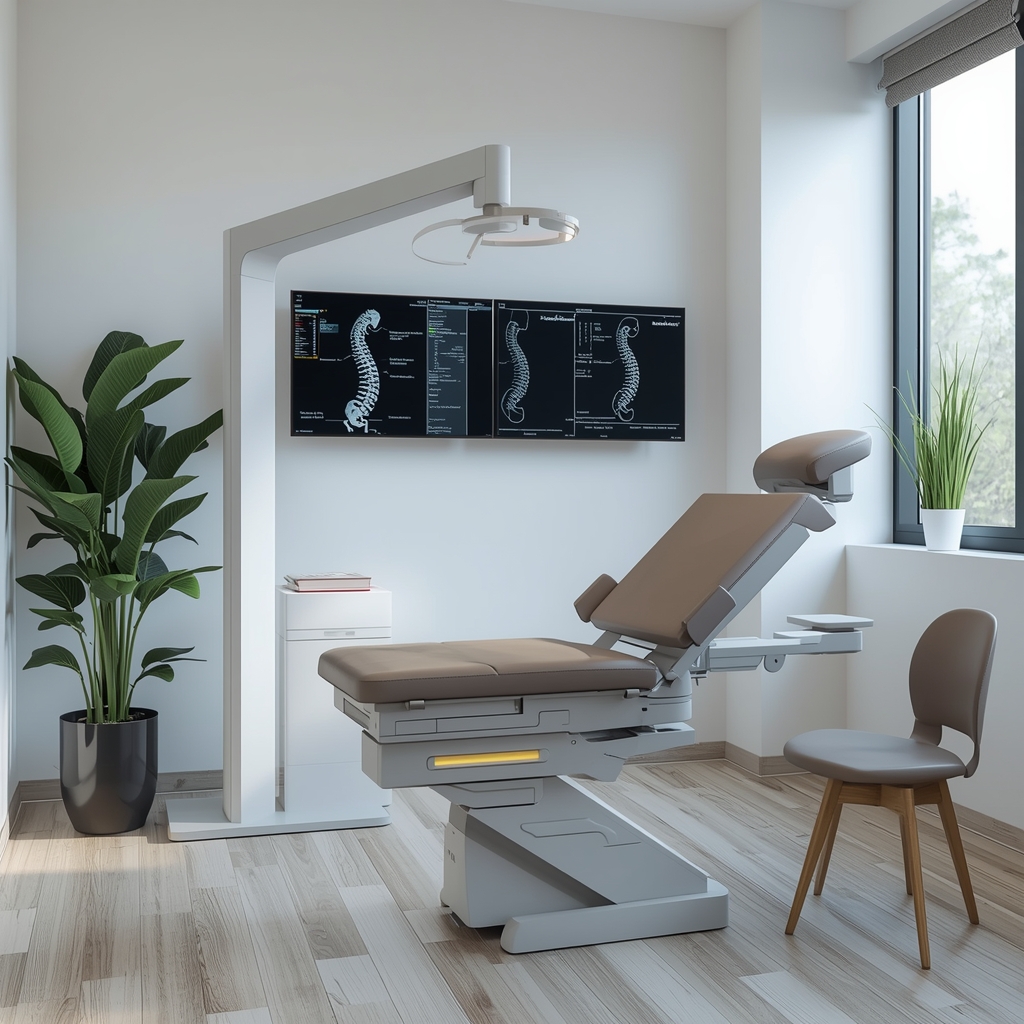
Spinal imaging has evolved significantly in recent years, offering chiropractors more precise tools to assess musculoskeletal conditions. Traditional methods like X-rays and standard MRI scans remain foundational, but newer technologies are enhancing diagnostic accuracy and treatment planning. These advancements allow practitioners to detect subtle misalignments, soft tissue issues, and nerve compression with greater clarity. As a result, chiropractors can tailor interventions to individual patient needs, improving outcomes. The integration of digital imaging with clinical expertise ensures that diagnoses are both data-driven and patient-centered. This shift underscores the growing importance of technology in modern chiropractic care, enabling more informed decisions and proactive management of spinal health.
3D Imaging: A New Dimension in Spinal Analysis
Three-dimensional (3D) imaging has revolutionized how chiropractors visualize the spine. Unlike traditional 2D scans, 3D models provide a comprehensive view of spinal structures, including vertebrae, discs, and surrounding tissues. This technology allows for better assessment of complex conditions like scoliosis, spinal stenosis, and disc herniations. By offering a multi-angle perspective, 3D imaging helps identify misalignments that might be missed with conventional methods. Some systems even enable dynamic imaging, capturing spinal movement in real time. This capability is particularly valuable for evaluating functional abnormalities and guiding adjustments. As 3D imaging becomes more accessible, it is likely to become a standard tool in chiropractic diagnostics, enhancing both precision and patient understanding of their conditions.
Artificial Intelligence and Machine Learning in Image Analysis
Artificial intelligence (AI) is increasingly being integrated into spinal imaging to improve diagnostic efficiency and accuracy. AI algorithms can analyze imaging data to detect patterns, such as abnormal curvature or degenerative changes, with remarkable speed. These systems help reduce human error and provide consistent interpretations, especially for complex cases. Machine learning models are trained on vast datasets, allowing them to recognize subtle anomalies that might be overlooked by the human eye. For chiropractors, this means faster, more reliable assessments and the ability to focus on treatment strategies rather than data interpretation. While AI serves as a supportive tool, it does not replace the expertise of a trained professional. Instead, it enhances clinical decision-making, ensuring patients receive timely and accurate care.
Portable and Real-Time Imaging Technologies
Portable imaging devices are transforming chiropractic diagnostics by making advanced technology more accessible. Devices like handheld ultrasounds and compact MRI systems allow practitioners to perform scans in-office, reducing the need for external referrals. These tools provide real-time data, enabling immediate assessment of soft tissues, muscle tension, and joint mobility. For example, ultrasound can visualize disc hydration and nerve root compression during a patient’s visit, facilitating on-the-spot adjustments. Portable imaging also supports follow-up evaluations, tracking progress over time without the inconvenience of repeated hospital visits. As these technologies become more affordable and user-friendly, they are expected to become standard in chiropractic practices, improving efficiency and patient satisfaction.
Functional and Dynamic Imaging for Spinal Assessment
Functional and dynamic imaging techniques are gaining traction for their ability to evaluate spinal movement and biomechanics. Unlike static imaging, these methods capture the spine in action, revealing how structures respond to motion. For instance, dynamic X-rays or fluoroscopy can show instability during bending or twisting, aiding in the diagnosis of conditions like spondylolisthesis. Advanced systems also use motion sensors and gait analysis to assess how spinal alignment affects overall posture and movement. This approach helps chiropractors identify functional impairments that may not be apparent in traditional scans. By integrating functional imaging into diagnostics, practitioners can develop more targeted treatment plans, addressing both structural and movement-related issues for better long-term outcomes.
Future Trends: Non-Invasive and High-Resolution Imaging
The future of spinal imaging in chiropractic care holds promise for even more advanced, non-invasive techniques. Innovations like quantum imaging and high-resolution MRI are being explored to provide unprecedented detail without exposing patients to radiation. These technologies could enable earlier detection of degenerative changes and subtle nerve issues. Additionally, wearable sensors paired with imaging systems may offer continuous monitoring of spinal health, allowing for proactive interventions. As research progresses, the focus will remain on minimizing patient discomfort while maximizing diagnostic accuracy. Chiropractors are likely to adopt these emerging tools as they become available, further refining their ability to diagnose and treat spinal conditions with precision and care.














