
Understanding Falls in the Elderly: A Growing Health Concern
Falls represent one of the most serious and prevalent health challenges facing older adults today. According to the Centers for Disease Control and Prevention, falls are the leading cause of both fatal and nonfatal injuries among people aged 65 and older. Beyond the immediate physical harm, a single fall can trigger a cascade of complications — from fractured bones and chronic pain to reduced mobility, loss of independence, and a persistent fear of falling again.
For many seniors, the road to recovery following a fall can feel long and uncertain. While conventional medical care addresses acute injuries such as fractures and lacerations, the underlying musculoskeletal imbalances, spinal misalignments, and functional deficits that contributed to — or resulted from — the fall often go unaddressed. This is precisely where an elderly fall recovery chiropractor can play a meaningful and complementary role in the healing process.
The Role of Chiropractic Care in Senior Fall Injury Treatment
Chiropractic care is a branch of healthcare that focuses on the diagnosis, treatment, and prevention of disorders related to the musculoskeletal and nervous systems. For older adults recovering from falls, chiropractic offers a non-invasive, drug-free approach that aims to restore function, reduce pain, and improve overall physical resilience.
When an elderly patient presents following a fall, a qualified chiropractor will conduct a thorough evaluation that includes a detailed medical history, physical examination, neurological assessment, and, where necessary, a review of diagnostic imaging. This comprehensive intake process allows the practitioner to identify not only the injuries sustained during the fall but also any pre-existing conditions — such as osteoarthritis, osteoporosis, or spinal stenosis — that may influence the treatment plan.
Effective senior fall injury treatment through chiropractic care typically encompasses several interconnected objectives:
- Alleviating acute and chronic musculoskeletal pain
- Restoring spinal alignment and joint mobility
- Improving balance, coordination, and proprioception
- Strengthening the muscles that support posture and gait
- Reducing the risk of future falls through corrective care
Common Injuries Addressed Through Geriatric Fall Rehabilitation
Falls in older adults can result in a wide spectrum of injuries, ranging from mild soft tissue damage to severe fractures. Even when bones remain intact, the impact of a fall can cause significant spinal misalignments, muscle strains, ligament sprains, and joint dysfunction that contribute to ongoing discomfort and impaired mobility.
Common musculoskeletal issues addressed during geriatric fall rehabilitation with chiropractic care include:
- Vertebral subluxations: Misalignments of the spinal vertebrae that can compress nerves, restrict movement, and cause radiating pain into the limbs.
- Hip and sacroiliac joint dysfunction: Disruption to the joints of the pelvis and lower back that can significantly affect gait and balance.
- Shoulder and wrist injuries: Often sustained when seniors attempt to catch themselves during a fall, these injuries can limit upper body function and independence.
- Cervical strain: Injury to the muscles and ligaments of the neck, which can cause headaches, dizziness, and restricted cervical range of motion.
- Thoracic spine stiffness: Reduced mobility in the mid-back that can compromise posture, breathing, and overall spinal integrity.
It is important to note that chiropractic care is always adapted to account for the specific vulnerabilities of older patients. Practitioners working with elderly individuals exercise considerable caution, particularly in cases involving reduced bone density, prior surgical interventions, or cardiovascular conditions.
Chiropractic Techniques Commonly Used in Older Adult Fall Chiropractic Care
One of the most significant advantages of chiropractic treatment for seniors is its adaptability. Unlike standardized protocols, chiropractic care is highly individualized, and the techniques used with older adult patients differ considerably from those applied to younger populations. Older adult fall chiropractic care emphasizes gentleness, precision, and a deep respect for the physiological changes that accompany aging.
Several chiropractic techniques are particularly well-suited to the needs of elderly fall recovery patients:
1. Low-Force Spinal Manipulation
Traditional high-velocity, low-amplitude (HVLA) spinal manipulation may not be appropriate for all elderly patients, particularly those with osteoporosis or significant joint degeneration. In such cases, chiropractors employ low-force techniques — such as the Activator Method or the use of a drop table — that deliver precise, controlled impulses to specific spinal segments without requiring forceful thrusting movements. These methods are gentle, effective, and well-tolerated by older patients.
2. Soft Tissue Therapy
Techniques such as myofascial release, trigger point therapy, and gentle massage are used to address muscle tightness, reduce inflammation, and improve circulation in injured areas. For seniors recovering from falls, soft tissue therapy can significantly alleviate the muscular guarding and tension that often develops following a traumatic event.
3. Mobilization Exercises
Chiropractors frequently prescribe therapeutic exercises designed to restore range of motion, strengthen supporting musculature, and improve joint stability. These exercises are carefully selected based on the patient’s current functional level and are gradually progressed as recovery advances.
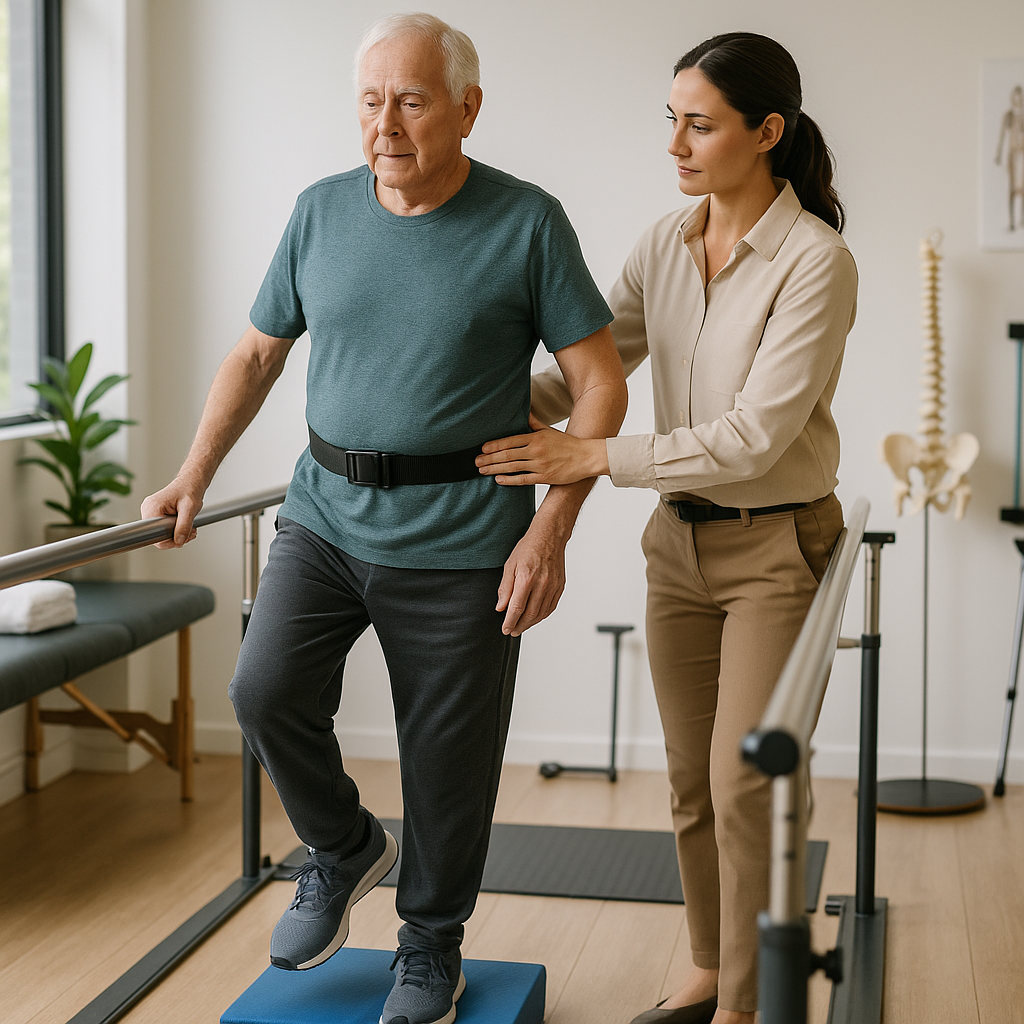
4. Balance and Proprioceptive Training
Given that impaired balance is both a primary cause and a consequence of falls in the elderly, chiropractors place considerable emphasis on balance rehabilitation.













