
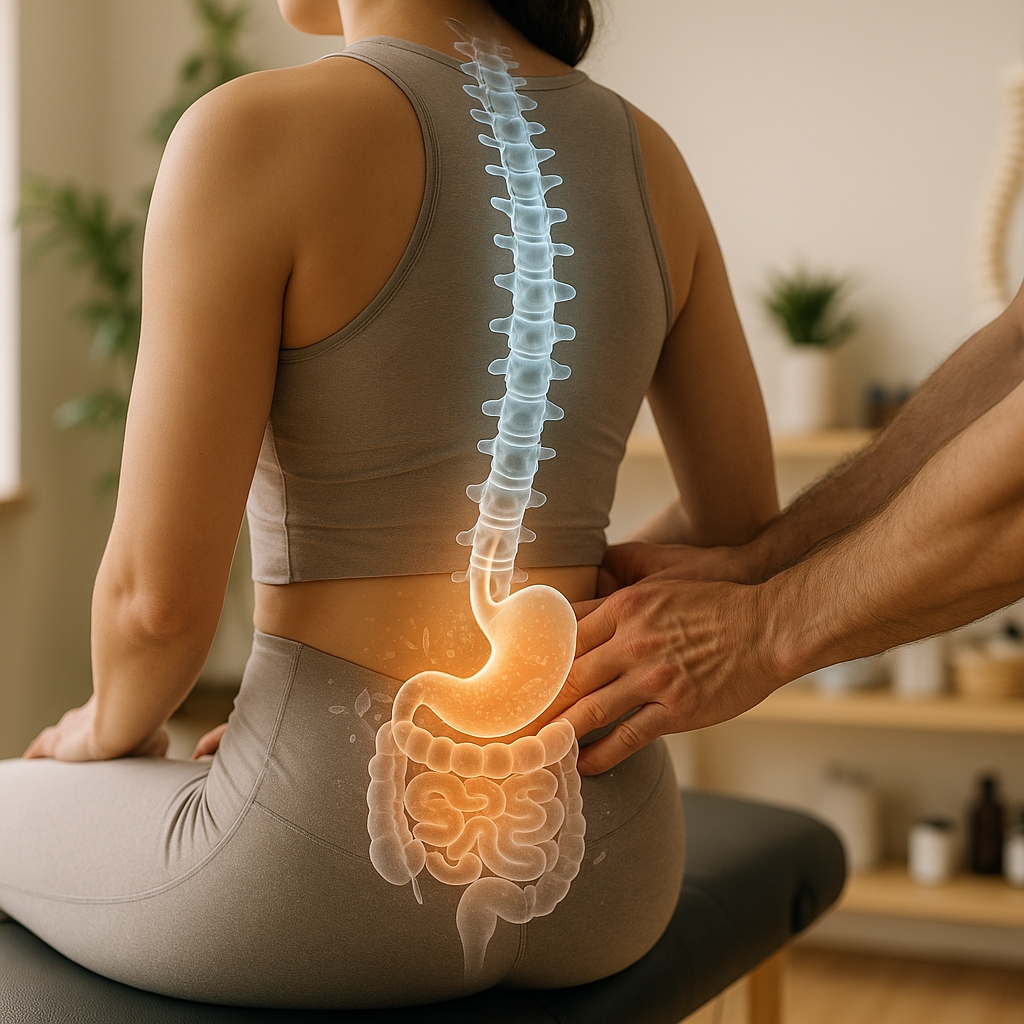
Understanding the Connection Between Your Spine and Gut Health
When most people think about chiropractic care, they picture relief from back pain, neck stiffness, or sports injuries. However, the scope of chiropractic practice extends far beyond musculoskeletal concerns. An emerging and increasingly compelling area of interest is the relationship between gut health and chiropractic care — a connection that is grounded in neuroscience, anatomy, and a growing body of clinical research.
The idea that spinal health could influence digestive function may seem unconventional at first glance. Yet, when we examine the intricate web of nerves that connects the spine to nearly every organ in the body — including those responsible for digestion — this relationship becomes not only plausible but remarkably logical.
The Nervous System: The Bridge Between the Spine and the Gut
To understand the gut-spine connection, it is essential to first appreciate the role of the nervous system. The central nervous system, which comprises the brain and spinal cord, serves as the primary communication highway for the entire body. Branching off from the spinal cord are peripheral nerves that travel to virtually every tissue and organ, including the digestive tract.
The digestive system is uniquely governed by what is known as the enteric nervous system (ENS) — a vast network of over 100 million nerve cells lining the gastrointestinal tract. Often referred to as the “second brain,” the ENS communicates bidirectionally with the central nervous system through the vagus nerve and spinal pathways. This relationship forms what scientists call the gut-brain axis.
When the spine is misaligned — a condition chiropractors refer to as a subluxation — the resulting nerve interference can disrupt communication along these pathways. This disruption may impair the signals that regulate digestive processes, including motility, enzyme secretion, and nutrient absorption. Restoring proper spinal alignment through chiropractic adjustments is believed to remove this interference and allow the nervous system to function optimally.
How Spinal Misalignments Can Affect Digestive Health
The thoracic and lumbar regions of the spine are particularly relevant when it comes to digestive health and spinal alignment. The nerves originating from the thoracic vertebrae (T5–T9) supply the stomach and small intestine, while those from the lower thoracic and lumbar regions (T10–L2) serve the large intestine and other digestive organs. Misalignments in these areas can therefore have a tangible impact on gastrointestinal function.
Patients who seek chiropractic care for back pain sometimes report improvements in digestive symptoms as a secondary benefit of treatment. These anecdotal observations have prompted researchers and clinicians to explore whether chiropractic adjustments may offer a legitimate therapeutic role in managing conditions such as:
- Irritable Bowel Syndrome (IBS)
- Constipation and irregular bowel movements
- Bloating and excessive gas
- Acid reflux and gastroesophageal reflux disease (GERD)
- Crohn’s disease and colitis (as a complementary approach)
- Colic in infants
While chiropractic care is not a replacement for conventional medical treatment for these conditions, its role as a complementary therapy in supporting digestive health through spinal care is gaining recognition within integrative medicine circles.
The Microbiome and Chiropractic: An Evolving Frontier
One of the most fascinating dimensions of this conversation involves the gut microbiome — the trillions of bacteria, fungi, and other microorganisms that inhabit the gastrointestinal tract. The microbiome plays a critical role in immune function, mental health, inflammation regulation, and of course, digestion. Disruptions to this microbial ecosystem, known as dysbiosis, have been linked to a wide range of chronic diseases.
The question of whether chiropractic care influences the microbiome is a relatively new area of scientific inquiry. The hypothesised mechanism centres on the autonomic nervous system. Spinal adjustments are thought to modulate the balance between the sympathetic (“fight or flight”) and parasympathetic (“rest and digest”) branches of the autonomic nervous system. Chronic sympathetic dominance — often associated with stress, poor posture, and spinal dysfunction — can reduce blood flow to the gut, impair digestive motility, and create an environment less hospitable to beneficial microorganisms.
By restoring autonomic balance through chiropractic adjustments, it is theorised that the gut environment may become more conducive to a healthy and diverse microbiome. Although direct research specifically measuring microbiome changes following chiropractic treatment remains in its early stages, preliminary studies and clinical observations suggest a promising connection worthy of further investigation.
The Vagus Nerve: A Key Player in Gut-Spine Communication
No discussion of the gut-spine relationship would be complete without examining the vagus nerve. This remarkable cranial nerve runs from the brainstem down through the neck and into the chest and abdomen, innervating the heart, lungs, and digestive organs. It is the principal pathway through which the brain and gut communicate, transmitting signals that regulate inflammation, digestion, mood, and immune response.
Chiropractic adjustments to the cervical (neck) region — particularly the upper cervical spine — may influence vagal tone, which refers to the activity level of the vagus nerve. Higher vagal tone is associated with better digestive function, reduced inflammation, and improved emotional well-being. Poor spinal alignment in the cervical region, often resulting from prolonged screen use or physical trauma, may compromise vagal tone and consequently affect gut function.
Additional Resources
- NIH overview of spinal manipulation
- MedlinePlus back pain resources
- NINDS low back pain information
- What is the debate about chiropractic scope of practice expansion?
- What is the difference between pain relief and correction in chiropractic?
- What is the chiropractic approach to breath work and spinal health?













