
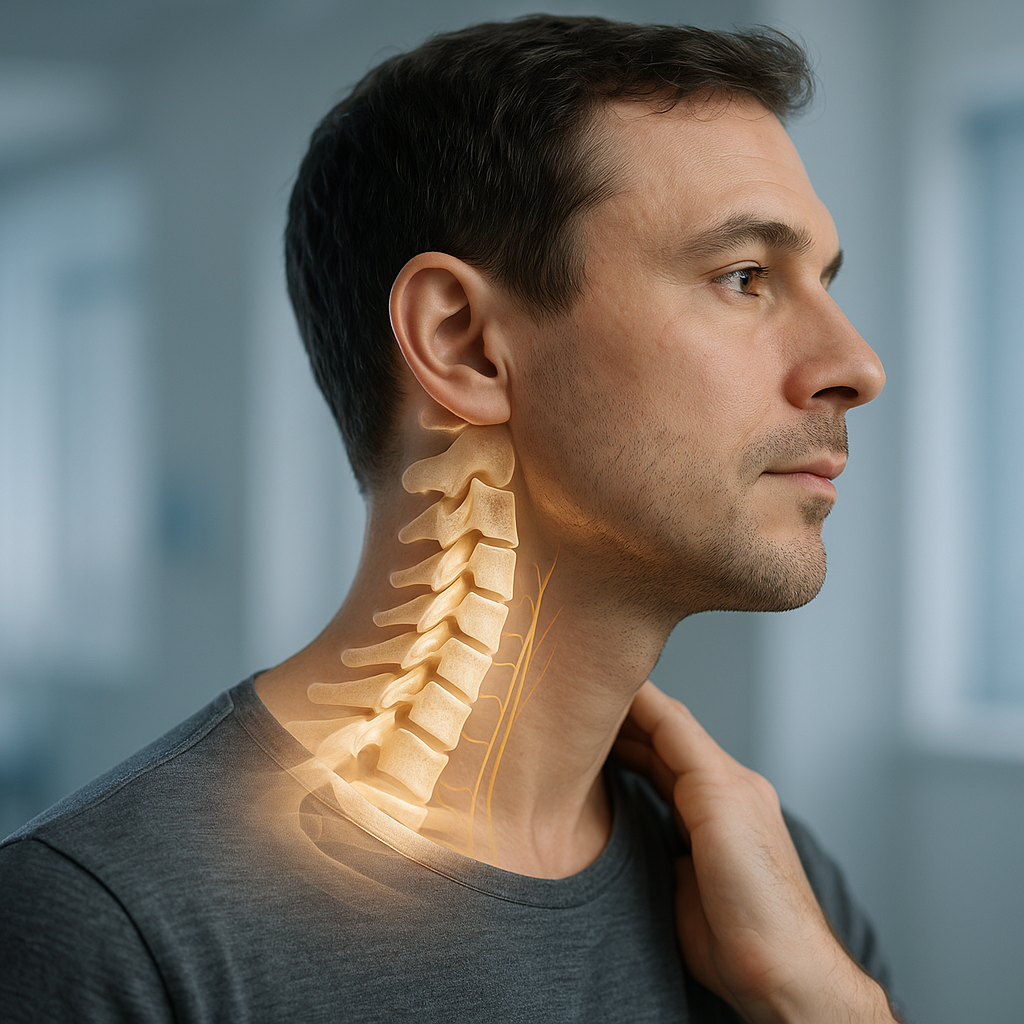
Understanding Cervical Spine Anatomy: A Complete Overview
The cervical spine is one of the most vital and intricate structures in the human body. Serving as the uppermost section of the spinal column, it provides structural support for the head, enables a remarkable range of motion, and protects the delicate neural pathways that connect the brain to the rest of the body. Whether you are a healthcare professional, a student of anatomy, or simply someone curious about how the human body works, understanding the cervical spine is essential to appreciating how we move, sense, and function every day.
What Is the Cervical Spine?
The cervical spine refers to the uppermost region of the vertebral column, located in the neck area. It begins at the base of the skull and extends downward to the top of the thoracic spine. Composed of seven individual bones known as vertebrae, this section of the upper spine is commonly referred to in clinical and anatomical settings using the designations C1 through C7, where “C” stands for cervical and the numbers indicate the position from top to bottom.
Together, these seven neck vertebrae form a slightly curved, lordotic structure — meaning the spine curves gently inward toward the front of the body. This natural curvature plays a critical role in distributing mechanical loads and absorbing physical stress generated by movement and posture throughout daily life.
The Seven Cervical Vertebrae: C1 Through C7
Each of the seven cervical vertebrae has a distinct role and unique structural characteristics. While they share certain features common to all vertebrae — such as a vertebral body, spinous process, and transverse processes — the cervical vertebrae also possess features that set them apart from those found in other spinal regions.
C1 — The Atlas
The first cervical vertebra, known as the atlas, is unlike any other vertebra in the spine. It lacks a vertebral body and instead forms a ring-like structure that supports the skull. The atlas articulates with the occipital condyles of the skull, creating the atlanto-occipital joint. This joint is responsible for the nodding motion of the head — the movement we make when gesturing “yes.”
C2 — The Axis
The second cervical vertebra, called the axis, features a bony projection known as the dens or odontoid process, which extends upward into the ring of the atlas. This unique structure acts as a pivot point, enabling the rotational movement of the head — the motion used when gesturing “no.” Together, C1 and C2 form one of the most mechanically specialized joints in the entire body.
C3 Through C6
The vertebrae from C3 to C6 are considered the “typical” cervical vertebrae. They share similar structural characteristics, including:
- A small, wide vertebral body designed to bear compressive loads
- Bifurcated (forked) spinous processes that can be felt along the back of the neck
- Transverse foramina — small openings in the transverse processes through which the vertebral arteries pass
- Uncinate processes, which are small bony projections on the upper surfaces of the vertebral bodies that help guide movement and add stability
These vertebrae work together to facilitate the smooth, coordinated movements of the neck while protecting the spinal cord and surrounding neurovascular structures.
C7 — The Vertebra Prominens
The seventh cervical vertebra is commonly referred to as the vertebra prominens due to its notably long and non-bifurcated spinous process, which is easily palpable at the base of the neck. This landmark is frequently used by clinicians to count and identify other vertebral levels. C7 marks the transition between the cervical and thoracic regions of the spine.
Key Functions of the Cervical Spine
The cervical spine is not merely a structural framework — it serves several critical biological and mechanical functions that are essential for everyday life.
Support and Stability
The upper spine cervical region bears the full weight of the human head, which typically weighs between 10 and 12 pounds. Despite this considerable load, the cervical spine provides both stability and flexibility, allowing the head to maintain its position while also enabling a wide variety of movements.
Range of Motion
The cervical spine allows for an impressive degree of movement in multiple directions, including:
- Flexion: Bending the head forward toward the chest
- Extension: Tilting the head backward
- Lateral flexion: Tilting the head toward either shoulder
- Rotation: Turning the head from side to side
This remarkable mobility is made possible by the interplay between the individual vertebrae, the intervertebral discs, and the surrounding network of muscles, ligaments, and tendons.
Protection of the Spinal Cord and Nerve Roots
One of the most vital functions of the cervical spine is to house and protect the spinal cord as it descends from the brainstem. The vertebral foramen — the central opening within each vertebra — collectively forms the spinal canal, through which the spinal cord travels. Additionally, nerve roots exit through openings called intervertebral foramina on either side of the vertebrae, branching out to supply sensation and motor function to the neck, shoulders, arms, and hands.
Passage for the Vertebral Arteries
A feature unique to cervical vertebrae is the presence of transverse foramina — small canals in each transverse process through which the vertebral arteries pass.














