
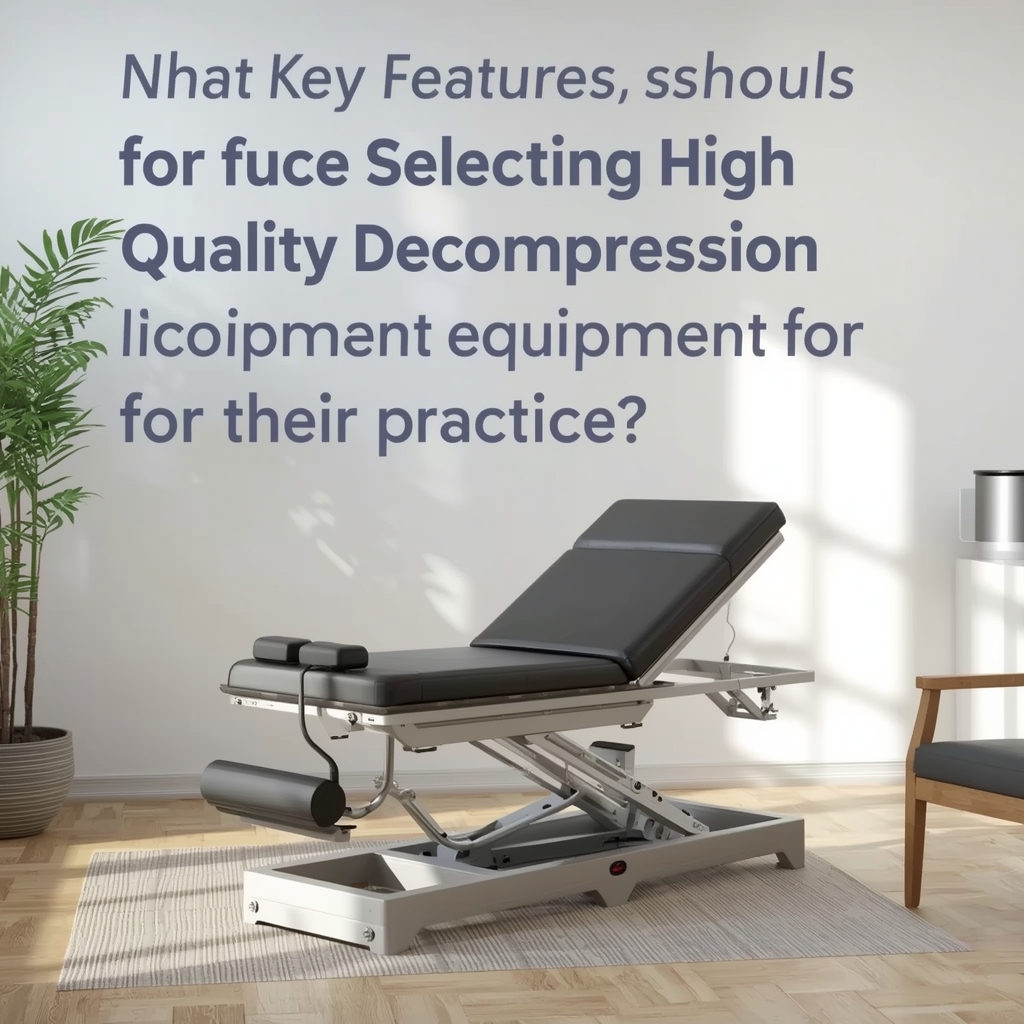
Safety Features and Regulatory Compliance
When selecting spinal decompression equipment, prioritize devices with robust safety mechanisms. Look for features like emergency stop functions, pressure sensors, and alignment safeguards to prevent injury during treatment. Ensure the equipment meets industry standards (e.g., ISO certifications) and complies with regulatory guidelines. A reliable manufacturer will provide clear documentation on safety protocols and maintenance requirements. These measures protect both patients and practitioners, reducing risks associated with improper use. Safety should never be compromised, as even minor malfunctions can lead to complications. Always verify that the equipment has undergone rigorous testing and has a proven track record in clinical settings.
Adjustability and Patient Customization
Effective spinal decompression requires equipment that adapts to diverse patient needs. Choose devices with adjustable settings for varying spinal regions, patient weights, and treatment intensities. Customizable straps, padding, and positioning systems enhance comfort and treatment accuracy. Some units offer pre-programmed modes for specific conditions, while others allow manual adjustments. Flexibility in setup ensures the equipment can address a wide range of spinal issues, from herniated discs to degenerative conditions. A good system should accommodate both acute and chronic cases, providing consistent results across different body types and anatomical variations.
Advanced Technology and Precision Control
Modern decompression equipment often incorporates technology to enhance precision and effectiveness. Look for systems with computerized controls, real-time feedback mechanisms, and adjustable traction forces. These features enable practitioners to monitor and modify treatment parameters dynamically. Some devices use digital interfaces to track progress and generate reports, improving patient communication. Advanced sensors can detect resistance and adjust pressure accordingly, minimizing discomfort. While specific technologies vary, the goal is to achieve targeted decompression without excessive force. Prioritize equipment that balances innovation with user-friendly design for optimal clinical outcomes.
Ease of Use and Clinical Workflow Integration
Efficiency in a chiropractic practice depends on equipment that integrates smoothly into daily operations. Choose decompression units with intuitive controls, minimal setup time, and compact designs for space-saving. Training requirements should be reasonable, allowing staff to operate the device confidently. Consider factors like patient positioning ease, data management systems, and compatibility with existing tools. A user-friendly interface reduces the learning curve and ensures consistent application. Equipment that streamlines workflows helps maintain productivity while delivering high-quality care. Always test the device in a clinical environment before purchasing to assess practicality.
Evidence-Based Design and Clinical Support
High-quality decompression equipment should align with established clinical principles. Seek devices backed by research on spinal mechanics and decompression techniques, even if specific studies are not cited. Manufacturers with a history of collaboration with chiropractic professionals often produce more effective tools. Look for systems that support evidence-based protocols, such as intermittent traction or specific angle adjustments. Clinical support, like access to training resources or technical assistance, adds value. While direct medical advice is not provided, equipment that reflects current best practices helps practitioners deliver reliable, results-driven care to patients.
Durability, Warranty, and Long-Term Value
Investing in durable, long-lasting equipment is crucial for cost-effectiveness. Evaluate the build quality, materials used, and resistance to wear and tear. A solid warranty and responsive customer support indicate the manufacturer’s confidence in their product. Consider maintenance requirements and the availability of replacement parts. While initial costs matter, prioritize systems that offer consistent performance over time. A reliable device reduces downtime and repair expenses, ensuring uninterrupted patient care. Always compare long-term value, not just upfront prices, when making a decision.












