
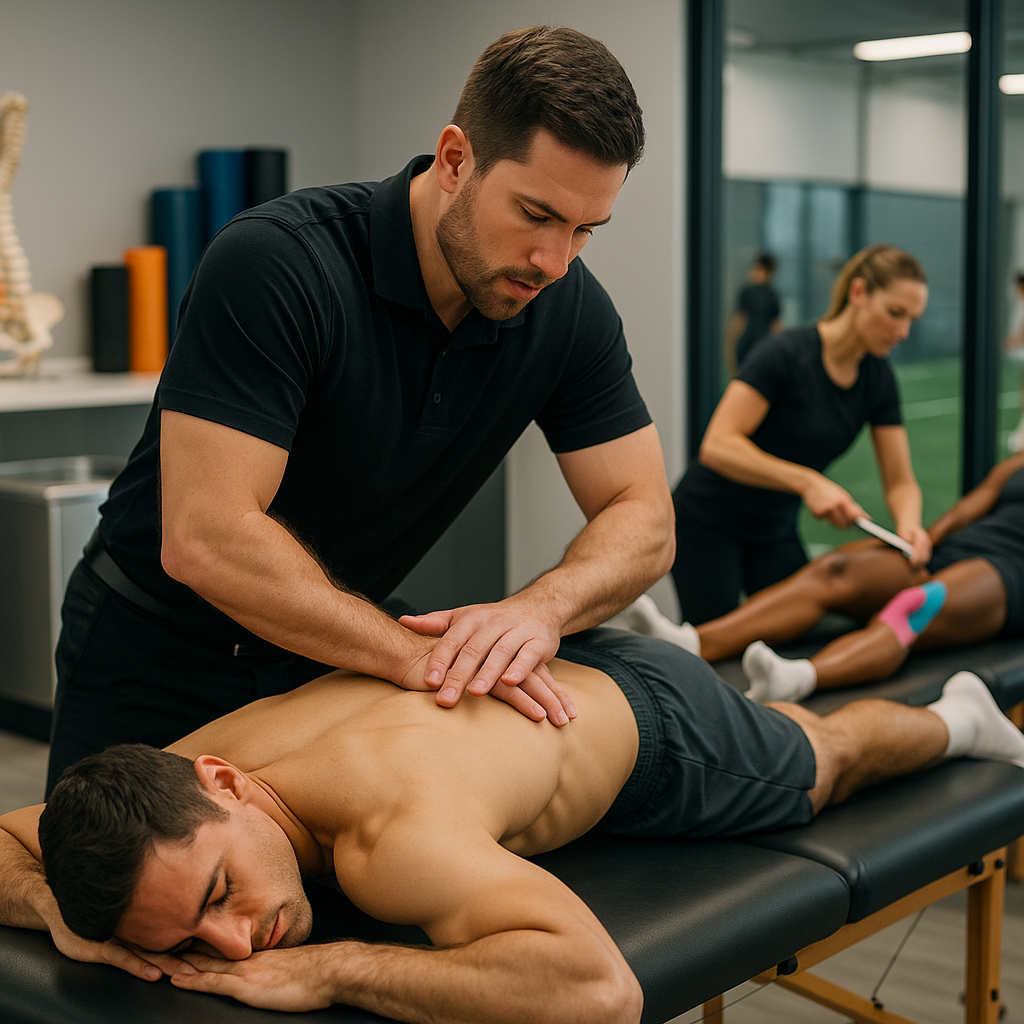
The Role of Chiropractic Care in Professional Sports
Professional athletes push their bodies to the absolute limit. Whether it is a linebacker absorbing a brutal tackle on the football field or a basketball player landing awkwardly after a high-flying dunk, the physical demands of elite competition are relentless. It should come as no surprise, then, that chiropractic care has become a cornerstone of sports medicine across virtually every major professional league. A pro sports chiropractor does far more than crack backs — these highly trained professionals deploy a wide range of specialized techniques designed to keep athletes performing at their peak while minimizing downtime from injury.
In recent decades, the integration of chiropractic care into professional sports has grown dramatically. Teams now recognize that preventive and rehabilitative chiropractic treatment can directly influence performance outcomes and extend careers. Understanding the specific treatments used at the professional level offers valuable insight into why so many elite athletes swear by their chiropractors.
Spinal Manipulation and Adjustment Techniques
At the foundation of chiropractic practice lies spinal manipulation, often referred to as a chiropractic adjustment. This technique involves the application of controlled force to specific joints of the spine or extremities, with the goal of restoring proper alignment, improving range of motion, and alleviating nerve interference. For professional athletes, even minor misalignments — known as subluxations — can have measurable effects on performance, reaction time, and pain levels.
There are several distinct forms of spinal manipulation used by sports chiropractors:
- High-Velocity Low-Amplitude (HVLA) Thrust: This is the classic adjustment technique most people associate with chiropractic care. A quick, precise thrust is applied to a specific joint, often producing the familiar popping sound. HVLA adjustments are commonly used to address acute spinal restrictions and joint dysfunction.
- Low-Force Mobilization: For athletes with acute inflammation or those who are in sensitive post-injury states, gentler mobilization techniques are preferred. These involve slow, rhythmic movements that gradually increase the range of motion in a restricted joint without the high-velocity thrust.
- Flexion-Distraction: Frequently used for disc-related injuries, this technique involves a specialized table that gently stretches and flexes the spine. It is particularly effective for athletes suffering from herniated discs or lumbar radiculopathy.
An NFL chiropractor working on the sidelines or in the training room may use HVLA adjustments to quickly address a player’s spinal restriction before or after a game, helping to restore full functional movement with minimal recovery time.
Soft Tissue Therapy and Myofascial Release
Chiropractic care extends well beyond joint adjustment. Soft tissue therapies are an essential component of treatment for professional athletes, addressing the muscles, tendons, ligaments, and fascia that support and surround the skeletal structure. When soft tissues become tight, damaged, or dysfunctional, athletic performance suffers significantly.
Some of the most widely used soft tissue techniques in professional sports chiropractic include:
- Active Release Technique (ART): ART is an evidence-based, movement-based soft tissue treatment system that breaks up scar tissue and adhesions within muscles and connective tissues. A certified ART provider uses precise tension combined with specific patient movements to restore normal tissue texture and function. This technique is particularly popular in NBA chiropractic settings, where muscle overuse injuries are extremely common.
- Instrument-Assisted Soft Tissue Mobilization (IASTM): Using specially designed stainless steel tools, chiropractors apply controlled pressure to soft tissues to detect and treat areas of fibrosis or chronic inflammation. Tools such as the Graston Instrument are among the most recognized in professional sports medicine.
- Myofascial Release: This technique targets the fascial network — the connective tissue that envelopes muscles and organs throughout the body. Sustained pressure is applied to tight fascial areas to release restrictions and restore mobility. For athletes who experience widespread tightness and movement inefficiency, myofascial release can be transformative.
- Trigger Point Therapy: Trigger points are hyperirritable spots within a muscle that cause localized pain and can refer pain to distant areas. Direct pressure is applied to these points to reduce muscular tension and relieve referred pain patterns.
Extremity Adjusting and Joint Mobilization
While the spine is the central focus of chiropractic care, professional athlete chiropractic treatment frequently extends to the extremities. Joints in the shoulders, elbows, wrists, hips, knees, and ankles are subject to enormous stress in competitive sports and often require specific chiropractic intervention.
Extremity adjusting involves the same principles as spinal manipulation — restoring proper joint mechanics, reducing nerve irritation, and improving overall function — but is applied to peripheral joints. For example:
- A basketball player with chronic ankle instability may receive regular adjustments to the subtalar and talocrural joints to improve proprioception and reduce sprain risk.
- A quarterback experiencing elbow discomfort may benefit from radiohumeral joint mobilization to restore full throwing mechanics.
- A wide receiver with shoulder impingement might undergo glenohumeral and acromioclavicular joint adjustments to decompress the shoulder complex and restore pain-free overhead function.
NFL chiropractors in particular are well-versed in extremity adjusting given the high incidence of joint injuries across multiple body regions in American football.
Rehabilitation and Exercise Therapy
Modern sports chiropractors do not simply treat injuries in isolation — they are deeply involved in the functional rehabilitation process. After addressing structural and soft tissue dysfunction, chiropractors design individualized corrective exercise programs to rebuild strength, stability, and movement quality.













