
Understanding the Pettibon System: A Comprehensive Overview
The Pettibon System is a scientifically grounded approach to spinal rehabilitation and chiropractic care that has transformed the way practitioners assess, treat, and correct spinal disorders. Developed by Dr. Burl Pettibon in the 1980s, this innovative system goes beyond traditional chiropractic methods by addressing the entire spine as an interconnected biomechanical structure. Whether you are suffering from chronic back pain, postural abnormalities, or complex spinal conditions, understanding the Pettibon System can open the door to more effective and lasting treatment outcomes.
The Origins and Philosophy Behind Pettibon Chiropractic
Pettibon chiropractic was founded on the premise that the spine must maintain specific geometric curves to function optimally and support overall neurological health. Dr. Pettibon recognized that conventional chiropractic adjustments, while beneficial, often failed to produce permanent structural changes because they did not adequately engage the neurological and muscular systems responsible for maintaining spinal posture.
The philosophy underlying the Pettibon System is rooted in the idea that the body is a self-healing organism, but it requires proper structural alignment to do so effectively. When spinal curves deviate from their ideal configuration, the nervous system becomes compromised, leading to a cascade of health issues that extend well beyond mere back pain. By correcting these structural deviations at their root cause, Pettibon chiropractic aims to restore the body’s natural healing capacity.
Key Components of the Pettibon Spinal Correction Method
The Pettibon spinal correction approach is distinguished by its multi-faceted methodology, which combines diagnostic precision with targeted rehabilitative techniques. Rather than relying solely on manual adjustments, the system integrates a variety of tools and exercises designed to retrain both the muscles and the nervous system simultaneously.
The core components of the Pettibon System include:
- Comprehensive Spinal Analysis: Before any treatment begins, practitioners conduct thorough radiographic assessments to measure spinal curvatures, vertebral positioning, and postural deviations. These measurements serve as the foundation for developing a personalized correction plan.
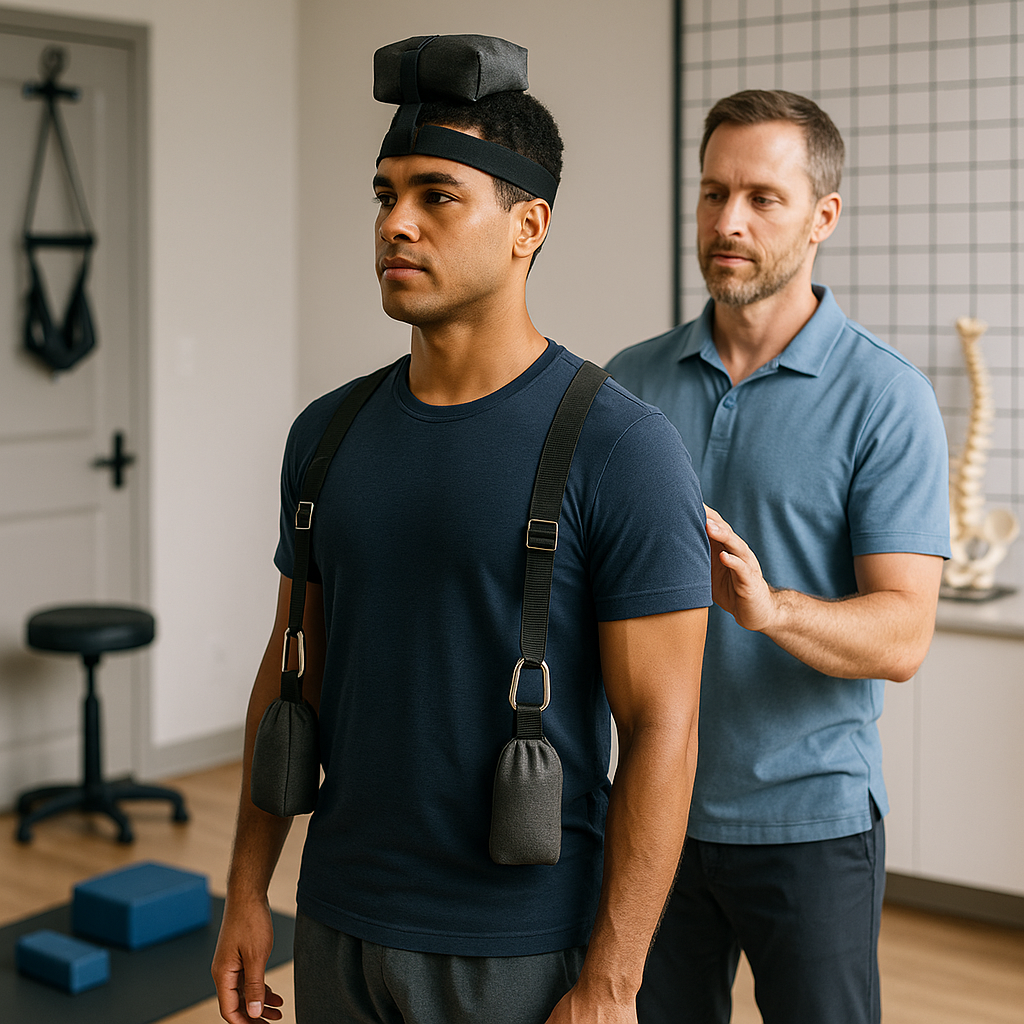
- Pettibon Weighting System: One of the most distinctive elements of the Pettibon approach, the weighting system uses strategically placed weights worn on the head, shoulders, and hips to stimulate postural reflexes and encourage the spine to shift toward its ideal alignment.
- Wobble Chair Exercises: Patients use a specially designed wobble chair to hydrate spinal discs, improve spinal flexibility, and warm up the muscles prior to adjustments. This preparatory step enhances the effectiveness of subsequent corrective procedures.
- Cervical Traction Devices: Custom-fitted traction devices are used to restore the natural curvature of the cervical spine, addressing issues such as military neck or reversed cervical curves.
- Chiropractic Adjustments: Manual adjustments are incorporated within the Pettibon framework, but they are delivered with greater precision and are enhanced by the preparatory work done through exercises and weighting.
- Home Care Protocols: Patients are provided with structured home exercise programs to reinforce in-office treatments and accelerate the rehabilitation process.
The Pettibon Weighting System Explained
Among the various tools employed within the Pettibon framework, the Pettibon weighting system stands out as one of its most innovative and effective components. This system operates on the principle of proprioceptive stimulation — essentially, the process of training the nervous system to recognize and maintain proper postural positioning.
The weights used in the Pettibon system are carefully calibrated and placed at specific anatomical locations, including the head, shoulders, and hips. When worn during exercise or daily activity, these weights create a biomechanical stimulus that prompts the body’s postural reflexes to engage and work toward correcting spinal imbalances.
The scientific rationale behind this approach is compelling. Research suggests that the righting reflex — the body’s innate mechanism for maintaining an upright posture — can be harnessed and guided through strategic external loading. By applying weights in opposition to postural deviations, the Pettibon weighting system essentially “trains” the nervous system to adopt and sustain healthier spinal positioning over time.
Patients typically wear the weights for prescribed periods during their rehabilitation sessions and, in some cases, during home care exercises. Over time, this consistent neurological stimulation contributes to measurable improvements in spinal curvature and overall postural alignment.
Who Can Benefit from the Pettibon Spinal Rehabilitation System?
The Pettibon spinal rehabilitation system is designed to address a broad spectrum of spinal conditions and postural abnormalities. It is particularly effective for individuals who have not achieved satisfactory results through conventional chiropractic care or physical therapy alone. Conditions that may respond well to the Pettibon System include:
- Scoliosis and abnormal spinal curvatures
- Loss of cervical lordosis or “military neck”
- Chronic low back pain and lumbar dysfunction
- Degenerative disc disease
- Forward head posture
- Kyphosis (excessive rounding of the upper back)
- Herniated or bulging spinal discs
- Postural imbalances resulting from injury or prolonged poor habits
It is important to note that the Pettibon System is not a one-size-fits-all solution. Each patient undergoes a thorough evaluation to determine whether this approach is appropriate for their specific condition and health history. Practitioners trained in Pettibon techniques are equipped to tailor the system’s tools and protocols to meet each individual’s unique rehabilitative needs.












