
Introduction to Winter Sports Injuries and Chiropractic Care
Winter sports like skiing and snowboarding are exhilarating activities that draw millions of enthusiasts to the slopes each year. However, these high-speed, physically demanding sports also come with a significant risk of injury. From sudden falls on icy terrain to high-impact collisions, the musculoskeletal strain that skiers and snowboarders endure can be both acute and long-lasting. For many athletes, seeing a skiing injury chiropractor has become an essential part of their recovery and prevention strategy.
Chiropractic care offers a non-invasive, drug-free approach to treating the wide range of injuries associated with winter sports. Whether you are a professional competitor or a weekend recreational skier, understanding how chiropractic treatment can support your healing process is crucial to getting back on the mountain safely and efficiently.
Common Skiing and Snowboarding Injuries
Before exploring the treatments available, it is important to understand the types of injuries that most frequently affect winter sports athletes. These injuries vary in severity and location but often involve the spine, joints, and soft tissues.
Spinal Injuries
The spine is particularly vulnerable during skiing and snowboarding accidents. Hard falls, awkward landings, and collisions can result in vertebral misalignments, herniated discs, and compression fractures. Ski accident spine care is one of the most critical areas where chiropractic intervention can make a meaningful difference in both short-term pain relief and long-term recovery outcomes.
Knee Injuries
Knee ligament tears, including ACL and MCL injuries, are among the most common problems reported by skiers. The twisting motions involved in navigating turns and moguls place enormous stress on the knee joint, making it highly susceptible to damage.
Shoulder and Wrist Injuries
Snowboarders frequently sustain shoulder dislocations and wrist fractures when they instinctively brace themselves during falls. The repetitive nature of these impacts can lead to chronic pain if not properly treated.
Neck Injuries
Whiplash and cervical strain are also prevalent among winter sports athletes. A sudden jolt from a collision or an abrupt stop can strain the muscles and ligaments of the neck, causing significant pain and reduced range of motion.
Hip and Lower Back Pain
The crouched, forward-leaning posture required in both skiing and snowboarding places continuous stress on the lower back and hip flexors. Over time, this can lead to muscle imbalances, joint dysfunction, and chronic lower back pain.
How Chiropractic Care Addresses Winter Sports Injuries
Chiropractic care takes a holistic, patient-centered approach to treating snowboarding injury treatment and skiing-related conditions. Rather than simply masking symptoms with medication, chiropractors work to identify and address the root cause of pain and dysfunction. Here is a closer look at the primary chiropractic techniques used for winter sports injuries.
Spinal Manipulation and Adjustment
Spinal manipulation, also known as chiropractic adjustment, is the cornerstone of chiropractic treatment. When vertebrae become misaligned due to a fall or impact, they can place pressure on surrounding nerves and tissues, causing pain, inflammation, and restricted movement. A qualified chiropractor uses precise, controlled force to restore proper alignment to the spine.
For skiing and snowboarding athletes, spinal adjustments are particularly effective in treating:
- Lumbar and thoracic vertebral misalignments
- Cervical spine injuries resulting from whiplash
- Nerve impingement and radiating pain
- Disc-related issues caused by compressive forces
Regular spinal care as part of a winter sports chiropractic program can significantly reduce pain levels, improve mobility, and accelerate the healing process.
Soft Tissue Therapy
In addition to spinal adjustments, chiropractors employ a variety of soft tissue therapies to address muscle strains, ligament sprains, and tendon injuries commonly associated with skiing and snowboarding accidents.
These therapies may include:
- Myofascial release: A technique that applies sustained pressure to the connective tissue to relieve tension and improve flexibility.
- Trigger point therapy: Targeted pressure applied to specific points of muscle tightness to reduce pain and restore normal function.
- Active Release Technique (ART): A movement-based massage method that breaks down scar tissue and adhesions in overused or injured muscles.
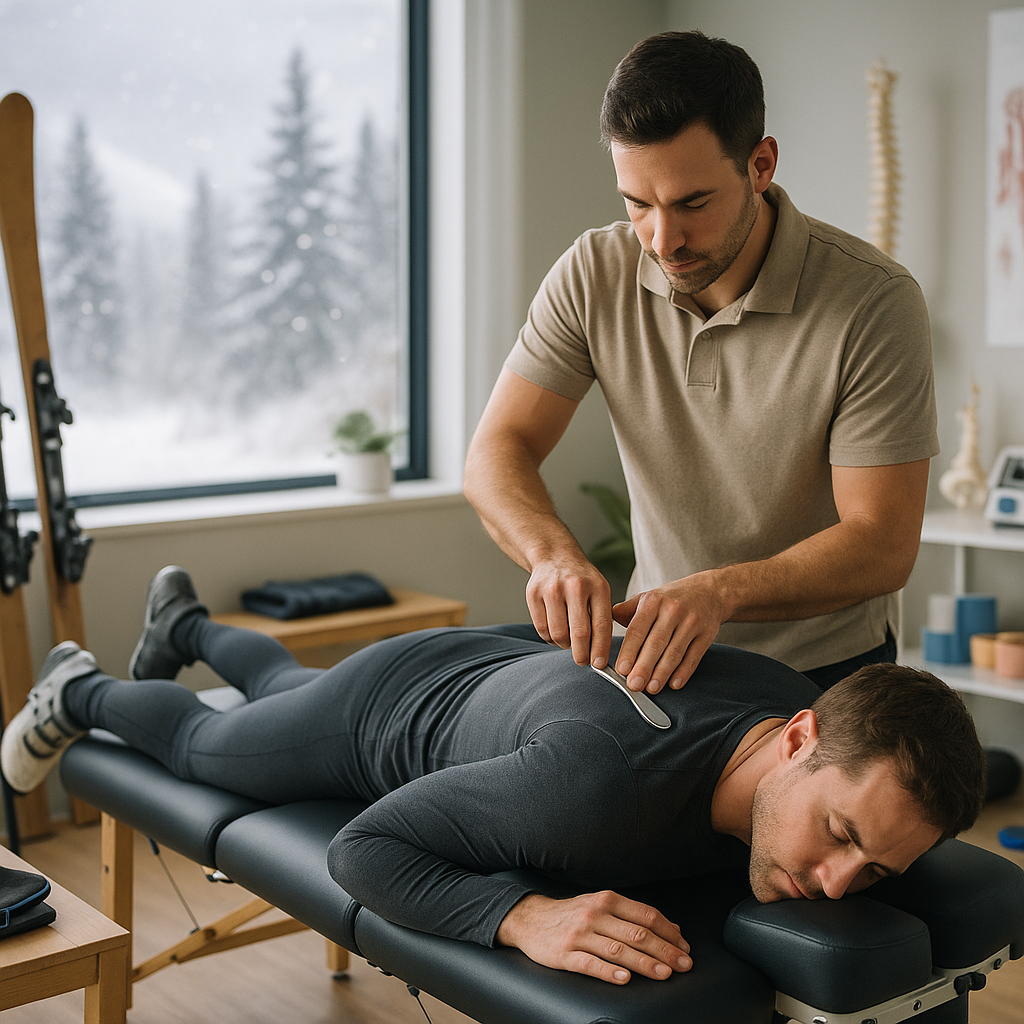
- Instrument-assisted soft tissue mobilization (IASTM): The use of specialized tools to detect and treat fascial restrictions and soft tissue injuries.
Extremity Adjustments
Chiropractic care is not limited to the spine. Extremity adjustments address joint dysfunction in the knees, shoulders, wrists, ankles, and hips — all areas commonly affected by skiing and snowboarding injuries. By restoring proper joint mechanics, these adjustments reduce inflammation, improve range of motion, and support faster recovery from acute injuries.
For snowboarders dealing with wrist injuries or skiers recovering from knee trauma, extremity adjustments can be a highly effective component of a comprehensive treatment plan.
Rehabilitative Exercises and Stretching
A skilled chiropractor does not simply treat the immediate injury — they also develop a personalized rehabilitation program to strengthen the surrounding muscles and prevent future injuries.













