
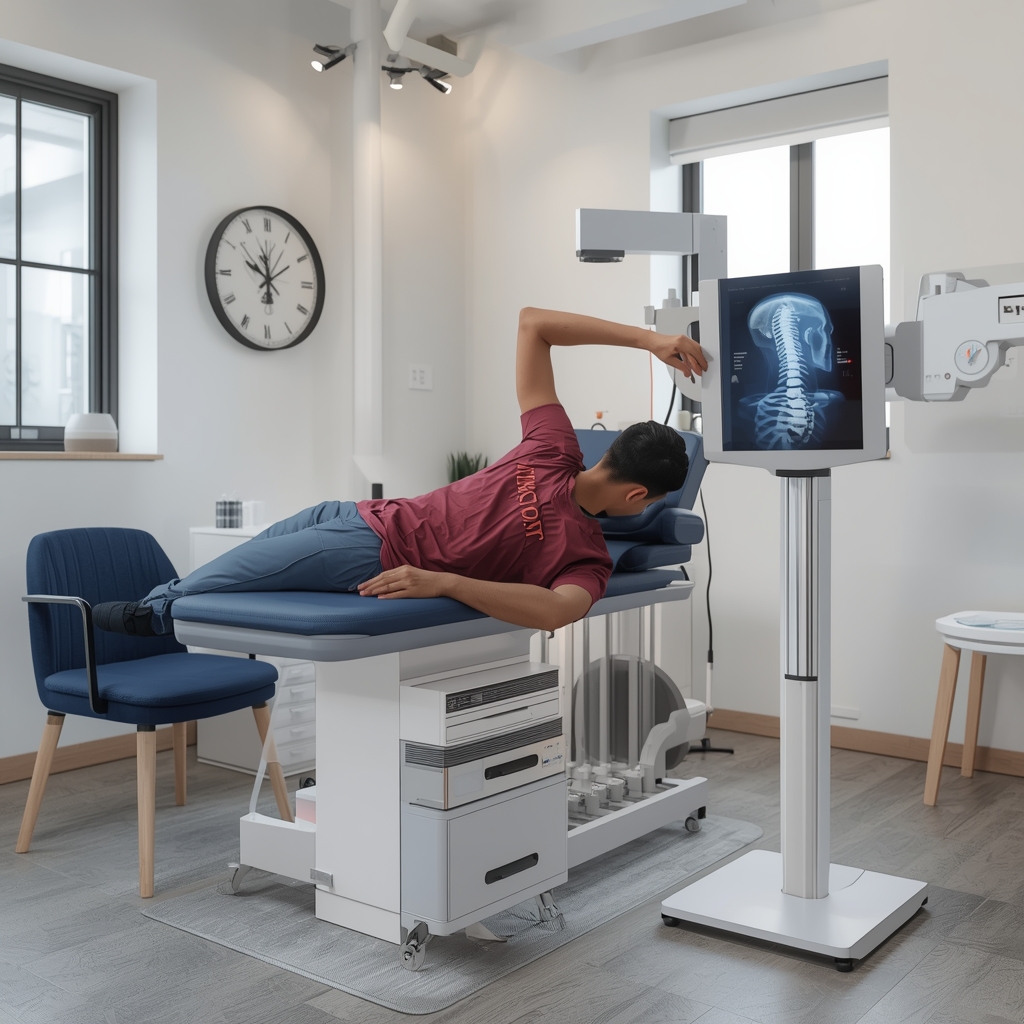
AI-Assisted Diagnostic Tools
2024 has seen significant advancements in artificial intelligence (AI) integration within chiropractic diagnostics. AI-powered software now analyzes patient data, including imaging scans and posture assessments, to identify misalignments with greater precision. These tools help chiropractors detect subtle issues that might be missed through traditional methods, enabling earlier interventions. By streamlining data interpretation, AI reduces human error and allows practitioners to focus more on personalized care. While these technologies are still evolving, their potential to enhance diagnostic accuracy and treatment planning is widely acknowledged in the industry.
Wearable Technology for Posture Monitoring
Wearable devices, such as smart sensors and posture-tracking apps, are becoming popular in chiropractic care. These gadgets monitor a patient’s alignment in real time, providing feedback on sitting, standing, and movement habits. For example, some wearables vibrate when a patient slouches, encouraging immediate corrective action. This continuous monitoring helps patients develop better posture over time, reducing strain on the spine and joints. Chiropractors often recommend these tools as part of a holistic approach to musculoskeletal health, emphasizing proactive lifestyle adjustments rather than reactive treatments.
Advancements in Cold Laser Therapy
Cold laser therapy, or low-level laser therapy (LLLT), has seen improvements in 2024 with more precise wavelength adjustments and enhanced delivery systems. These upgrades allow for deeper tissue penetration and targeted treatment of inflammation or nerve pain. Many chiropractors use this technology to complement manual adjustments, particularly for conditions like arthritis or sports injuries. Patients often report faster recovery times and reduced discomfort. While research on long-term efficacy continues, the non-invasive nature of cold laser therapy makes it a valuable addition to modern chiropractic practices.
3D Imaging and Spinal Analysis
3D imaging technology is revolutionizing how chiropractors assess spinal structures. Unlike traditional X-rays, 3D scans provide a comprehensive view of the spine’s curvature, disc health, and alignment. This detailed visualization helps practitioners create more accurate treatment plans tailored to individual needs. Some systems even simulate the effects of adjustments, allowing patients to see potential outcomes before procedures. As this technology becomes more accessible, it is expected to improve diagnostic consistency and patient engagement in their care journeys.
Telehealth Integration for Remote Consultations
The rise of telehealth has extended to chiropractic care, with 2024 seeing improved virtual platforms for remote consultations. These tools enable chiropractors to assess patients through video calls, review medical histories, and recommend home exercises or adjustments. While in-person visits remain essential for hands-on care, telehealth offers greater convenience for follow-ups or initial screenings. This trend has expanded access to chiropractic services, particularly for patients in rural areas or those with mobility challenges. As technology evolves, hybrid models combining virtual and in-person care are likely to become standard.
Robotic-Assisted Adjustment Devices
Robotic systems designed to assist with spinal adjustments are emerging as a cutting-edge innovation. These devices use sensors and precision engineering to apply controlled force during adjustments, minimizing human error and ensuring consistency. Some models are designed for specific regions of the spine, such as the cervical or lumbar areas. While still in early adoption, these tools are praised for their potential to enhance treatment accuracy and reduce physical strain on practitioners. Their integration into clinics reflects the industry’s ongoing pursuit of technology-driven solutions for improved patient outcomes.













