
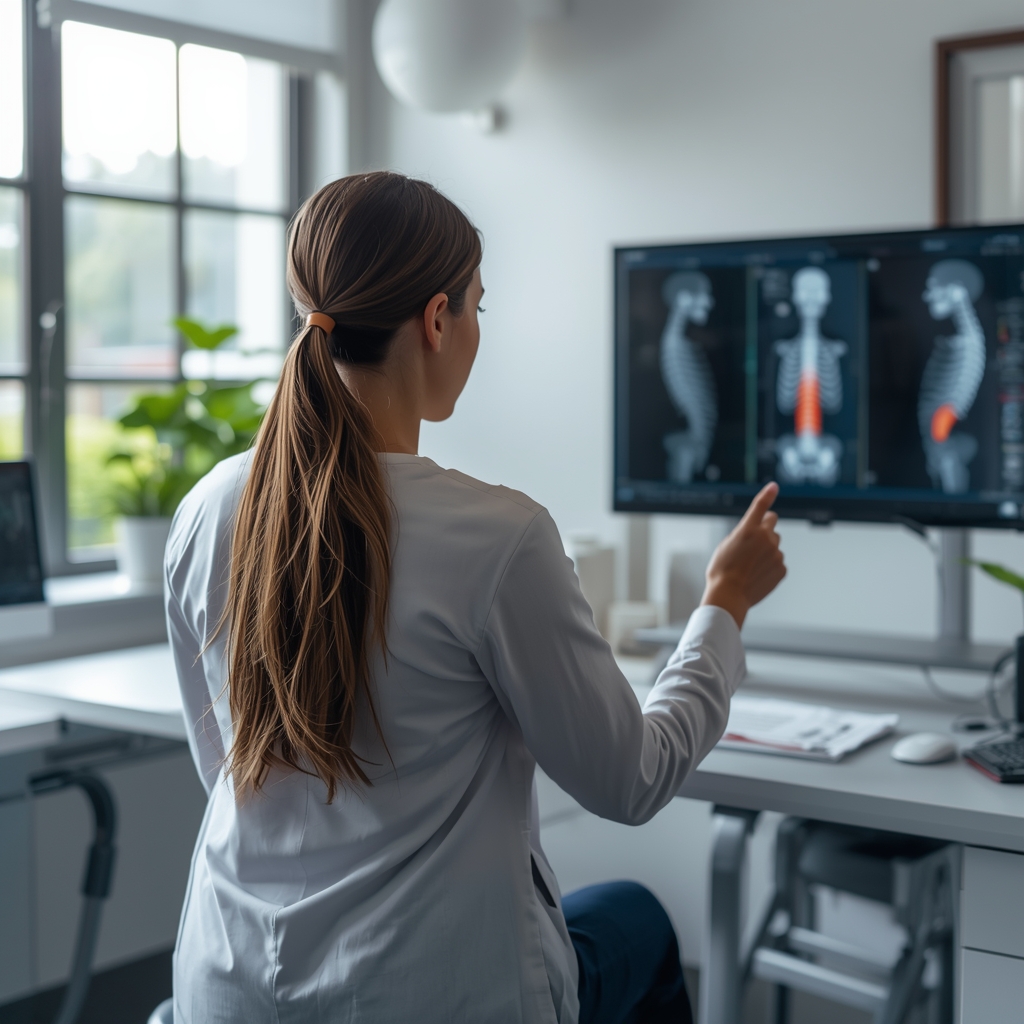
Recent Advances in Spinal Imaging and Their Impact on Chiropractic Diagnoses
Spinal imaging has evolved significantly in recent years, offering chiropractors more precise tools to assess musculoskeletal conditions. Traditional methods like X-rays and MRI scans remain foundational, but newer technologies are enhancing diagnostic accuracy. For instance, advancements in 3D imaging and real-time motion analysis allow practitioners to observe spinal mechanics during movement, revealing issues that static images might miss. These innovations enable more tailored treatment plans, as chiropractors can better identify misalignments, disc irregularities, or soft tissue abnormalities. As the field embraces these tools, the focus remains on improving patient outcomes through early and accurate diagnosis.
AI and Machine Learning in Image Analysis
Artificial intelligence (AI) is transforming how spinal imaging data is interpreted. Machine learning algorithms can now analyze scans with increasing accuracy, detecting subtle patterns that may elude human interpretation. For example, AI tools can flag early signs of degenerative disc disease or spinal stenosis, helping chiropractors intervene before symptoms worsen. These systems also reduce diagnostic variability by standardizing image analysis protocols. While AI serves as a supportive tool rather than a replacement for clinical judgment, its integration into chiropractic practice highlights the growing synergy between technology and healthcare. Patients may benefit from faster, more consistent diagnoses, though ongoing research is needed to validate long-term efficacy.
High-Resolution Imaging for Soft Tissue Evaluation
Recent advancements in imaging technology have improved the visualization of soft tissues, such as ligaments, muscles, and nerves. Techniques like high-field MRI and ultra-high-resolution ultrasound provide clearer images, enabling chiropractors to assess injuries like herniated discs, muscle tears, or nerve compression with greater precision. These tools are particularly valuable for diagnosing conditions that lack obvious structural changes on traditional X-rays. By offering detailed soft tissue insights, chiropractors can develop more targeted therapies, such as specific adjustments or rehabilitative exercises. As these technologies become more accessible, they are likely to play a larger role in personalized chiropractic care.
Portable and Wearable Imaging Devices
Portable imaging devices are making spinal diagnostics more accessible and efficient. Compact MRI systems and handheld ultrasound machines allow chiropractors to perform scans in-office, reducing the need for referrals to external facilities. Wearable sensors, paired with imaging software, can monitor spinal movement and posture during daily activities, providing dynamic data that complements static imaging. These innovations streamline the diagnostic process, enabling quicker assessments and follow-ups. While still emerging, portable technologies hold promise for expanding chiropractic care to underserved areas and improving patient convenience. However, their integration requires careful evaluation to ensure accuracy and regulatory compliance.
Integration with Electronic Health Records (EHRs)
The seamless integration of spinal imaging with electronic health records (EHRs) is enhancing continuity of care. Chiropractors can now store, retrieve, and share imaging data digitally, facilitating collaboration with other healthcare providers. This connectivity supports a more holistic approach to patient management, as imaging findings can be cross-referenced with medical histories and treatment progress. For example, a chiropractor might review a patient’s MRI results alongside their physical examination notes to refine a care plan. EHR integration also reduces administrative burdens, allowing practitioners to focus more on patient interactions. As digital health systems advance, this trend is likely to strengthen the role of imaging in comprehensive chiropractic practice.
Ethical Considerations and Future Directions
As spinal imaging technologies evolve, ethical considerations surrounding data privacy, over-reliance on technology, and cost remain critical. Chiropractors must balance the benefits of advanced diagnostics with the need to avoid unnecessary testing or misinterpretation of results. Patient education is essential to ensure informed consent and realistic expectations about imaging’s role in care. Looking ahead, future developments may include AI-driven predictive analytics or non-invasive imaging modalities with even higher resolution. While these advancements hold promise, their adoption will depend on ongoing research, regulatory oversight, and alignment with evidence-based chiropractic principles. The key remains using technology to enhance, not replace, the patient-provider relationship.














