
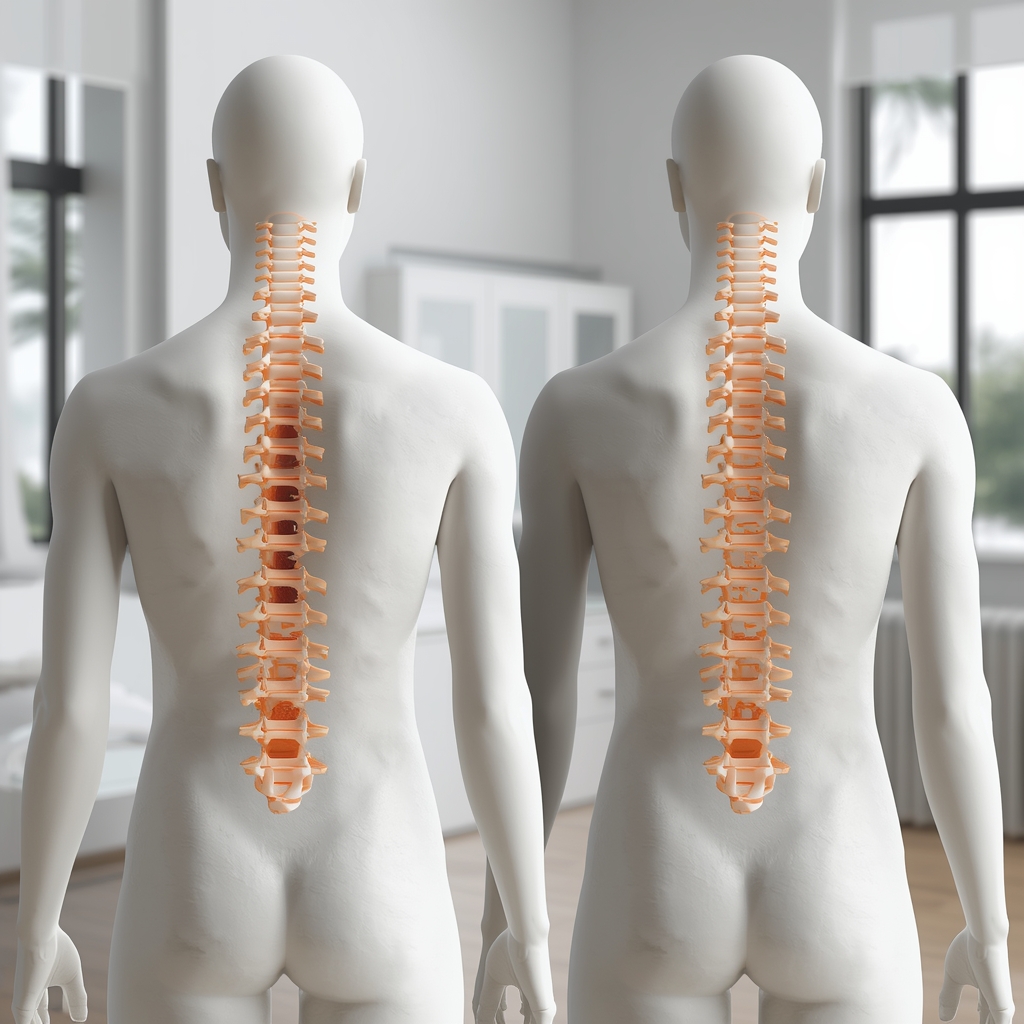
Anatomical Differences in Structure and Mobility
The thoracic and lumbar spine differ significantly in structure and function, influencing disc herniation risk. The thoracic spine, connected to the rib cage, has a more rigid, stable configuration due to its curved shape and costovertebral joints. This limits movement, particularly rotational forces. In contrast, the lumbar spine is more flexible, with larger intervertebral discs and a greater range of motion, especially in flexion and extension. Facet joints in the thoracic region are oriented vertically, reducing shear forces, while lumbar facets are more horizontal, allowing for increased mobility but also greater mechanical stress. These anatomical distinctions shape how each region responds to biomechanical demands and injury risks.
Impact on Disc Herniation Risk
The thoracic spine’s structural rigidity generally reduces disc herniation risk compared to the lumbar spine. Its smaller discs and restricted movement minimize excessive pressure on the annulus fibrosus. However, the lumbar spine’s larger discs and greater mobility make it more susceptible to herniation, particularly under repetitive strain or improper lifting. The lumbar region also bears more weight, increasing disc degeneration risk. While thoracic discs are less likely to herniate, they can still be affected by trauma or chronic postural imbalances. These differences highlight the need for region-specific approaches in assessment and treatment to address unique biomechanical vulnerabilities.
Chiropractic Assessment Techniques
Chiropractors evaluate thoracic and lumbar spine differences through palpation, range-of-motion testing, and postural analysis. For the thoracic spine, they assess rib cage alignment and costovertebral joint mobility, as restrictions here can alter spinal mechanics. In the lumbar region, they focus on disc space narrowing, facet joint tenderness, and nerve root irritation. Imaging, like X-rays or MRI, may be used to identify herniations or degenerative changes. These assessments guide treatment planning, ensuring adjustments address the specific anatomical and functional needs of each spinal region while minimizing injury risk.
Tailoring Adjustments for Thoracic Spine
Thoracic adjustments require precision due to the spine’s inherent stability. Chiropractors often use gentle, targeted thrusts to correct misalignments without excessive force, avoiding the risk of over-rotation. Techniques like diversified or activator methods may be employed to restore mobility in restricted segments. Since thoracic discs are less prone to herniation, the focus is on improving joint function and reducing compensatory stress on adjacent areas. Adjustments may also address rib cage imbalances, which can indirectly affect thoracic mechanics. This approach prioritizes stability while enhancing overall spinal function.
Tailoring Adjustments for Lumbar Spine
Lumbar adjustments emphasize mobility and disc health, given the region’s higher herniation risk. Chiropractors may use techniques like diversified thrusts or flexion-distraction to decompress discs and relieve nerve pressure. Care is taken to avoid hyperextension, which could exacerbate lumbar instability. Soft tissue therapies, such as myofascial release, may complement adjustments to reduce muscle tension around the discs. The goal is to restore normal motion while protecting the intervertebral discs from excessive strain. These strategies aim to balance mobility with structural integrity, supporting long-term spinal health.
Conclusion and Clinical Considerations
Understanding thoracic and lumbar spine differences is critical for effective chiropractic care. The thoracic spine’s rigidity and the lumbar spine’s mobility shape their respective herniation risks, requiring distinct adjustment approaches. Chiropractors must integrate anatomical knowledge with patient-specific assessments to optimize outcomes. While general guidelines exist, individualized care remains essential. Patients should consult qualified providers to determine the most appropriate strategies for their unique conditions. By addressing regional biomechanics, chiropractors can help mitigate disc-related risks and promote spinal wellness.












