
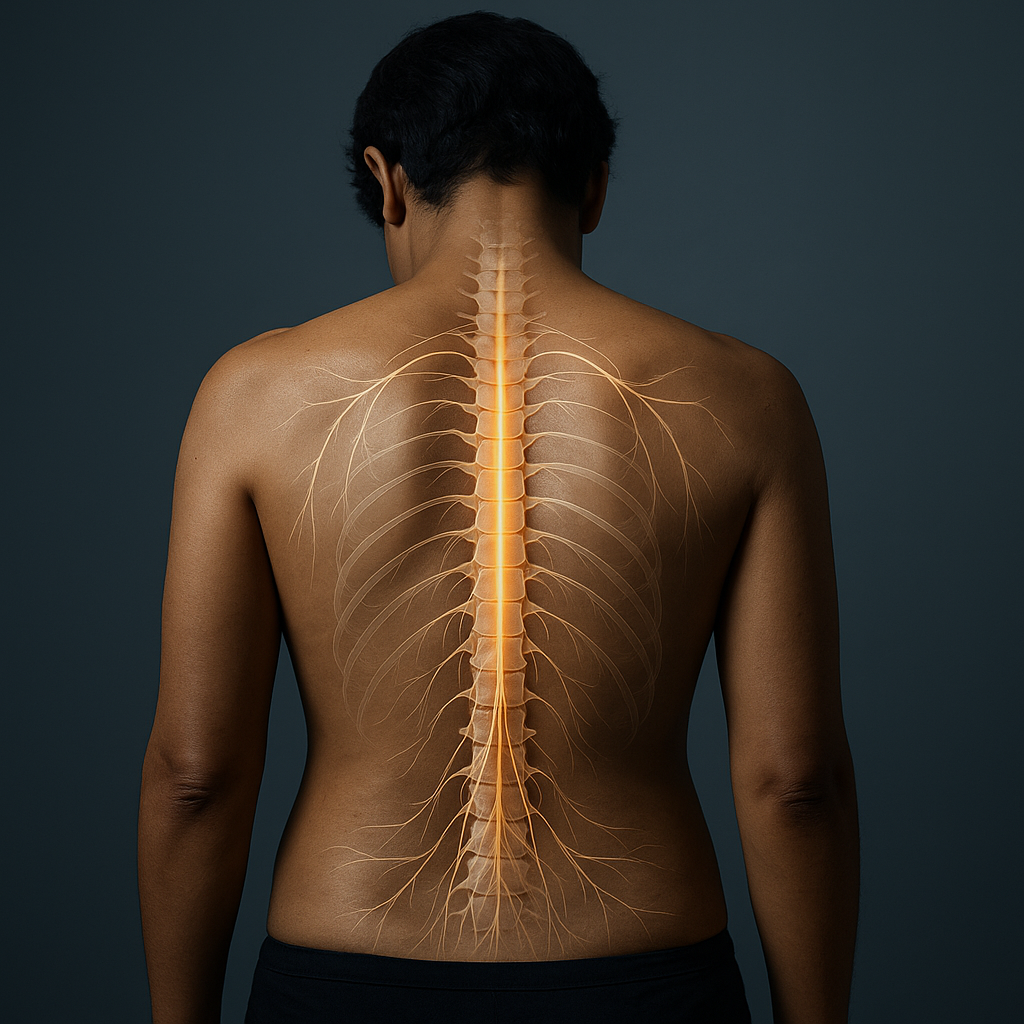
Understanding the Spine and Nervous System Connection
The human body is an extraordinarily complex machine, and few relationships within it are as critical as the spine nervous system connection. The spine does far more than simply hold us upright — it serves as the primary protective structure for one of the most vital components of the human body: the spinal cord. Without a healthy spine, the nervous system cannot function optimally, and the consequences can range from mild discomfort to life-altering disability.
To truly appreciate this relationship, it helps to understand the individual roles of the spine and the nervous system before examining how they work together in remarkable harmony.
The Anatomy of the Spine
The spine, also known as the vertebral column, is composed of 33 individual bones called vertebrae. These vertebrae are stacked upon one another and divided into five distinct regions:
- Cervical region: 7 vertebrae located in the neck area (C1–C7)
- Thoracic region: 12 vertebrae in the mid-back area (T1–T12)
- Lumbar region: 5 vertebrae in the lower back (L1–L5)
- Sacral region: 5 fused vertebrae forming the sacrum (S1–S5)
- Coccygeal region: 4 fused vertebrae forming the coccyx or tailbone
Between each vertebra lies an intervertebral disc — a cushion-like structure made of fibrocartilage that absorbs shock and allows for flexibility. Running through the center of the vertebral column is the vertebral canal, a hollow passage that houses and protects the spinal cord.
What Is the Spinal Cord and What Does It Do?
The spinal cord is a long, cylindrical bundle of nerve tissue that extends from the base of the brain down through the vertebral canal to approximately the first or second lumbar vertebra. It is a direct extension of the brain and forms a critical part of the central nervous system (CNS).
The primary functions of the spinal cord include:
- Transmitting motor signals: Carrying instructions from the brain to the muscles and organs throughout the body
- Transmitting sensory signals: Relaying information about touch, pain, temperature, and position from the body back to the brain
- Coordinating reflexes: Processing reflex actions independently of the brain to generate rapid responses to stimuli
Understanding the spinal cord nerve relationship is essential to grasping how messages travel between the brain and virtually every part of the body. Without the spinal cord functioning properly within its protective vertebral environment, communication between the brain and the rest of the body would be severely compromised.
Spinal Nerve Anatomy: How Nerves Branch From the Spine
One of the most fascinating aspects of spinal nerve anatomy is the way in which nerves branch outward from the spinal cord and extend to all regions of the body. There are 31 pairs of spinal nerves in the human body, and each pair exits the spinal cord through openings between adjacent vertebrae called intervertebral foramina.
These 31 pairs are distributed as follows:
- 8 pairs of cervical nerves (C1–C8)
- 12 pairs of thoracic nerves (T1–T12)
- 5 pairs of lumbar nerves (L1–L5)
- 5 pairs of sacral nerves (S1–S5)
- 1 pair of coccygeal nerves
Each spinal nerve is formed by the combination of a dorsal root and a ventral root. The dorsal root carries sensory information from the body into the spinal cord, while the ventral root carries motor commands from the spinal cord outward to the muscles. Together, these roots form a mixed spinal nerve capable of both transmitting and receiving information.
Once these nerves exit the vertebral column, they branch extensively, forming networks known as nerve plexuses, which supply specific regions of the body with nerve function. The brachial plexus, for example, controls the shoulders, arms, and hands, while the lumbar and sacral plexuses govern the lower limbs and pelvic organs.
Vertebral Nerve Function: Why Each Level Matters
Each level of the spine corresponds to a specific region of the body through what is known as a dermatome — an area of skin supplied by a single spinal nerve. Understanding vertebral nerve function helps healthcare professionals identify where problems may originate when a patient reports symptoms in a particular area of the body.
For example:
- The cervical nerves (C1–C8) control sensation and movement in the head, neck, diaphragm, and upper extremities. Damage at the cervical level can result in paralysis of the arms and even difficulty breathing.
- The thoracic nerves (T1–T12) are associated with the chest, abdomen, and upper back. Injury in this region may affect torso stability and organ function.
- The lumbar nerves (L1–L5) govern sensation and movement in the lower back, hips, and legs. Conditions such as sciatica often arise from compression of lumbar nerve roots.
- The sacral nerves (S1–S5) control the lower legs, bladder, bowel, and sexual function. Damage here can lead to significant impairment of these essential bodily functions.
Additional Resources















