
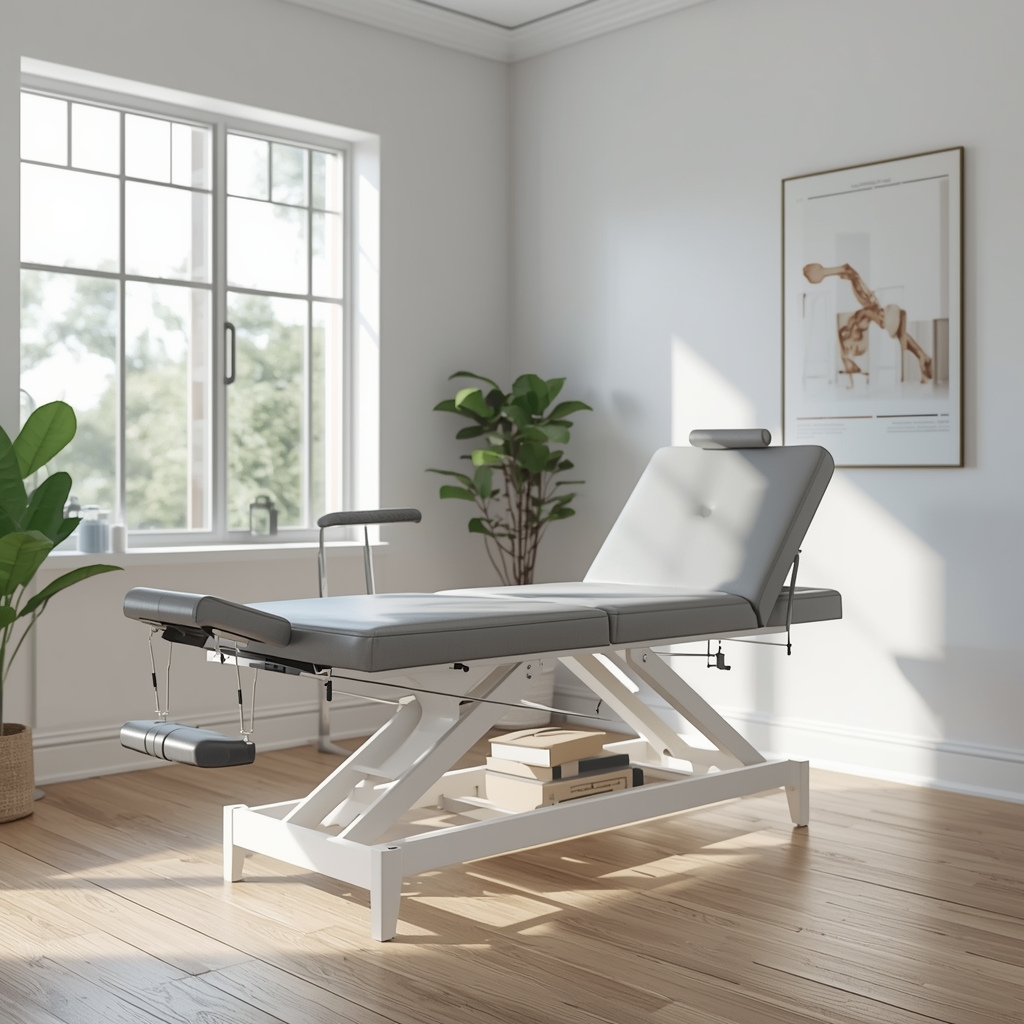
Adjustable Tables for Personalized Support
Modern chiropractic tables feature advanced adjustability, allowing practitioners to customize height, angle, and contour to suit each patient’s body type and condition. These adjustments reduce pressure points and enhance comfort during sessions. For example, tables with segmented sections enable precise positioning for spinal decompression or targeted muscle relaxation. This adaptability also streamlines treatment workflows, as practitioners can quickly modify the table to match the specific needs of each case. By prioritizing patient-specific configurations, these tables improve both comfort and the efficiency of adjustments, ensuring a more effective experience for individuals with diverse physical requirements.
Ergonomic Design for Reduced Strain
Ergonomic innovations in chiropractic tables focus on minimizing physical stress for both patients and practitioners. Features like contoured padding, adjustable headrests, and supportive lumbar zones help patients maintain optimal positioning without discomfort. For practitioners, tables with smooth, intuitive adjustment mechanisms reduce the need for excessive bending or lifting, lowering the risk of musculoskeletal strain. Some models also incorporate lightweight materials that make repositioning easier. These design improvements not only enhance patient satisfaction but also contribute to a more sustainable work environment for chiropractors, enabling them to deliver consistent care over long hours without fatigue.
Integrated Technology for Precision
Some chiropractic tables now include integrated technology to enhance treatment accuracy. Sensors and digital readouts can monitor patient positioning, providing real-time feedback to ensure proper alignment during adjustments. Others feature built-in traction systems that apply controlled force for spinal decompression, reducing manual effort for practitioners. These technological additions allow for more consistent and repeatable results, improving the overall effectiveness of care. Additionally, tables with wireless connectivity may sync with electronic health records, streamlining documentation and reducing administrative burdens. By combining traditional techniques with modern tools, these innovations support a more efficient and data-driven approach to chiropractic treatment.
Lightweight and Durable Materials
Advancements in materials science have led to chiropractic tables that balance durability with portability. High-density foam and memory foam padding provide superior comfort while maintaining structural integrity over time. Lightweight yet robust frames, often made from aluminum or reinforced composites, make tables easier to move and adjust during sessions. These materials also resist wear and tear, ensuring long-term reliability. For practices with limited space or those requiring mobility, compact designs with foldable components offer practical solutions. By prioritizing both comfort and resilience, these tables enhance the patient experience while reducing maintenance costs and downtime for practitioners.
Specialized Positioning Systems
Chiropractic tables now include specialized systems for advanced treatment techniques. For instance, tables with drop-piece mechanisms allow for controlled, low-force adjustments by slightly lowering a section of the table during manipulation. Others feature built-in traction units for decompression therapy, targeting disc-related issues with precision. These systems enable practitioners to perform complex procedures with greater ease, improving treatment outcomes. Patients benefit from reduced discomfort during adjustments, while practitioners gain tools to address a wider range of conditions. Such innovations reflect a growing emphasis on combining traditional chiropractic methods with modern engineering to deliver more effective and comfortable care.
Efficiency in Clinical Workflows
Innovations in chiropractic tables are designed to optimize clinical efficiency without compromising patient care. Features like rapid adjustment levers, modular components, and streamlined layouts help practitioners transition between patients more quickly. Tables with built-in storage compartments reduce clutter and keep essential tools within reach. Additionally, designs that accommodate multiple treatment modalities—such as combining spinal adjustments with soft tissue therapy—minimize the need for additional equipment. These efficiency gains allow chiropractors to focus more on patient interactions and less on logistical challenges. By integrating practical improvements, modern tables support a smoother, more productive practice environment for both providers and patients.













