
Introduction: The Intersection of Technology and Chiropractic Care
The rapid advancement of wearable health technology has created a fascinating dialogue within the chiropractic profession. From smartwatches that monitor heart rate variability to posture-correcting devices that vibrate when you slouch, these innovations are reshaping how patients understand and manage their own health. For chiropractors, wearable tech presents both remarkable opportunities and important considerations that deserve thoughtful examination.
As patients increasingly arrive at chiropractic clinics armed with data from their fitness trackers and health monitors, practitioners are finding new ways to integrate this information into comprehensive care plans. Understanding the chiropractic perspective on wearable health technology is essential for both practitioners and patients who seek to optimise their musculoskeletal health in the modern age.
How Chiropractors View Wearable Health Technology
The chiropractic profession has, by and large, embraced wearable technology as a valuable adjunct to clinical care. Many practitioners recognise that wearable tech chiropractic applications can bridge the gap between in-office treatments and the patient’s daily life — a domain that has historically been difficult to monitor and address.
Chiropractors often emphasise that the body tells a story through its patterns of movement, posture, and activity. Wearable devices give patients and practitioners access to chapters of that story that were previously invisible. When a patient reports chronic lower back pain, for example, a health tracker can reveal whether the individual is spending eight or more hours seated each day, confirming clinical suspicions and providing measurable data to guide treatment strategies.
That said, most experienced chiropractors are careful to position wearable technology as a complement to — rather than a replacement for — hands-on clinical assessment. No device, however sophisticated, can replicate the nuanced evaluation performed by a trained chiropractor examining spinal alignment, joint mobility, and soft tissue integrity.
The Role of Posture Wearables in Chiropractic Practice
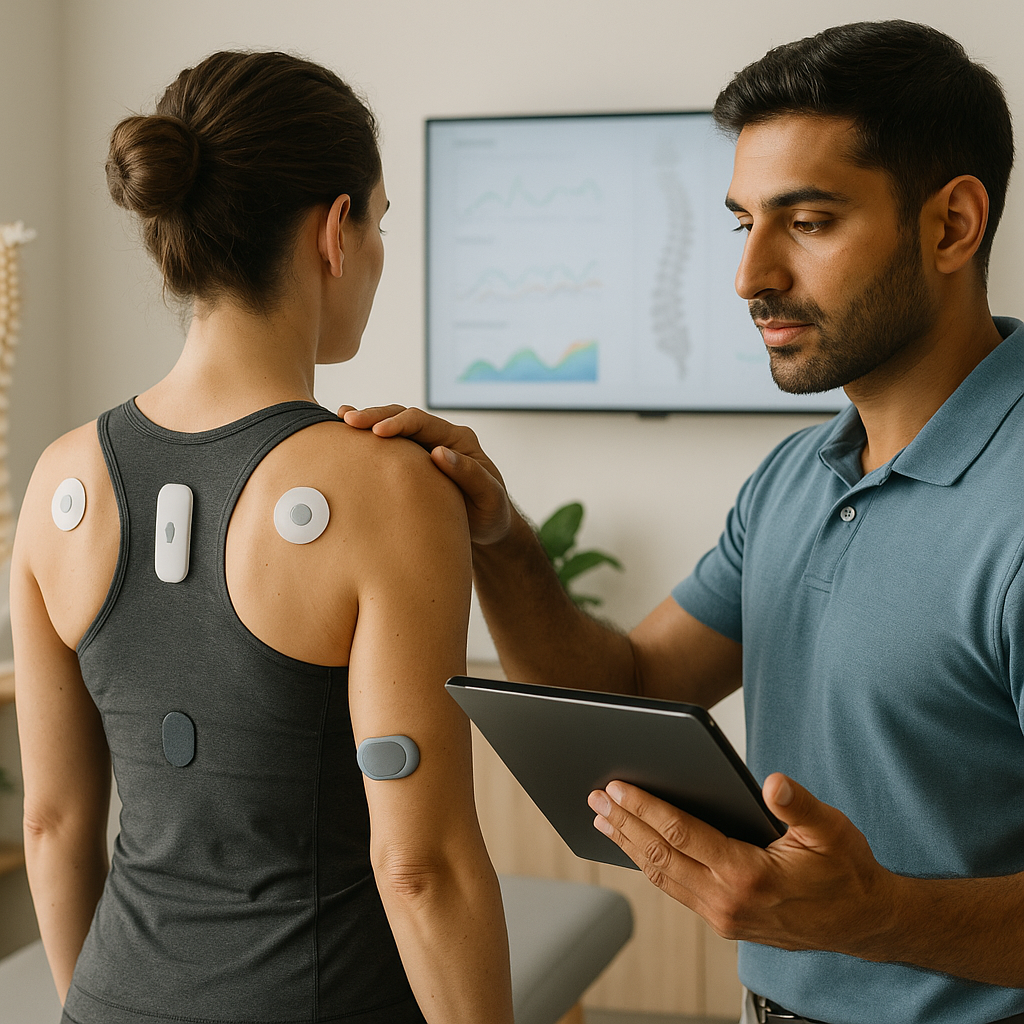
Among all wearable health technologies, posture wearables have attracted particular interest from the chiropractic community. These devices — which typically adhere to the upper back or are incorporated into garments — monitor spinal positioning throughout the day and alert the wearer when they deviate from optimal posture.
From a chiropractic standpoint, posture wearables offer several compelling benefits:
- Real-time feedback: Patients receive immediate awareness of postural deviations that they might otherwise ignore for hours at a time.
- Behavioural reinforcement: The consistent feedback loop encourages patients to build healthier postural habits, reinforcing the corrections made during chiropractic adjustments.
- Data documentation: Many posture devices generate reports that chiropractors can review, providing objective evidence of postural patterns over days or weeks.
- Patient engagement: Wearable devices tend to increase patient investment in their own recovery, which is associated with better clinical outcomes.
However, chiropractors are equally aware of the limitations of posture wearables. A device placed on the upper thoracic region, for instance, may not capture lumbar or cervical misalignments. Furthermore, if a patient’s baseline posture is already compromised, the device may be calibrated to an incorrect “neutral” position, reinforcing problematic patterns rather than correcting them. This is why chiropractors consistently recommend that posture wearables be used in conjunction with professional assessment, not independently.
Fitness Trackers and Their Value in Chiropractic Assessments
The chiropractic fitness tracker relationship is another area of growing interest. Standard fitness trackers — including popular devices that monitor steps, sleep, heart rate, and caloric expenditure — can provide chiropractors with a wealth of contextual information about a patient’s lifestyle and physical demands.
Consider the following ways in which fitness tracker data can enhance chiropractic care:
- Activity level assessment: A chiropractor treating a patient with repetitive strain injuries can use fitness tracker data to identify whether overtraining or insufficient recovery time may be contributing to the problem.
- Sleep quality analysis: Poor sleep is strongly associated with musculoskeletal pain. Sleep tracking data can help chiropractors counsel patients on sleep positioning, duration, and its relationship to their symptoms.
- Gait and movement tracking: Advanced wearables equipped with accelerometers and gyroscopes can provide insights into walking patterns, stride length, and movement asymmetries that may be relevant to a patient’s spinal health.
- Sedentary behaviour identification: Many health trackers alert users to prolonged periods of inactivity. This data allows chiropractors to identify and address lifestyle factors that exacerbate spinal compression and joint stiffness.
In clinical settings, chiropractors who integrate fitness tracker data into their assessments often report a more complete picture of their patients’ health. Rather than relying solely on a patient’s subjective recollection — which can be influenced by memory, bias, or a desire to appear compliant — objective data from a fitness tracker offers a more accurate representation of daily habits and physical demands.
Potential Concerns and Limitations: A Balanced Perspective
While the chiropractic profession is broadly supportive of wearable health technology, responsible practitioners are also forthright about the potential concerns associated with its use. A measured, evidence-informed approach is central to chiropractic philosophy, and this extends to the adoption of new technologies.
Data Accuracy and Reliability
Consumer-grade wearable devices are not held to the same standards as medical-grade instruments. Studies have shown that many popular fitness trackers contain meaningful inaccuracies, particularly when measuring metrics such as heart rate during vigorous activity, caloric burn, and sleep staging.














