
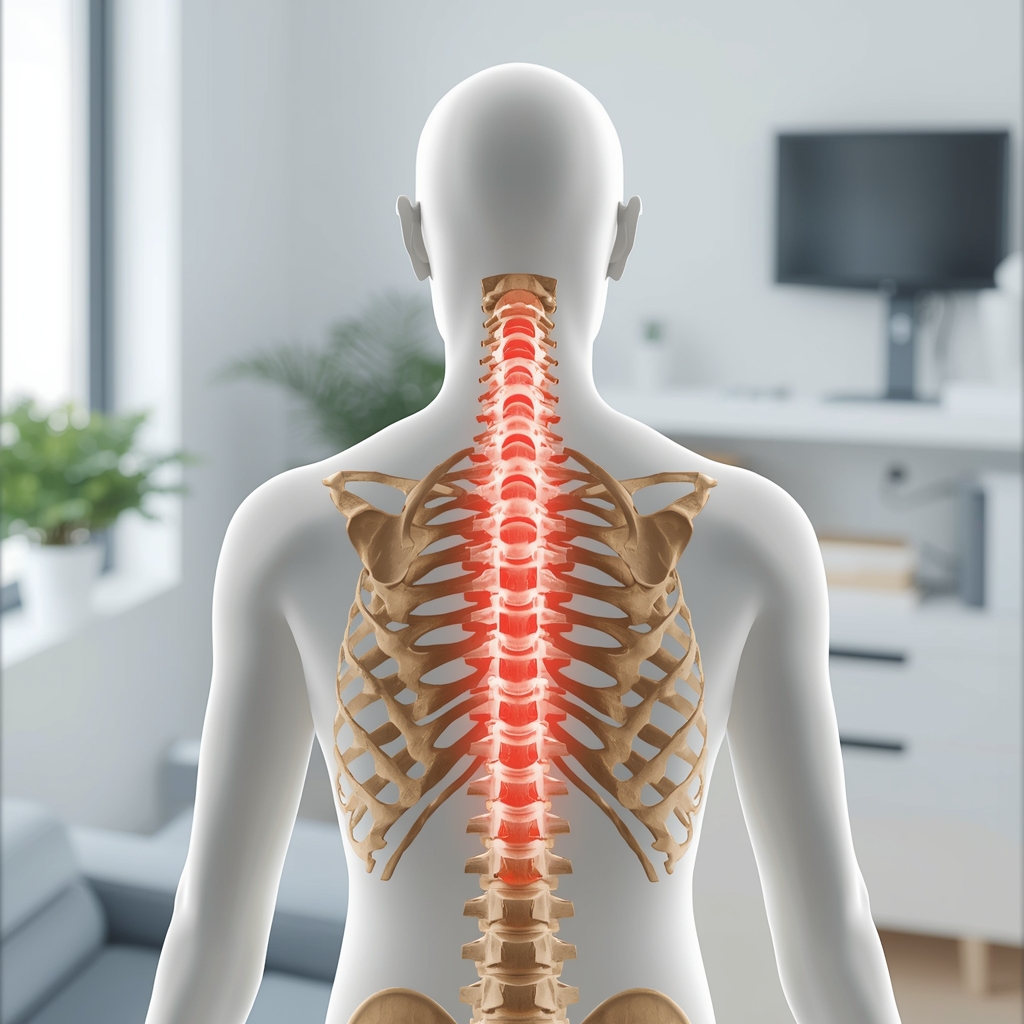
Anatomy of the Thoracic Outlet and Cervical Spine
The thoracic outlet is a narrow space between the base of the neck and the armpit, bounded by the first rib, clavicle, and scalene muscles. Key structures here include the brachial plexus (nerves to the arm) and subclavian artery/vein. The cervical spine, particularly C7-T1, plays a role in nerve pathways through this region. Misalignments or abnormal curvatures in the cervical spine can alter the space available for these structures, potentially contributing to thoracic outlet syndrome (TOS). Understanding the relationship between spinal alignment and thoracic outlet anatomy is critical for identifying mechanical causes of nerve or vascular compression in patients.
Role of the Cervical Vertebrae in Nerve Pathways
The cervical vertebrae (C5-C8) and upper thoracic spine (T1) form the vertebral column that protects and channels the brachial plexus. Each intervertebral foramen allows nerves to exit the spinal cord, and misalignments here can irritate or compress these nerves. For example, a subluxation at C7 might affect the lower brachial plexus, leading to symptoms like tingling in the hand. Chiropractors must assess these regions for mobility and alignment, as adjustments can help restore normal nerve function. However, treatment should always be guided by a qualified provider to avoid exacerbating conditions.
Thoracic Spine Alignment and Postural Influences
The upper thoracic spine (T1-T4) influences posture and rib positioning, which directly affects the thoracic outlet. Excessive kyphosis (rounded shoulders) or scoliosis can narrow this space, increasing pressure on nerves and blood vessels. A forward-head posture, often linked to cervical spine misalignment, further strains the scalene muscles and compresses the brachial plexus. Chiropractors must evaluate thoracic spine curvature and its impact on surrounding soft tissues. Correcting postural imbalances through spinal adjustments and soft tissue work may alleviate TOS symptoms, but individualized assessment is essential.
Muscular Structures Involved in TOS
Key muscles in the thoracic outlet include the scalene muscles, pectoralis minor, and levator scapulae. These can become tight or hypertonic, narrowing the space for nerves and vessels. For instance, overactive scalene muscles may compress the subclavian artery, causing vascular TOS. Chiropractors should assess muscle tone and identify trigger points that contribute to symptoms. Soft tissue techniques like myofascial release or trigger point therapy may complement spinal adjustments. However, treatment plans should be developed in collaboration with a healthcare provider to address the root causes of muscular dysfunction.
Vascular Considerations in Thoracic Outlet Syndrome
Vascular TOS involves compression of the subclavian artery or vein, often due to bony abnormalities or muscular tightness. The thoracic spine’s position affects the angle of these vessels as they pass through the thoracic outlet. For example, a downward displacement of the first rib can narrow the subclavian vein, leading to swelling or pain. Chiropractors must recognize signs of vascular compromise, such as cyanosis or pulse irregularities, and refer patients for imaging if needed. While spinal adjustments may help, vascular cases often require multidisciplinary care, highlighting the importance of thorough evaluation.
Clinical Implications for Chiropractic Treatment
Understanding spinal anatomy is foundational for diagnosing and treating TOS. Chiropractors must differentiate between neurogenic, vascular, and musculoskeletal causes to develop effective care plans. Techniques like spinal manipulation, soft tissue therapy, and postural re-education are often used, but their application depends on individual patient needs. Education on ergonomics and exercise can also support long-term recovery. Patients should consult qualified providers to determine the best approach, as TOS can have complex, multifactorial origins requiring tailored interventions.











