
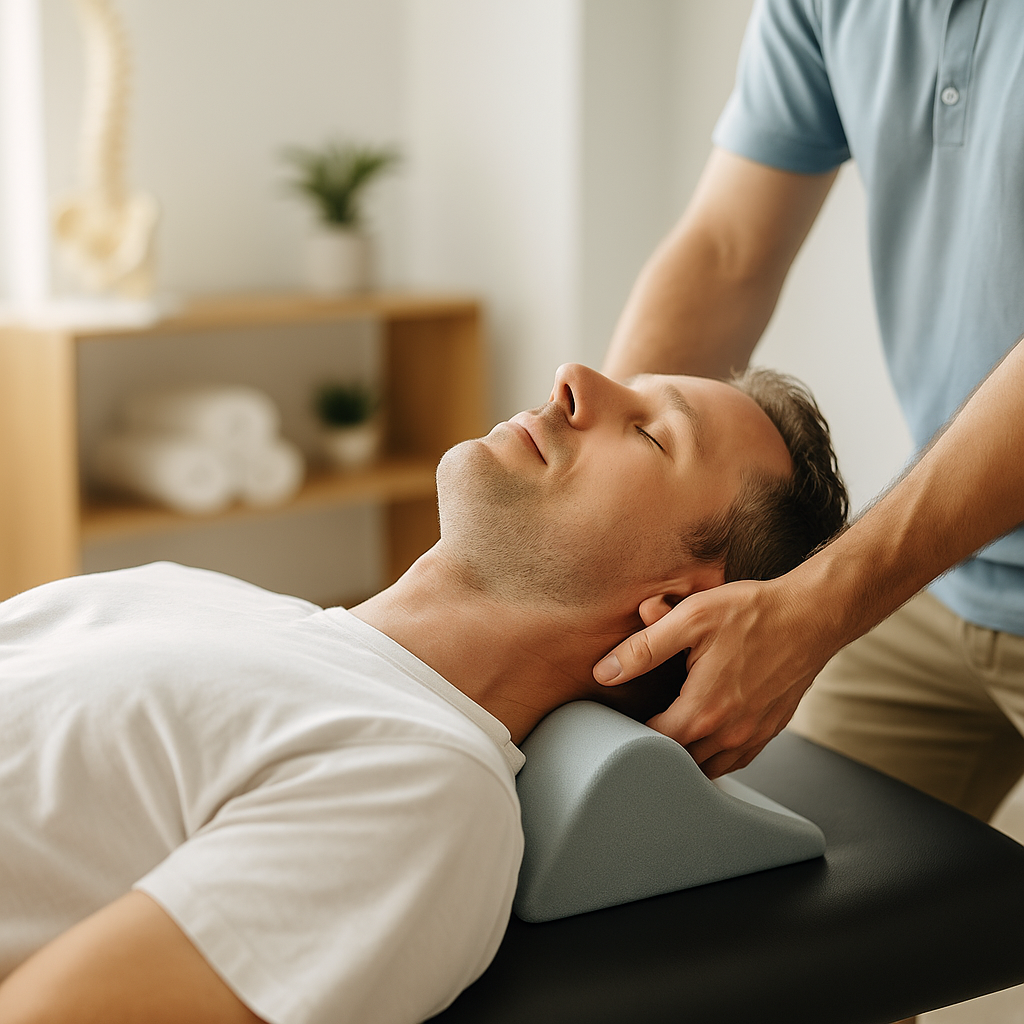
Understanding the Denneroll Orthotic: A Comprehensive Guide
If you have ever visited a chiropractor and been told that your spine has lost its natural curve, you may have been introduced to a device called a Denneroll. This spinal curve correction device has become an increasingly prominent tool in chiropractic care, offering patients a structured and evidence-informed approach to restoring proper spinal alignment. But what exactly is a Denneroll, how does it work, and who can benefit from using one? This article explores everything you need to know.
What Is a Denneroll Orthotic?
A Denneroll orthotic is a specially designed foam device used in chiropractic practice to help correct and restore the natural curves of the spine. The device was developed by Dr. Deed Harrison and his colleagues, who are recognized for their work in chiropractic biophysics (CBP) — a technique that places significant emphasis on restoring the spine’s ideal geometry and posture.
Unlike generic foam rollers or standard postural aids, the Denneroll is a precision-engineered orthotic. It is contoured in a very specific shape to apply a targeted, sustained stretch to particular regions of the spine. The goal is to gently encourage the spine back toward its optimal curvature over time through consistent, structured use.
The device is available in several variations, each designed for a specific region of the spine:
- Cervical Denneroll – designed for the neck (cervical spine)
- Thoracic Denneroll – targeting the mid-back region
- Lumbar Denneroll – focused on the lower back (lumbar spine)
Each version is tailored in size, shape, and density to suit the biomechanical demands of its corresponding spinal region.
The Cervical Denneroll: Restoring the Neck Curve
Among the various types, the cervical Denneroll is one of the most widely used and most extensively studied. The cervical spine — comprising the seven vertebrae of the neck — should naturally display a gentle backward C-shaped curve, known medically as a lordosis. This curvature plays a vital role in supporting the weight of the head, absorbing mechanical stress, and ensuring optimal function of the surrounding nerves and soft tissues.
Modern lifestyles, however, have contributed to a widespread loss of this natural cervical curve. Prolonged use of smartphones, working at desks for extended hours, and poor postural habits have led many individuals to develop what is commonly referred to as “tech neck” or forward head posture. In more severe cases, the cervical spine may become completely straight or even reverse in its curvature — a condition known as cervical kyphosis.
The cervical Denneroll is placed beneath the neck while a person lies on their back. Its curved surface acts as a fulcrum, applying a gentle traction-like force that encourages the cervical vertebrae to gradually resume their natural lordotic arc. Sessions typically last between 10 and 20 minutes, and the device is often recommended for regular home use in conjunction with in-office chiropractic treatment.
How Does Denneroll Traction Work?
Denneroll traction operates on the principle of sustained mechanical loading. Unlike intermittent or short-duration stretching, the Denneroll applies a consistent, prolonged force to the spinal tissues. This approach is grounded in the concept of viscoelastic creep — a well-established biomechanical principle that describes how biological tissues, including ligaments, intervertebral discs, and muscles, gradually deform and remodel when subjected to sustained, low-load stress over time.
In practical terms, this means that when a patient lies on a cervical or lumbar Denneroll for a recommended period each day, the connective tissues surrounding the spine are progressively stretched and encouraged to adapt. Over weeks and months of consistent use, this can lead to meaningful and measurable changes in spinal curvature, as verified through comparative X-ray analysis.
Research published in peer-reviewed chiropractic and rehabilitation journals has demonstrated statistically significant improvements in cervical lordosis among patients who used the cervical Denneroll consistently as part of a broader chiropractic biophysics treatment protocol. These findings lend credibility to the device as more than simply a comfort aid — it functions as a genuine clinical rehabilitation tool.
Who May Benefit from a Denneroll?
A Denneroll orthotic may be recommended for a variety of individuals, particularly those who present with measurable deviations from ideal spinal curvature. Conditions and circumstances that may make a person a suitable candidate for Denneroll therapy include:
- Loss of cervical lordosis or a “military neck” presentation
- Forward head posture resulting from sedentary or technology-dependent lifestyles
- Chronic neck pain and associated headaches
- Upper back stiffness and postural imbalance
- Lumbar hypolordosis or flattening of the lower back curve
- Early-stage scoliosis management (under professional supervision)
- Post-injury spinal rehabilitation
It is important to note that the Denneroll is not a standalone treatment. It is most effective when used as part of a comprehensive chiropractic care plan that may include spinal adjustments, rehabilitative exercises, postural training, and ergonomic guidance. A qualified chiropractor will assess a patient’s spinal geometry — typically through postural analysis and spinal X-rays — before recommending the appropriate type and size of Denneroll.
Is the Denneroll Safe to Use?
When used correctly and under professional guidance, the Denneroll orthotic is considered a safe and non-invasive spinal rehabilitation tool.
Additional Resources
- NIH overview of spinal manipulation
- MedlinePlus back pain resources
- NINDS low back pain information
- What is the chiropractic approach to breath work and spinal health?
- What is the chiropractic approach to gut health and the spine?
- What is the chiropractic approach to sleeping positions and spinal health?













