
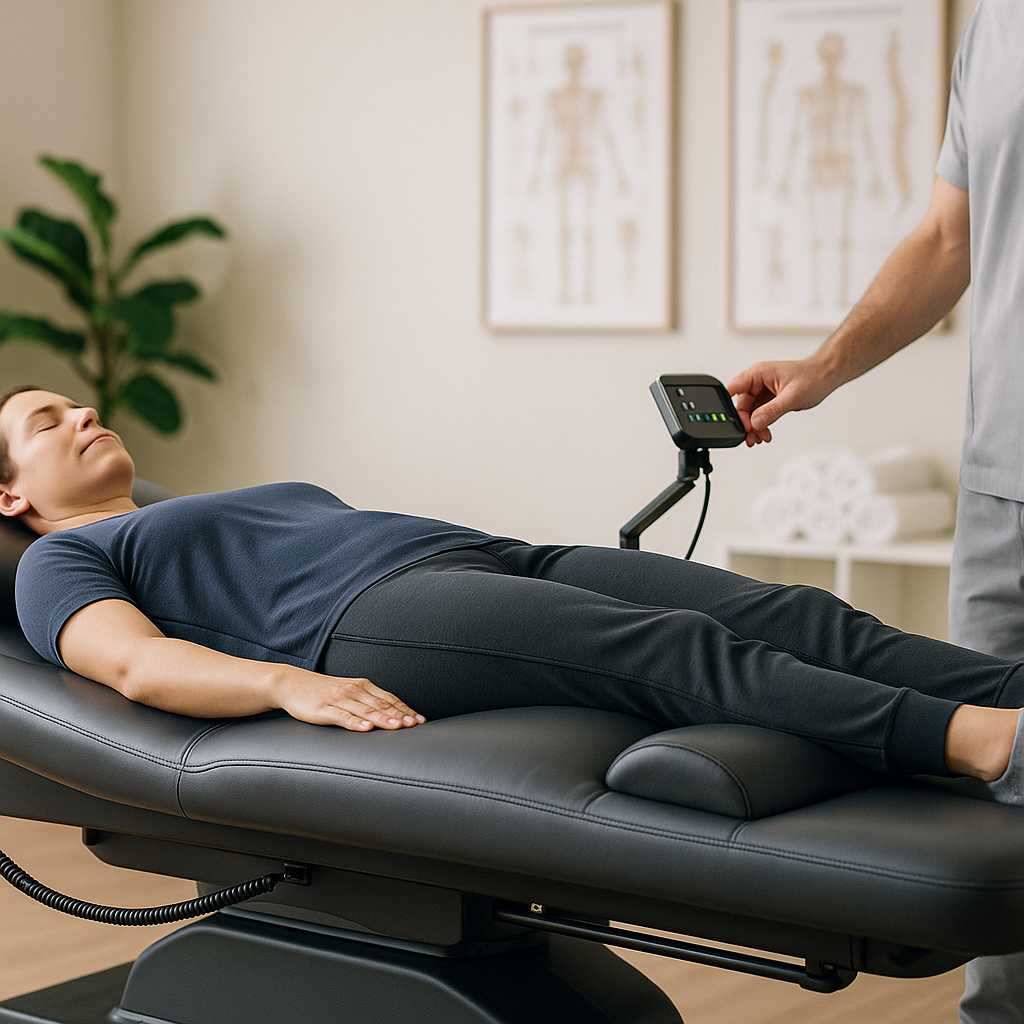
Understanding Intersegmental Traction in Chiropractic Care
If you have ever visited a chiropractic clinic, you may have noticed a specialized table that gently moves beneath you, producing a soothing rolling sensation along your spine. This device is known as an intersegmental traction table, and it plays a meaningful role in modern chiropractic treatment. Whether you are seeking relief from back pain, recovering from an injury, or simply looking to improve spinal mobility, understanding how this equipment works can help you make more informed decisions about your care.
What Is an Intersegmental Traction Table?
An intersegmental traction (IST) table is a motorized chiropractic therapy device designed to gently stretch and mobilize the spine. The table features a series of rollers positioned beneath a padded surface. As the patient lies flat on their back, these rollers travel slowly up and down the length of the spine, applying gentle pressure between each vertebral segment. This process helps to restore natural movement, reduce muscle tension, and promote circulation within the spinal joints and surrounding soft tissues.
The term “intersegmental” refers to the space between individual spinal segments — the vertebrae and the intervertebral discs that cushion them. The primary goal of this therapy is to address restrictions or stiffness within these specific areas, making it a highly targeted form of passive spinal mobilization.
How Does a Roller Table Chiropractic Device Work?
The mechanics behind a roller table chiropractic setup are relatively straightforward, yet highly effective. The patient lies in a relaxed, supine position on the padded table surface. Beneath the surface, two or three rollers — typically positioned in a wave-like pattern — begin to move in a controlled, rhythmic motion along the spine.
Most IST tables allow the chiropractor to adjust several parameters to suit the individual patient’s needs, including:
- Roller speed: The pace at which the rollers travel along the spine can be increased or decreased depending on patient comfort and therapeutic goals.
- Roller elevation: The height of the rollers can be modified to control the depth of pressure applied to the spinal segments.
- Treatment duration: Sessions typically last between five and fifteen minutes, though this varies based on the patient’s condition and the chiropractor’s clinical judgment.
- Roller positioning: Some advanced IST tables allow the rollers to be focused on specific regions of the spine, such as the lumbar, thoracic, or cervical areas.
The gentle, wave-like motion produced by the spinal traction roller creates a passive stretch across multiple spinal segments simultaneously, gradually encouraging the vertebrae to move more freely and reducing areas of hypomobility.
The Therapeutic Benefits of Intersegmental Traction
Chiropractors incorporate IST tables into their treatment protocols for a wide range of clinical reasons. The therapeutic benefits of intersegmental traction are both numerous and well-regarded within the chiropractic community.
1. Improved Spinal Mobility and Flexibility
One of the primary advantages of intersegmental traction is its ability to restore normal range of motion to spinal joints that have become restricted or stiff. By gently cycling through each vertebral segment, the rollers help loosen adhesions and reduce joint fixation, which can contribute to improved overall spinal function.
2. Increased Circulation to Spinal Discs
Unlike most tissues in the body, intervertebral discs do not have a direct blood supply. Instead, they rely on a process called imbibition — the absorption of nutrients through fluid exchange — to remain healthy. The rhythmic compression and decompression created by the IST table encourages this fluid movement, delivering vital nutrients to the disc tissue and helping to remove metabolic waste products.
3. Muscle Relaxation and Tension Relief
The gentle, repetitive motion of the rollers has a pronounced relaxing effect on the paraspinal muscles — the muscles running alongside the spine. Patients frequently report a significant reduction in muscle tightness and soreness following an IST session, making it an effective complement to manual chiropractic adjustments.
4. Reduction of Nerve Irritation
When spinal segments lose their normal alignment or mobility, nerves exiting the spine can become compressed or irritated. By restoring proper movement to these segments, intersegmental traction can help alleviate nerve-related symptoms such as radiating pain, numbness, or tingling in the extremities.
5. Enhanced Effectiveness of Chiropractic Adjustments
Many chiropractors use the IST table as a preparatory tool before performing manual spinal adjustments. The pre-treatment relaxation of the muscles and mobilization of the joints can make adjustments easier to perform, more comfortable for the patient, and potentially more effective in achieving lasting results.
Conditions Commonly Treated with an IST Table
Intersegmental traction is suitable for a broad range of musculoskeletal conditions.












