
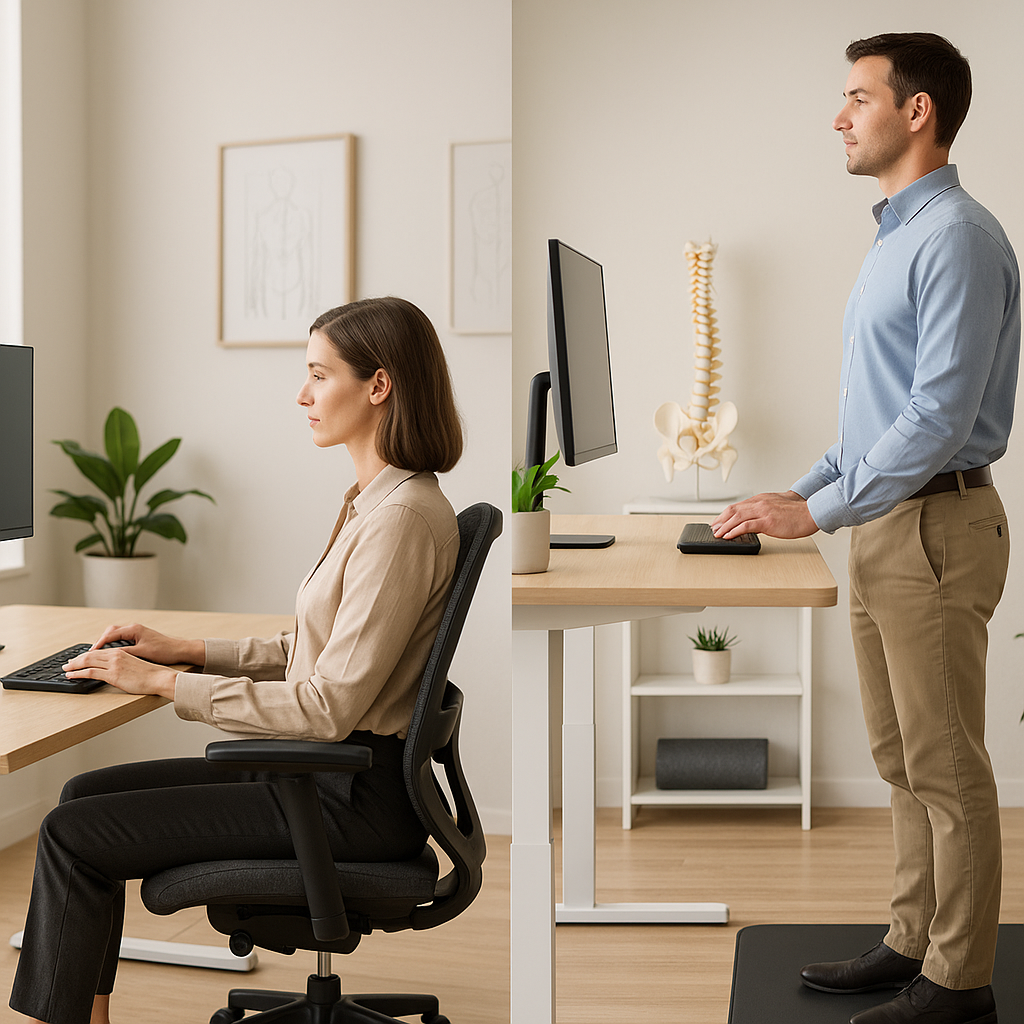
Introduction to Chiropractic Posture Guidance
Most people spend a significant portion of their day either sitting at a desk or standing for extended periods. While these activities may seem harmless, poor posture during either can lead to chronic pain, spinal misalignment, and long-term musculoskeletal issues. Chiropractors are uniquely positioned to offer expert guidance on chiropractic sitting posture and standing posture recommendations that help maintain spinal health, reduce discomfort, and improve overall well-being.
Whether you work from home, sit in an office, or spend hours on your feet, understanding and implementing proper postural habits can make a profound difference in your quality of life. This article outlines the key chiropractic recommendations for both sitting and standing, offering practical advice you can begin applying today.
Why Posture Matters: A Chiropractic Perspective
From a chiropractic standpoint, posture is not merely about appearance — it is a direct reflection of the health of your spine. When the body is properly aligned, the muscles, joints, and ligaments work in harmony, reducing unnecessary strain. Poor posture, on the other hand, places excessive pressure on the vertebral discs, compresses nerves, and weakens supporting muscles over time.
Chiropractors often see patients whose chronic neck pain, lower back pain, and headaches can be traced directly to habitual postural imbalances. By correcting these patterns early, patients can avoid more serious conditions such as herniated discs, sciatica, and degenerative joint disease. This is why ergonomic posture advice from a qualified chiropractor is an essential component of any preventative health strategy.
Chiropractic Recommendations for Proper Sitting Position
Sitting for prolonged periods is one of the most common causes of spinal dysfunction in modern society. Chiropractors emphasize that how you sit is just as important as how long you sit. Following a proper sitting position can significantly reduce the risk of developing postural-related conditions.
Key Guidelines for Correct Sitting Posture
Chiropractors recommend the following when seated:
- Keep both feet flat on the floor: Avoid crossing your legs or tucking your feet beneath your chair. Both feet should rest comfortably flat on the floor or on a footrest to promote even weight distribution across the hips and pelvis.
- Maintain a 90-degree angle at the knees and hips: Your knees should be at approximately the same height as your hips, or slightly lower. This position reduces strain on the lumbar spine and promotes neutral pelvic alignment.
- Support the lower back: The lumbar region of the spine has a natural inward curve. Use a lumbar support cushion or an ergonomically designed chair to maintain this curve. Avoid slouching or rounding the lower back.
- Sit back in your chair: Position yourself so that your back is fully supported by the chair backrest. Perching on the edge of the seat increases strain on the lower back and spinal muscles.
- Keep your shoulders relaxed and level: Avoid hunching or raising your shoulders toward your ears. Shoulders should be relaxed and pulled slightly back to open the chest and promote healthy thoracic alignment.
- Position the screen at eye level: For those working at a computer, the top of the monitor should be at or slightly below eye level. This prevents the forward head posture that is a leading cause of cervicogenic headaches and neck strain.
- Keep your head aligned with your spine: Your ears should be directly above your shoulders, not jutting forward. For every inch the head moves forward from its neutral position, the perceived weight on the cervical spine can increase by up to ten pounds.
The Role of Chair Ergonomics in Sitting Posture
Chiropractors frequently advise patients to invest in a high-quality ergonomic chair. A well-designed chair should offer adjustable seat height, lumbar support, armrests, and seat depth. Armrests should be set at a height where your elbows can rest comfortably at approximately 90 degrees, reducing tension in the shoulders and upper trapezius muscles.
Additionally, the angle of the seat itself matters. A slightly forward-tilting seat can encourage a more neutral pelvic position and reduce the tendency to slouch. These ergonomic considerations are not merely comfort features — they are integral to maintaining the spine’s natural curvature throughout the workday.
How Long Should You Sit Without a Break?
Even with perfect chiropractic sitting posture, remaining stationary for too long is detrimental to spinal health. Chiropractors generally recommend taking a brief break from sitting every 30 to 45 minutes. This may involve standing up, walking briefly, or performing gentle stretching exercises. Movement encourages circulation, reduces muscle fatigue, and helps maintain the nutrient supply to spinal discs, which are avascular structures that depend on movement to absorb nutrients.
Chiropractic Recommendations for Standing Posture
Standing for extended periods without proper posture is equally problematic. Workers in retail, healthcare, hospitality, and manufacturing, for example, are particularly vulnerable to the effects of poor standing posture. A standing posture chiropractor consultation can help individuals in these professions develop habits that protect the spine, hips, knees, and feet.
Key Guidelines for Correct Standing Posture
Chiropractors recommend the following when standing:
- Stand with feet shoulder-width apart: This stance creates a stable base of support and distributes body weight evenly between both legs, reducing stress on individual joints.
Additional Resources














