What to Do in the First 10 Minutes After a Car Accident — The Legal Checklist
The first 10 minutes after a car accident can feel confusing, stressful, and fast. What you do in that short window may affect your safety, the police report, insurance communications, and any future injury or property damage claim. The goal is not to argue about fault or solve everything at the scene. The goal is to get people safe, contact emergency help when needed, preserve basic facts, and avoid statements or actions that could create problems later. This checklist is written in plain English to help you stay organized after a crash. It is general information, not legal or medical advice. If you are hurt, unsure about symptoms, or facing a claim issue, contact qualified local medical and legal professionals for guidance based on your situation.
Minute 1: Pause, Breathe, and Check for Immediate Danger
Right after impact, take a moment to orient yourself. If you are driving, put the vehicle in park, turn on your hazard lights, and check whether you or your passengers are in immediate danger. Look for smoke, fire, leaking fluids, broken glass, traffic movement, or a vehicle positioned where another collision could happen.
Before getting out, make sure it is reasonably safe to open the door. On a highway or busy road, stepping into traffic can be more dangerous than staying inside with your seat belt on. If anyone appears seriously injured, avoid moving them unless there is an immediate threat such as fire or oncoming traffic. When in doubt, wait for emergency responders.
Minutes 1 to 3: Check for Injuries and Call 911 When Appropriate
Ask yourself and passengers simple questions: Are you bleeding? Can you move normally? Do you feel dizzy, confused, numb, short of breath, or in significant pain? Some injuries are obvious right away, while others appear later as adrenaline wears off. Neck pain, back pain, headaches, shoulder pain, tingling, or stiffness can develop over hours or days.
Call 911 if anyone may be injured, if vehicles are blocking traffic, if there is major damage, if a driver appears impaired, if someone leaves the scene, or if local law requires a report. Even in a seemingly minor crash, a police response can create an official record. Tell the dispatcher your location, the number of vehicles involved, whether anyone appears injured, and whether there are road hazards.
Minutes 3 to 5: Move to Safety if You Can Do So Safely
If the vehicles are drivable and local rules allow it, move them out of active traffic to a shoulder, parking lot, or nearby safe area. If the vehicles cannot be moved, keep hazard lights on and stay away from traffic. Use cones, flares, or warning triangles only if you already have them and can place them without putting yourself at risk.
Moving to safety does not mean you are accepting fault or changing the story. It simply reduces the chance of another crash. If you do move the vehicles, take quick photos first if it is safe to do so. A few wide-angle pictures showing where the cars came to rest can be useful later.
Minutes 5 to 7: Exchange the Right Information
Exchange basic information with the other driver or drivers. This usually includes full name, phone number, address, driver’s license number, license plate number, insurance company, policy number, and vehicle make, model, and color. If the driver is not the vehicle owner, note the owner’s name if available.
Keep the conversation calm and brief. Do not argue, accuse, or guess about what happened. Avoid statements such as “I’m sorry, it was my fault,” or “I didn’t see you.” Polite concern is fine, but fault is often determined later using evidence, traffic laws, witness statements, and insurance investigation. If the other driver is hostile or refuses to share information, step away and wait for law enforcement.
Minutes 6 to 9: Photograph and Record the Scene
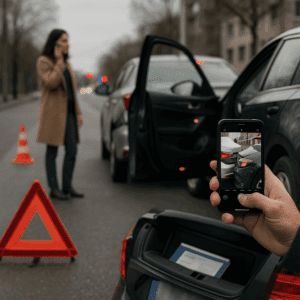
If you can do so safely, use your phone to document the scene. Take wide photos of the road, intersection, traffic signals, lane markings, skid marks, debris, weather conditions, and vehicle positions. Then take closer photos of vehicle damage, license plates, insurance cards, driver’s licenses, and any visible injuries, if appropriate and respectful.
Also photograph details that may disappear quickly: construction signs, blocked views, potholes, broken traffic lights, wet pavement, or damaged guardrails. If there are witnesses, ask for their names and contact information. You do not need to interview them in detail. A simple note that they saw the crash and are willing to be contacted can help later.
Minute 9 to 10: Make Short Notes Before Details Fade
As soon as you have a safe moment, write or record a short note on your phone. Include the time, location, direction you were traveling, approximate speed, weather, traffic conditions, and what you remember seeing before the impact. Keep it factual and simple. For example: “I was traveling north on Main Street. The light was green. The other vehicle entered from the right.”
Memory can change under stress, and small details may fade quickly. A short, time-stamped note can help you stay consistent when speaking with police, insurers, or professionals later. Avoid adding speculation such as “they must have been texting” unless you actually saw it.
What Not to Do at the Accident Scene
Do not leave the scene until it is legally appropriate to do so. Leaving too early can create serious legal and insurance problems, especially if someone was injured or property was damaged. Do not throw away damaged items, delete photos, or repair the vehicle before documenting the damage. Do not post about the crash on social media, because comments, photos, and location tags may be reviewed later.
Do not minimize injuries just to be polite. Saying “I’m fine” may feel natural in the moment, but it may not be accurate. A safer phrase is, “I’m not sure yet.” If you have pain or symptoms, consider being evaluated by a qualified local healthcare professional. For legal questions about fault, statements, deadlines, or insurance forms, consider contacting a licensed attorney in your area.
How to Speak With Police at the Scene
When an officer arrives, provide your license, registration, insurance information, and a factual description of what you observed. Keep your statement short and accurate. If you do not know an answer, say so. Guessing about speed, distance, or timing can create confusion later.
Ask how to obtain the accident report or report number. The police report may include driver information, insurance details, citations, diagrams, and witness names. It is not always the final word on fault, but it is often an important document for insurance and claim review.
Why the First 10 Minutes Matter for Insurance and Claims
Insurance companies often look closely at early information: photos, police reports, statements, injuries reported at the scene, and the timing of medical evaluation. Clear documentation can help reduce disputes about where the crash happened, what vehicles were involved, and what damage occurred. It can also help connect later symptoms to the collision when medically appropriate.
At the same time, the first 10 minutes are not about building a courtroom case. They are about preserving facts. Many people make mistakes because they feel pressure to explain, apologize, or settle the matter immediately. A better approach is to stay calm, gather information, and let the proper process unfold.
After You Leave the Scene: Next Practical Steps
Once you are away from the crash scene, notify your insurance company within the timeframe required by your policy. Provide basic facts, but be cautious about recorded statements, broad medical releases, or quick settlement offers before you understand the full situation. Policies and state laws vary, so local professional guidance can be important.
Monitor your health over the next several days. Pain, stiffness, headaches, dizziness, sleep changes, or numbness should not be ignored. Contact a qualified local healthcare provider, such as a physician, chiropractor, physical therapist, or emergency department, depending on your symptoms and urgency. Keep copies of medical visits, repair estimates, towing bills, rental car receipts, and all claim-related communications.
Key Takeaways
- In the first 10 minutes after a car accident, focus on safety, injuries, 911, and preventing another crash.
- Exchange information, take photos, gather witness contacts, and make short factual notes while details are fresh.
- Avoid admitting fault, guessing, arguing, posting online, or minimizing injuries before you know the full picture.
A car accident can leave you shaken, but a simple checklist can help you make better decisions in the first 10 minutes. Check for danger, call for help when needed, move to safety if possible, exchange information, document the scene, and keep your words factual. These steps can protect your safety and preserve important information for insurance, healthcare, and any legal review that may follow. Because every crash is different, speak with qualified local medical and legal professionals for advice tailored to your injuries, location, and claim circumstances.
Additional Resources
- NIH overview of spinal manipulation
- MedlinePlus back pain resources
- NINDS low back pain information
- What Happens After a Boise Car Accident With an Uninsured At-Fault Driver
- What Legal Actions Can Be Taken After a Los Angeles Bus Crash?
- When to Contact a Rideshare Accident Lawyer After a Crash