
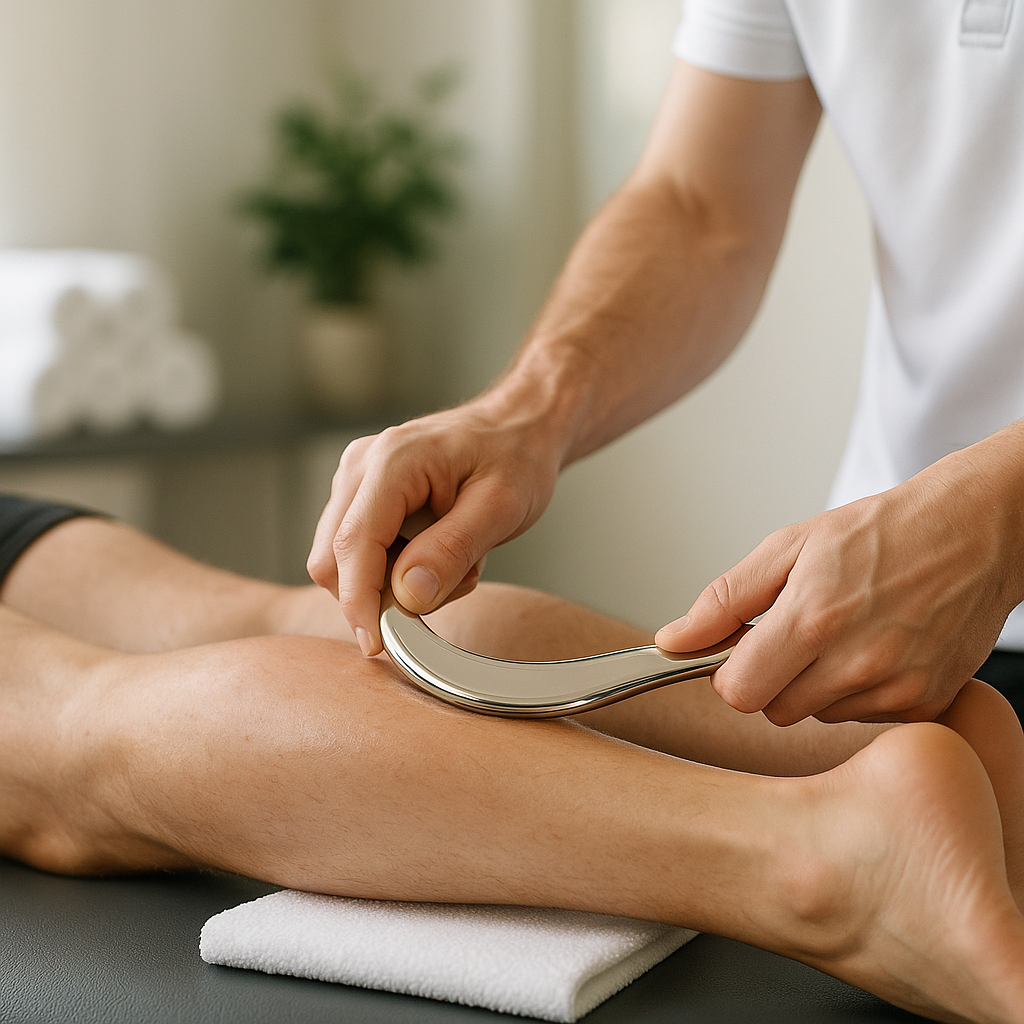
Understanding the Graston Technique: A Comprehensive Guide
If you have ever experienced chronic muscle pain, lingering sports injuries, or stubborn scar tissue that simply refuses to heal properly, you may have heard a healthcare provider mention the Graston Technique. This specialized form of manual therapy has gained considerable recognition in rehabilitation and chiropractic settings over the past few decades. But what exactly is it, and how does it work? This article explores the fundamentals of Graston instrument therapy, its clinical applications, and what patients can expect during treatment.
What Is the Graston Technique?
The Graston Technique is a patented form of instrument assisted soft tissue mobilization (IASTM) that uses specially designed stainless steel tools to detect and treat areas of soft tissue dysfunction. Originally developed in the early 1990s by athlete David Graston, who sought a solution for his own knee injury, the technique has since evolved into a widely recognized clinical protocol used by physical therapists, chiropractors, athletic trainers, and other licensed healthcare professionals.
At its core, the technique involves gliding these precision-crafted instruments across the skin to identify and address restrictions within the fascia, muscles, tendons, and ligaments. The tools are contoured in specific shapes to fit various body regions, allowing practitioners to target tissue with a high degree of accuracy. Unlike traditional manual therapy performed solely with the hands, Graston instrument therapy amplifies the clinician’s ability to detect subtle changes in tissue texture and density.
How Does Instrument Assisted Soft Tissue Mobilization Work?
To understand how IASTM chiropractic and rehabilitation practices apply this technique, it is important to first understand what happens to soft tissue following injury or prolonged stress. When muscles, tendons, or ligaments are damaged, the body responds by producing collagen fibers to repair the affected area. In many cases, this process results in disorganized scar tissue formation, which lacks the structural alignment of healthy tissue.
This disorganized scar tissue can cause:
- Reduced range of motion in affected joints
- Chronic pain or tenderness at the site of injury
- Muscle weakness and altered movement patterns
- Recurrent injuries due to compromised tissue integrity
- Fascial adhesions that restrict normal tissue mobility
The Graston Technique works as a scar tissue breakdown technique by introducing controlled microtrauma to the dysfunctional tissue. This stimulates a localized inflammatory response, which in turn signals the body to reabsorb the disorganized collagen and replace it with properly aligned fibers. The result is improved tissue mobility, reduced pain, and enhanced functional movement over the course of treatment.
The Specialized Instruments Used in Graston Therapy
One of the distinguishing features of the Graston Technique is the use of six stainless steel instruments, each designed with a specific purpose and body region in mind. These tools are manufactured to exacting standards and are recognized for their durability and precision. They range in size and curvature to accommodate treatment of areas such as the spine, extremities, and smaller joints like the wrist or ankle.
The beveled edges of the instruments allow clinicians to perform several types of strokes, including:
- Scanning strokes — used to identify areas of tissue restriction or fibrosis
- Treatment strokes — applied with greater pressure to mobilize and break down adhesions
- Fanning strokes — used over broader surface areas to address diffuse restrictions
When the instrument passes over an area of dysfunction, both the clinician and often the patient can feel or hear a distinctive grating sensation. This is a hallmark of the Graston Technique and serves as a diagnostic indicator of where treatment attention is most needed.
Common Conditions Treated with the Graston Technique
The versatility of Graston instrument therapy makes it applicable to a broad range of musculoskeletal conditions. It is particularly well-suited for chronic conditions that have not responded adequately to conventional treatment approaches. Some of the most frequently treated conditions include:
- Plantar fasciitis — chronic heel pain caused by inflammation of the plantar fascia
- Carpal tunnel syndrome — compression of the median nerve at the wrist
- IT band syndrome — lateral knee pain common among runners and cyclists
- Rotator cuff tendinopathy — degeneration or inflammation of shoulder tendons
- Achilles tendinosis — chronic degeneration of the Achilles tendon
- Cervicogenic headaches — headaches originating from cervical spine dysfunction
- Post-surgical scar tissue — restrictions resulting from surgical procedures
- Lumbar strain — lower back pain associated with muscular or fascial injury
- Tennis elbow and golfer’s elbow — lateral and medial epicondylitis
In chiropractic settings, IASTM chiropractic care often combines the Graston Technique with spinal manipulation, corrective exercises, and other adjunct therapies to provide a comprehensive and integrative approach to recovery.
What to Expect During a Graston Treatment Session
For patients considering this form of therapy, understanding the treatment process can help set appropriate expectations and reduce any apprehension. A typical Graston session generally follows a structured protocol.
1. Initial Assessment
Before treatment begins, the clinician conducts a thorough evaluation to identify the area of dysfunction, assess range of motion, and determine the most appropriate course of action.












