
Understanding Adhesions and Their Impact on the Body
Adhesions are abnormal bands of fibrous tissue that form between internal organs, muscles, and connective tissues, often as a result of injury, surgery, inflammation, or repetitive stress. These dense, scar-like structures can restrict movement, compress nerves, reduce circulation, and contribute to chronic pain that significantly diminishes quality of life. When left untreated, adhesions can progressively worsen, leading to functional limitations that affect everyday activities.
While adhesions were historically managed primarily through surgical intervention, modern chiropractic care offers a non-invasive, evidence-informed alternative that has gained considerable recognition in the healthcare community. Understanding how chiropractors approach adhesion treatment provides valuable insight into why an increasing number of patients are seeking chiropractic solutions for this complex musculoskeletal condition.
How Adhesions Develop in Connective Tissue
To appreciate the chiropractic approach, it is essential to understand how adhesions form in the first place. When the body sustains tissue damage, whether from acute trauma, surgical procedures, or chronic overuse, the natural healing process involves the production of collagen fibres. Under ideal conditions, these fibres align properly and integrate seamlessly with surrounding tissue.
However, when healing is compromised — due to poor circulation, inadequate rehabilitation, or excessive stress on the tissue — collagen fibres can become disorganised, layering upon one another in a haphazard fashion. This irregular arrangement creates what is commonly referred to as a tissue adhesion: a dense, inelastic region that adheres to neighbouring structures and impedes normal movement patterns.
Common sites for adhesion formation include:
- The lumbar spine and surrounding musculature
- The shoulder complex and rotator cuff region
- The hip flexors and iliotibial band
- The plantar fascia and Achilles tendon
- The cervical spine and suboccipital muscles
- Post-surgical sites, including the abdomen and pelvis
The Chiropractic Philosophy Behind Adhesion Treatment
Chiropractic medicine is grounded in the principle that the body’s structural integrity directly influences its neurological and physiological function. When adhesions develop, they disrupt the biomechanical balance of the musculoskeletal system, placing undue stress on joints, altering movement mechanics, and potentially irritating the nervous system. Chiropractors view adhesion treatment not merely as symptom management, but as a restoration of the body’s inherent capacity to move freely and heal efficiently.
Rather than treating adhesions in isolation, a qualified chiropractor conducts a thorough assessment to identify the root cause of adhesion formation. This comprehensive evaluation typically includes postural analysis, range-of-motion testing, orthopedic examinations, and palpation of affected tissues. The findings guide a tailored treatment plan that addresses both the adhesion itself and the underlying biomechanical dysfunctions contributing to its development.
Tissue Adhesion Release: Primary Chiropractic Techniques
Tissue adhesion release is at the core of the chiropractic approach to managing fibrous restrictions. Several specialised techniques are employed by trained chiropractors to break down adhesive tissue, restore pliability, and promote optimal healing. These methods are distinguished by their precision, therapeutic depth, and emphasis on functional restoration.
Active Release Technique (ART)
Active Release Technique is one of the most widely recognised and clinically validated methods for adhesion breakdown in chiropractic practice. This soft tissue system involves the precise application of tension to the affected tissue while the patient actively moves the body part through a specific range of motion. The combination of manual pressure and patient movement creates a shearing force that effectively breaks down adhesive bonds and restores normal tissue glide.
ART is particularly effective for treating adhesions in muscles, tendons, ligaments, fascia, and nerves. It is commonly used for conditions such as carpal tunnel syndrome, shoulder impingement, plantar fasciitis, and lower back pain — all of which frequently involve underlying adhesion formation.
Instrument-Assisted Soft Tissue Mobilisation (IASTM)
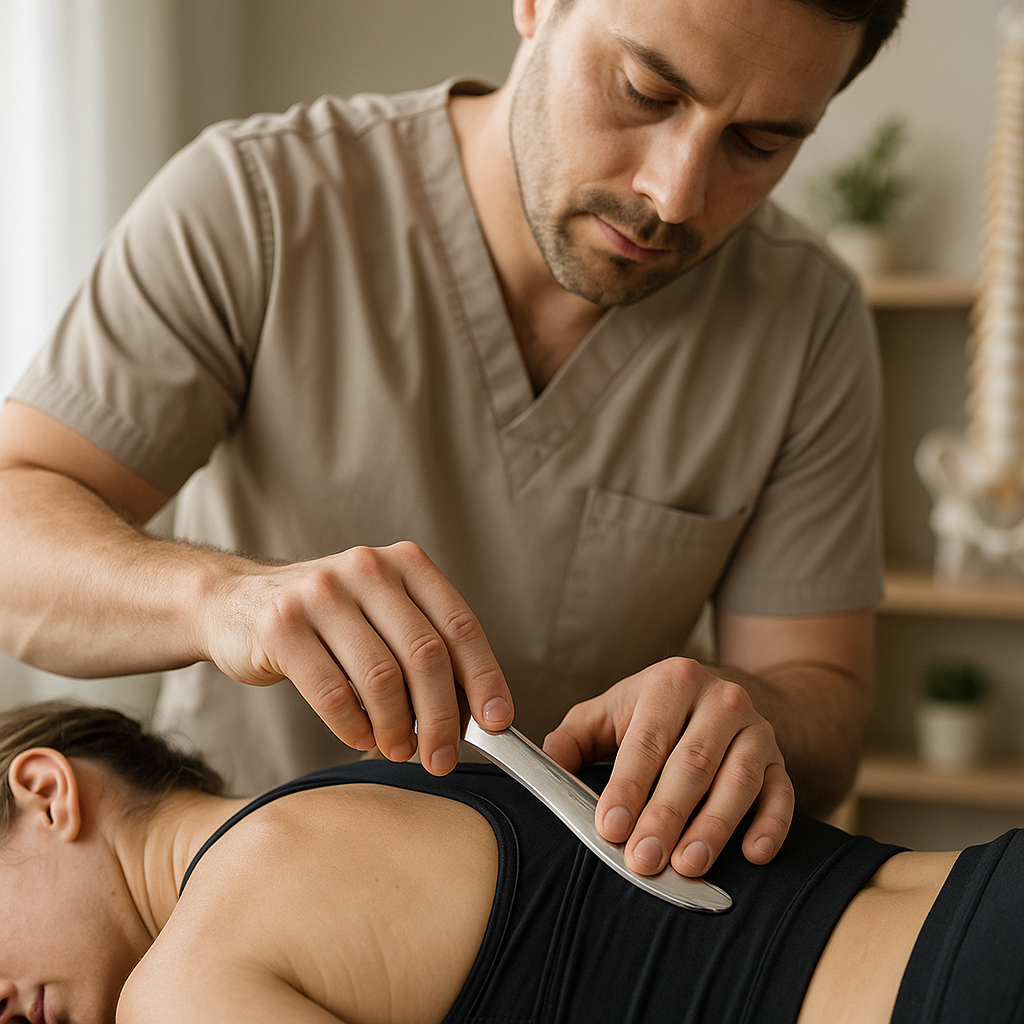
Instrument-Assisted Soft Tissue Mobilisation represents a significant advancement in fascial adhesion therapy. Using specialised stainless steel tools with bevelled edges, chiropractors apply controlled microtrauma to affected tissues, which stimulates the body’s natural healing response. This neurological signal encourages the remodelling of disordered collagen fibres and facilitates the breakdown of scar tissue and adhesions.
Techniques such as Graston Technique and FAKTR (Functional and Kinetic Treatment with Rehabilitation) fall under the IASTM umbrella and have demonstrated strong clinical outcomes in both acute and chronic adhesion-related conditions. IASTM is particularly advantageous for treating superficial fascial adhesions and scar tissue resulting from surgical procedures or repetitive strain injuries.
Myofascial Release Therapy
Myofascial release is a hands-on technique that applies sustained, gentle pressure into the fascial network — the interconnected web of connective tissue that envelops every muscle, organ, and structure in the body. Because fascia exists as a continuous three-dimensional matrix, restrictions in one area can create tension and dysfunction throughout the entire system.
Fascial adhesion therapy through myofascial release aims to elongate and soften restricted fascial tissue, improve hydration within the extracellular matrix, and restore the natural elasticity of the connective tissue. This approach is particularly beneficial for patients with widespread musculoskeletal tension, chronic postural dysfunction, or post-surgical scarring.
Spinal Manipulation and Joint Mobilisation
While spinal manipulation is classically associated with joint adjustment, its role in adhesion treatment chiropractor protocols should not be underestimated. Joint restrictions often develop in conjunction with soft tissue adhesions, as the body compensates for reduced mobility by altering its movement patterns.













