
Understanding Scar Tissue and Its Impact on the Body
When the body sustains an injury, whether from surgery, trauma, or repetitive strain, it initiates a natural healing process that often results in the formation of scar tissue. While this biological response is essential for recovery, the resulting fibrous tissue can cause significant long-term complications. Scar tissue is generally less flexible and more rigid than healthy tissue, which can restrict movement, compress nerves, and create chronic pain patterns that affect a person’s quality of life.
Many patients are unaware that a scar tissue chiropractor can play a pivotal role in addressing these complications. Chiropractic care offers a range of non-invasive, evidence-informed techniques specifically designed to break down adhesions, restore mobility, and improve the overall function of affected tissues. Understanding how these treatments work — and what to expect — can help patients make informed decisions about their care.
What Is Scar Tissue and How Does It Form?
Scar tissue, also known as fibrosis in clinical terminology, forms as a direct response to tissue damage. When cells in muscles, tendons, ligaments, or fascia are torn or injured, the body replaces them with collagen fibers. Unlike the original tissue, these collagen fibers are laid down in a disorganized, overlapping pattern rather than in the smooth, parallel alignment found in healthy tissue.
Over time, these fibers can bind together and adhere to surrounding structures, creating what are commonly referred to as adhesions. These adhesions can tether muscles to one another, restrict joint movement, and place abnormal tension on nerves and blood vessels. Fibrosis chiropractic treatment specifically addresses these adhesions to restore normal tissue function and relieve associated pain.
Common causes of problematic scar tissue include:
- Surgical incisions and post-operative healing
- Sports injuries and muscle tears
- Repetitive strain injuries
- Whiplash and motor vehicle accidents
- Sprains and ligament damage
- Chronic inflammatory conditions
The Role of a Chiropractor in Scar Tissue Management
Chiropractors are trained musculoskeletal specialists with a comprehensive understanding of soft tissue mechanics, joint function, and the nervous system. Their role in managing scar tissue goes well beyond spinal adjustments. Through a combination of manual therapies, instrument-assisted techniques, and rehabilitative exercises, chiropractors can effectively address fibrotic tissue buildup and restore optimal movement patterns.
A thorough assessment is always the starting point. A skilled scar tissue chiropractor will evaluate the location, extent, and functional impact of adhesions before designing an individualized treatment plan. This assessment typically includes postural analysis, range-of-motion testing, and palpation of the affected tissues to identify areas of restriction and tenderness.
Key Chiropractic Treatments for Scar Tissue
1. Instrument-Assisted Soft Tissue Mobilization (IASTM)
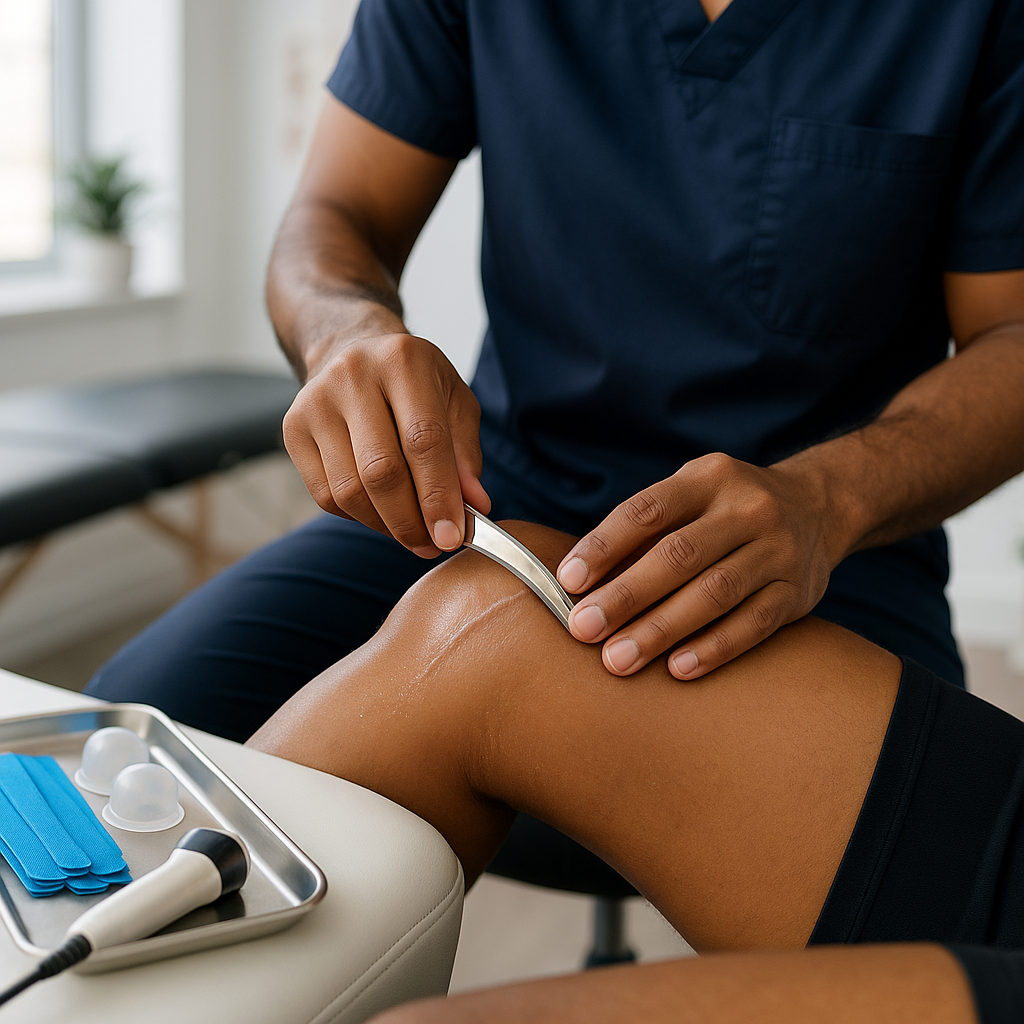
Scar tissue mobilization using instrument-assisted techniques is one of the most widely used approaches in modern chiropractic care. Methods such as the Graston Technique or similar IASTM protocols involve the use of specially designed stainless steel instruments to detect and treat fibrotic tissue restrictions.
The instruments are applied with controlled pressure along the affected area, allowing the practitioner to identify areas of tissue irregularity through tactile feedback. The mechanical stimulation created by these tools promotes microtrauma to the dysfunctional tissue, which in turn triggers the body’s natural healing cascade. This leads to the remodeling of collagen fibers into a more organized, functional structure.
IASTM has demonstrated clinical effectiveness in treating a wide range of conditions associated with scar tissue, including:
- Plantar fasciitis
- Carpal tunnel syndrome
- IT band syndrome
- Rotator cuff injuries
- Post-surgical adhesions
- Achilles tendinopathy
2. Active Release Technique (ART)
Active Release Technique is a patented, movement-based soft tissue system that targets muscles, tendons, ligaments, fascia, and nerves. It is among the most effective forms of adhesion breakdown treatment currently available in chiropractic practice. ART combines precise manual pressure with specific patient movements to stretch and release entrapped structures.
During an ART session, the chiropractor applies a contact point to the affected tissue while guiding the patient through a range of motion that elongates the targeted structure. This combination of compression and movement mechanically disrupts adhesions between tissue layers and restores normal sliding motion between muscles and surrounding fascia.
ART is particularly well-suited for athletes and individuals with occupational injuries, as it addresses both the primary adhesion and any compensatory movement patterns that may have developed as a result of the restriction.
3. Myofascial Release Therapy
Myofascial release is a manual therapy technique that focuses on the fascia — the intricate web of connective tissue that surrounds and supports every muscle, organ, and structure in the body. When scar tissue or adhesions develop within the fascial network, they can create widespread pain and dysfunction that extends well beyond the original injury site.
Through sustained, gentle pressure applied in specific directions, the chiropractor works to elongate and release restrictions within the fascial system. This form of fibrosis chiropractic treatment is particularly effective for patients with widespread tightness, chronic pain syndromes, or conditions such as fibromyalgia that involve diffuse fascial involvement.













