
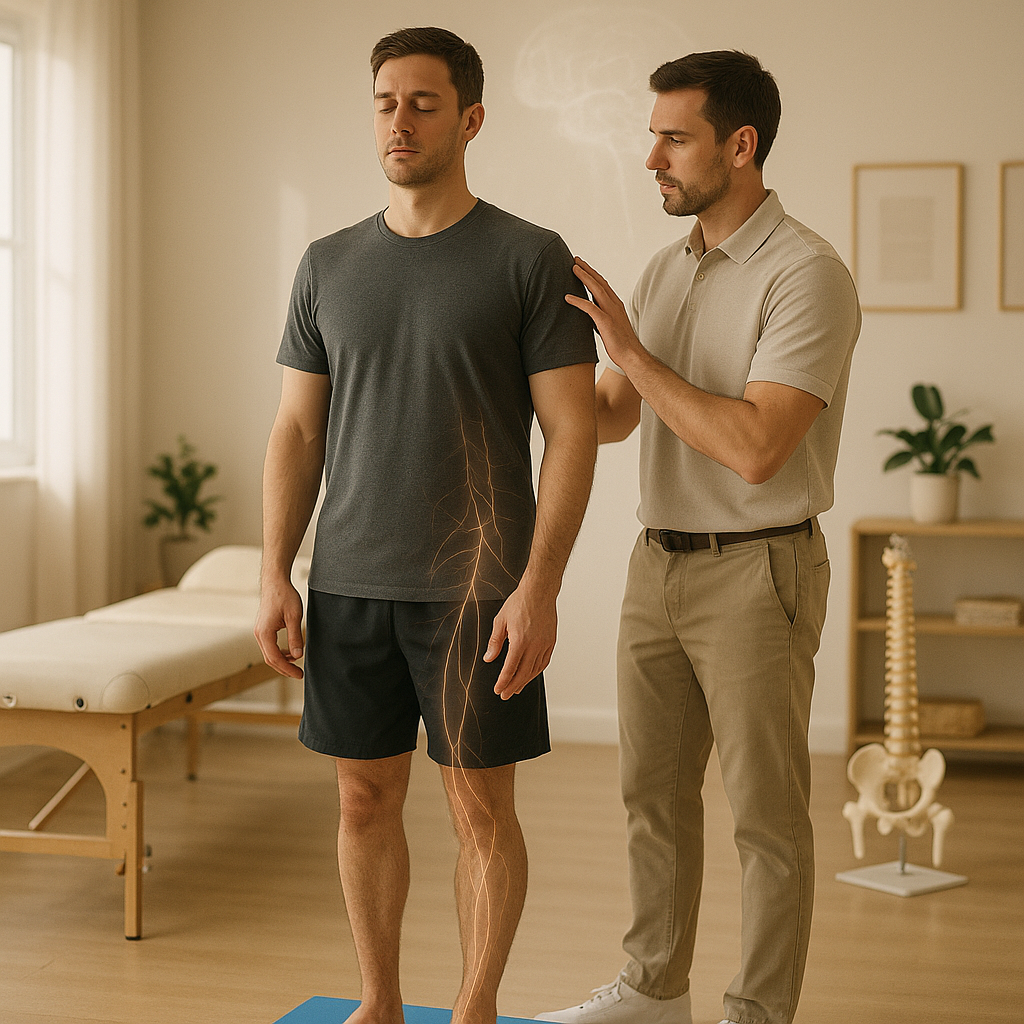
Understanding Proprioception in Chiropractic Care
When most people think about chiropractic care, they immediately picture relief from back pain or neck stiffness. However, there is a far deeper and more fascinating dimension to chiropractic treatment that often goes unrecognized — proprioception. This sensory system plays a critical role in how the body functions, moves, and maintains balance. Understanding proprioception in chiropractic care can help patients appreciate why spinal adjustments and musculoskeletal treatments go well beyond simple pain relief.
What Is Proprioception?
Proprioception is the body’s ability to sense its own position, movement, and spatial orientation without relying on visual input. Often referred to as the “sixth sense,” it is the neurological mechanism that allows you to touch your nose with your eyes closed or maintain your balance while walking on uneven ground. This awareness is constantly active, sending signals from muscles, tendons, joints, and ligaments to the brain and spinal cord.
The sensory receptors responsible for proprioception are known as proprioceptors. These specialized nerve endings are found throughout the body, but they are especially concentrated in areas such as:
- Joint capsules
- Ligaments
- Muscle spindles
- Golgi tendon organs
- The skin surrounding joints
Together, these receptors continuously relay information to the central nervous system, helping the body make instantaneous adjustments to posture, movement, and coordination. Body position awareness, in this sense, is not a passive function — it is an active, ongoing neurological process that directly influences physical performance and safety.
The Connection Between Proprioception and the Spine
The spine is one of the richest sources of proprioceptive input in the entire body. The deep muscles surrounding the vertebral column, known as the paraspinal muscles, are densely packed with proprioceptive nerve fibers. These structures are in constant communication with the brain, providing feedback about posture, balance, and movement.
When spinal joints become restricted, misaligned, or dysfunctional — a condition chiropractors refer to as a subluxation — this proprioceptive communication can be significantly disrupted. The brain may receive inaccurate or incomplete signals about the body’s position, leading to a cascade of compensatory issues such as:
- Poor posture and muscle imbalances
- Increased risk of joint injury
- Reduced coordination and balance
- Chronic pain and inflammation
- Delayed reaction times during physical activity
This is why proprioception chiropractic care extends far beyond addressing pain symptoms. By restoring proper joint mechanics and spinal alignment, chiropractors aim to re-establish healthy neurological communication throughout the body.
How Chiropractic Adjustments Influence Proprioception
Chiropractic adjustments — also known as spinal manipulations — involve the application of controlled, precise force to specific joints of the spine or extremities. The primary goal is to restore proper motion and alignment to restricted or dysfunctional joints. However, the neurological impact of these adjustments is equally significant.
Research has shown that spinal manipulation stimulates mechanoreceptors and proprioceptors within the joint capsules and surrounding tissues. This stimulation sends a surge of sensory input to the brain and spinal cord, effectively “waking up” the nervous system and improving its ability to process body position awareness accurately.
In practical terms, this means that following a chiropractic adjustment, patients may experience:
- Improved balance and coordination
- Greater body awareness during movement
- Reduced muscle tension and increased range of motion
- Enhanced athletic performance
- A more stable and controlled gait pattern
These benefits are not merely subjective. Several clinical studies have documented measurable improvements in proprioceptive function following chiropractic care, particularly in patients with chronic low back pain, neck dysfunction, and ankle instability.
Joint Proprioception and Its Role in Injury Prevention
Joint proprioception is a specific aspect of the broader proprioceptive system. Each individual joint in the body — from the ankle to the shoulder — has its own network of proprioceptors that monitor position, pressure, and movement in real time. When these receptors function optimally, the body can react swiftly and appropriately to sudden changes in terrain, load, or direction.
When joint proprioception is compromised, however, the consequences can be significant. A common example is seen in individuals who have experienced a sprained ankle. Even after the initial injury has healed, many patients report a persistent sense of instability or a tendency to re-injure the same joint. This is often due to proprioceptive dysfunction — the sensory receptors within the joint capsule and surrounding ligaments have been damaged, reducing the accuracy of the body’s positional feedback.
Chiropractic care addresses this problem through several approaches:
- Joint manipulation: Restores normal joint mechanics and stimulates proprioceptive receptors
- Soft tissue therapy: Reduces adhesions and scar tissue that can impair receptor function
- Rehabilitation exercises: Specifically designed to retrain proprioceptive pathways and restore functional stability
- Postural correction: Addresses compensatory movement patterns that place excessive stress on vulnerable joints
By taking this comprehensive approach, chiropractors help patients rebuild not just structural integrity but neurological competence — the ability of the joint to “talk” accurately to the brain.












