
Understanding Non-Surgical Spinal Decompression
Back pain and spinal conditions affect millions of people worldwide, often disrupting daily life and limiting physical function. While surgical interventions have traditionally been considered for severe cases, advancements in conservative care have introduced highly effective alternatives. Non-surgical spinal decompression is one such approach — a clinically recognized, nonsurgical disc treatment that offers meaningful relief for patients dealing with chronic back pain, herniated discs, and other spinal disorders.
This article explores what non-surgical spinal decompression involves, how it works, who may benefit from it, and what patients can expect during treatment.
What Is Non-Surgical Spinal Decompression?
Non-surgical spinal decompression is a motorized traction-based therapy designed to relieve pressure on the spinal discs and surrounding nerves. Unlike traditional traction, which applies a constant pulling force, this method uses a computer-controlled decompression table therapy system that alternates between distraction and relaxation phases. This rhythmic approach allows the spine to gently stretch and release, creating negative intradiscal pressure.
That negative pressure is the cornerstone of the treatment. By reducing pressure within the disc, the therapy encourages the retraction or repositioning of herniated or bulging disc material. At the same time, it promotes the flow of oxygen, water, and nutrient-rich fluids back into the disc — supporting the body’s natural healing process.
How Does the Decompression Table Work?
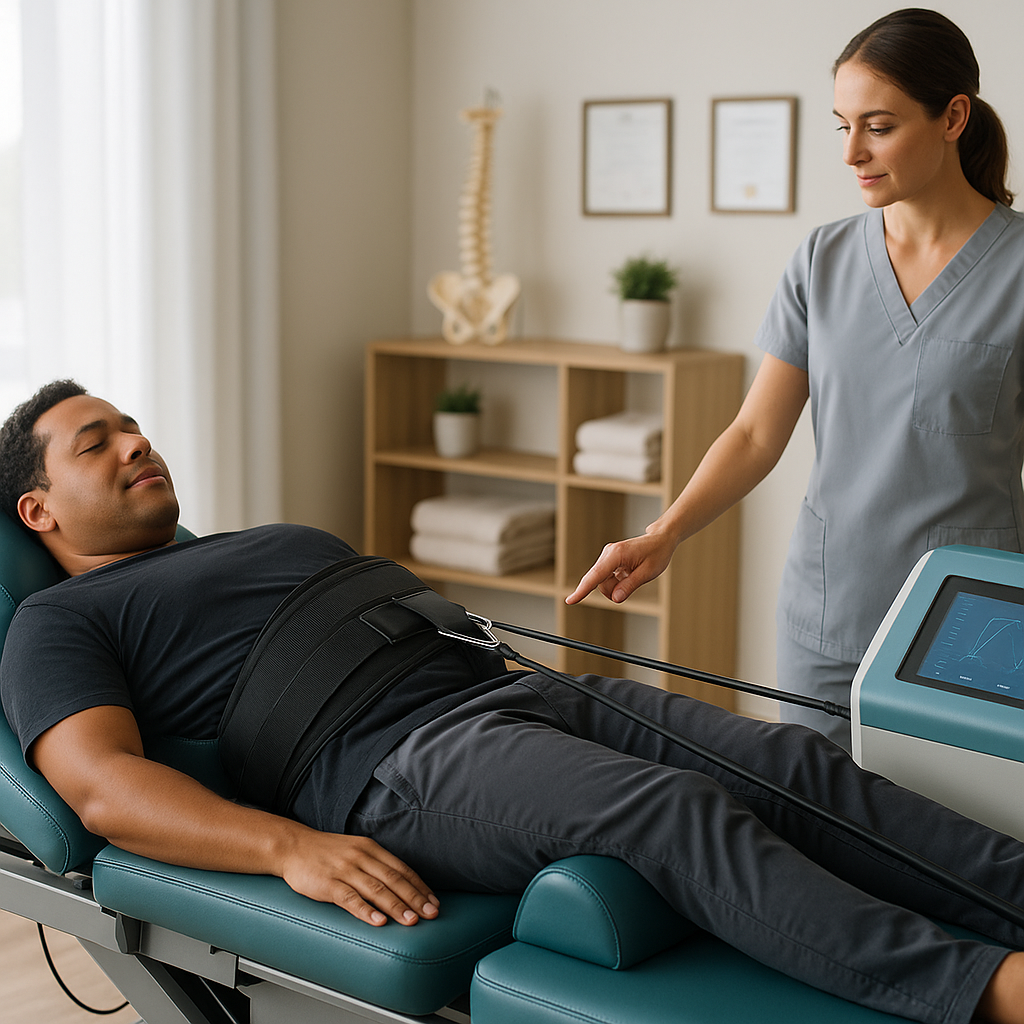
The decompression table therapy involves a specialized motorized table that is divided into two sections. The patient lies down — either face up or face down, depending on the targeted area — and is fitted with a harness around the pelvis and trunk. The table’s computer system then controls the angle, force, and duration of the distraction cycles with a high degree of precision.
Sessions typically last between 30 to 45 minutes, and a full course of treatment may involve anywhere from 15 to 30 sessions scheduled over several weeks. Many practitioners also integrate complementary therapies — such as electrical stimulation, ultrasound, or cold and heat therapy — either before or after decompression to enhance outcomes and reduce discomfort.
Conditions Treated With Bulging Disc Decompression
Non-surgical spinal decompression is most commonly associated with bulging disc decompression, but its application extends to a broader range of spinal conditions. The therapy may be recommended for patients experiencing:
- Herniated or bulging discs — One of the most common reasons patients seek this treatment, particularly when disc material is pressing on adjacent nerves.
- Degenerative disc disease — Age-related wear and tear that reduces disc height and causes pain or stiffness.
- Sciatica — Radiating pain, tingling, or numbness that travels along the sciatic nerve from the lower back down through the leg.
- Spinal stenosis — A narrowing of the spinal canal that places pressure on the spinal cord or nerve roots.
- Facet syndrome — Dysfunction in the small joints of the spine that can cause significant localized pain.
- Failed back surgery syndrome — Persistent pain in patients who have not experienced full relief following spinal surgery.
It is important to note that not every patient with these conditions will be a suitable candidate. A thorough clinical evaluation — including a review of medical history, physical examination, and imaging studies — is essential to determine whether this nonsurgical disc treatment is appropriate.
The Science Behind Motorized Traction Therapy
The therapeutic value of motorized traction lies in its ability to produce controlled, cyclical decompressive forces that target specific spinal segments. Unlike manual traction, motorized systems can deliver highly consistent force levels and adjust parameters in real time based on patient response, making the treatment both safer and more predictable.
Research has shown that the intermittent nature of computerized decompression helps prevent the muscle guarding reflex — a natural response the body uses to resist sustained pulling forces. By alternating between tension and release, motorized traction allows deeper tissue relaxation and more effective disc rehydration over time.
Clinical studies and patient outcomes suggest that when applied correctly over a structured treatment plan, spinal decompression therapy can significantly reduce pain intensity, improve mobility, and decrease the likelihood of surgical intervention for appropriate candidates.
What to Expect During a Treatment Session
For most patients, the experience of non-surgical spinal decompression is comfortable and relatively straightforward. Upon arrival, the clinician will review the patient’s progress and adjust treatment parameters as needed. The patient is then positioned on the decompression table and secured with the appropriate harness system.
During the session, the table will gently stretch and release, producing a sensation that many patients describe as a mild pulling or stretching of the lower back or neck. The majority of individuals find the treatment relaxing, and some even fall asleep during the session. Temporary mild soreness following the first few treatments is not uncommon as the body adjusts to the therapy.
It is advisable for patients to stay well-hydrated before and after sessions, as proper hydration supports disc health and aids in the reabsorption of fluids during the decompression process.
Who Is Not a Candidate for Spinal Decompression?
While non-surgical spinal decompression is a safe and well-tolerated procedure for many individuals, there are specific contraindications that must be carefully considered.













