
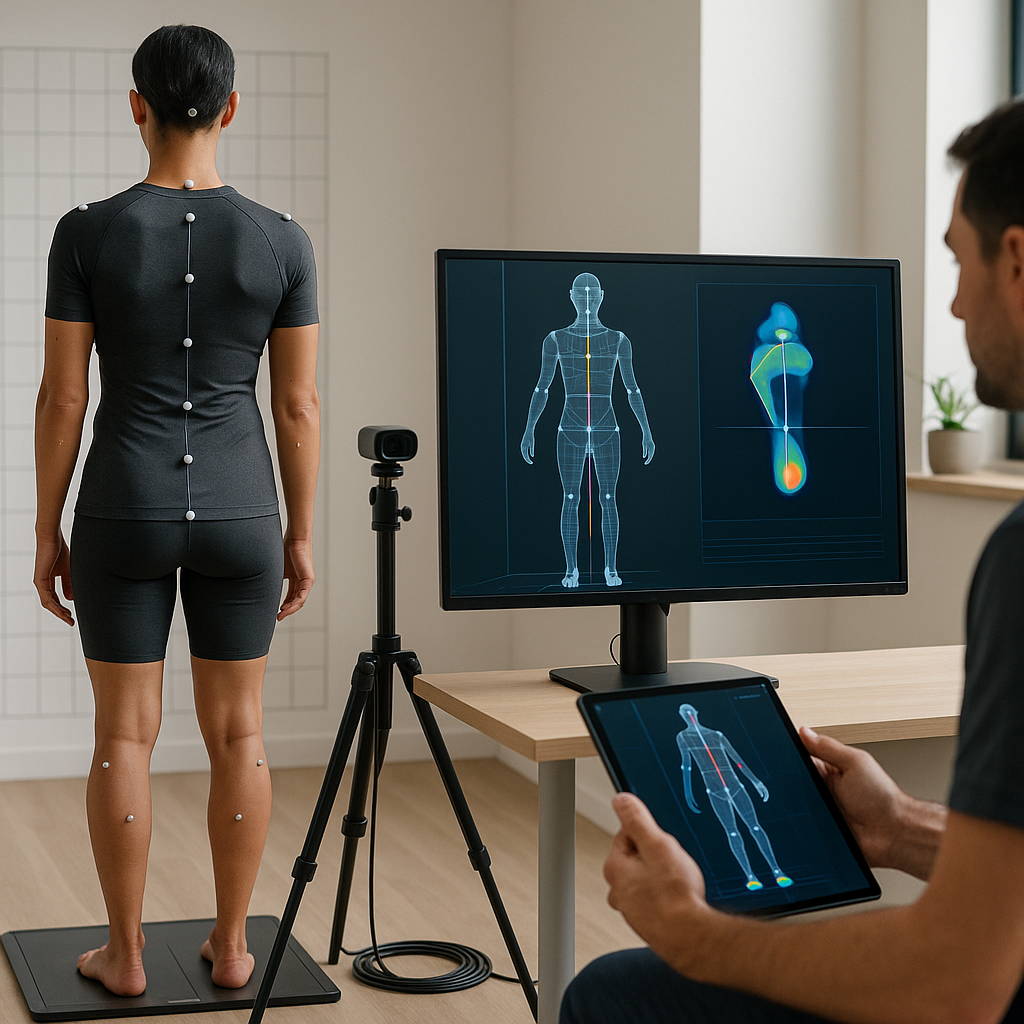
Understanding Computerized Postural Analysis
In today’s increasingly technology-driven healthcare environment, computerized posture analysis has emerged as one of the most valuable tools available to clinicians, chiropractors, physiotherapists, and wellness professionals. Rather than relying solely on the trained eye of a practitioner, this technology introduces an objective, data-driven approach to evaluating how a person holds and carries their body. The result is a more precise understanding of postural imbalances that may be contributing to pain, discomfort, or long-term musculoskeletal dysfunction.
Whether you are a healthcare provider looking to enhance your diagnostic capabilities or a patient curious about what your next assessment might involve, this article will walk you through everything you need to know about computerized postural analysis — what it is, how it works, and why it matters.
Defining Computerized Postural Analysis
Digital postural assessment refers to the use of specialized software, cameras, and sensor technologies to capture, measure, and analyze the alignment of a patient’s body. Unlike traditional visual assessments, which depend heavily on clinical experience and subjective interpretation, computerized systems generate quantifiable data points that can be tracked, compared, and reviewed over time.
At its core, the process involves capturing images or videos of a patient standing in specific positions — typically from the front, side, and rear. The software then maps key anatomical landmarks, measures angles, and identifies deviations from what is considered an ideal or neutral postural alignment. This information is compiled into a comprehensive report that both the clinician and patient can review together.
How Does Posture Scanning Technology Work?
Posture scanning technology typically involves a combination of high-resolution cameras or infrared sensors, reflective markers or grid backgrounds, and proprietary software that processes the captured data. Here is a general overview of how the process unfolds in a clinical setting:
- Patient Positioning: The patient stands in a relaxed, natural position in front of a calibrated camera system or scanning device. Multiple angles are usually captured to provide a 360-degree view of the body’s alignment.
- Landmark Detection: The software automatically identifies and marks key anatomical reference points, such as the ears, shoulders, hips, knees, and ankles.
- Measurement and Analysis: Using these landmarks, the system calculates angles, distances, and deviations. It compares this data against established normative values for optimal postural alignment.
- Report Generation: A detailed visual report is produced, highlighting areas of concern, asymmetries, and postural distortions that may require clinical attention.
- Progress Tracking: Subsequent assessments can be compared side by side with previous scans, allowing both the clinician and patient to monitor improvements or changes over time.
Some advanced systems also incorporate three-dimensional scanning, force plate technology, and even artificial intelligence algorithms to further enhance the accuracy and depth of the analysis.
The Role of Postural Software in Chiropractic Practice
Postural software in chiropractic settings has transformed the way practitioners communicate findings to patients and design treatment plans. Historically, explaining postural imbalances to a patient without visual aids was a challenge — many individuals simply could not conceptualize what “forward head posture” or “pelvic tilt” meant in relation to their symptoms.
With computerized analysis, chiropractors can now show patients a clear, visually compelling image of their own posture alongside an overlay of ideal alignment. This not only improves patient understanding but also increases engagement with the treatment process. When patients can see the problem with their own eyes, they are far more likely to commit to recommended exercises, lifestyle adjustments, and follow-up appointments.
Beyond patient education, postural software also supports clinical decision-making. By providing objective measurements, it helps chiropractors:
- Identify the primary areas of postural dysfunction requiring attention
- Set measurable goals for correction and rehabilitation
- Monitor the effectiveness of treatment over time
- Document findings for insurance, referral, or medicolegal purposes
- Demonstrate clinical outcomes with concrete, data-backed evidence
Common Postural Deviations Detected Through Computerized Analysis
One of the significant advantages of digital postural assessment is its ability to detect a wide range of postural deviations with precision. Some of the most commonly identified conditions include:
- Forward Head Posture: A forward displacement of the head relative to the shoulders, which is increasingly common due to prolonged screen use and sedentary lifestyles.
- Kyphosis: An exaggerated rounding of the upper back, often associated with muscle imbalances or prolonged poor posture habits.
- Lordosis: An excessive inward curve of the lower back that can place significant stress on lumbar vertebrae and surrounding soft tissue.
- Scoliosis: A lateral curvature of the spine that may be structural or functional in nature, and which benefits greatly from early detection and monitoring.
- Pelvic Tilt: An anterior or posterior tilting of the pelvis that affects spinal alignment and contributes to lower back and hip dysfunction.
- Shoulder Asymmetry: Uneven shoulder heights that may indicate muscle imbalances, scoliosis, or habitual movement patterns.
The ability to objectively measure and document these deviations makes computerized postural analysis a powerful tool not only for treatment but also for preventive healthcare.
Who Can Benefit from Digital Postural Assessment?
While computerized postural analysis is particularly prevalent in chiropractic and physiotherapy settings, its applications extend across a broad range of healthcare and wellness disciplines.














