
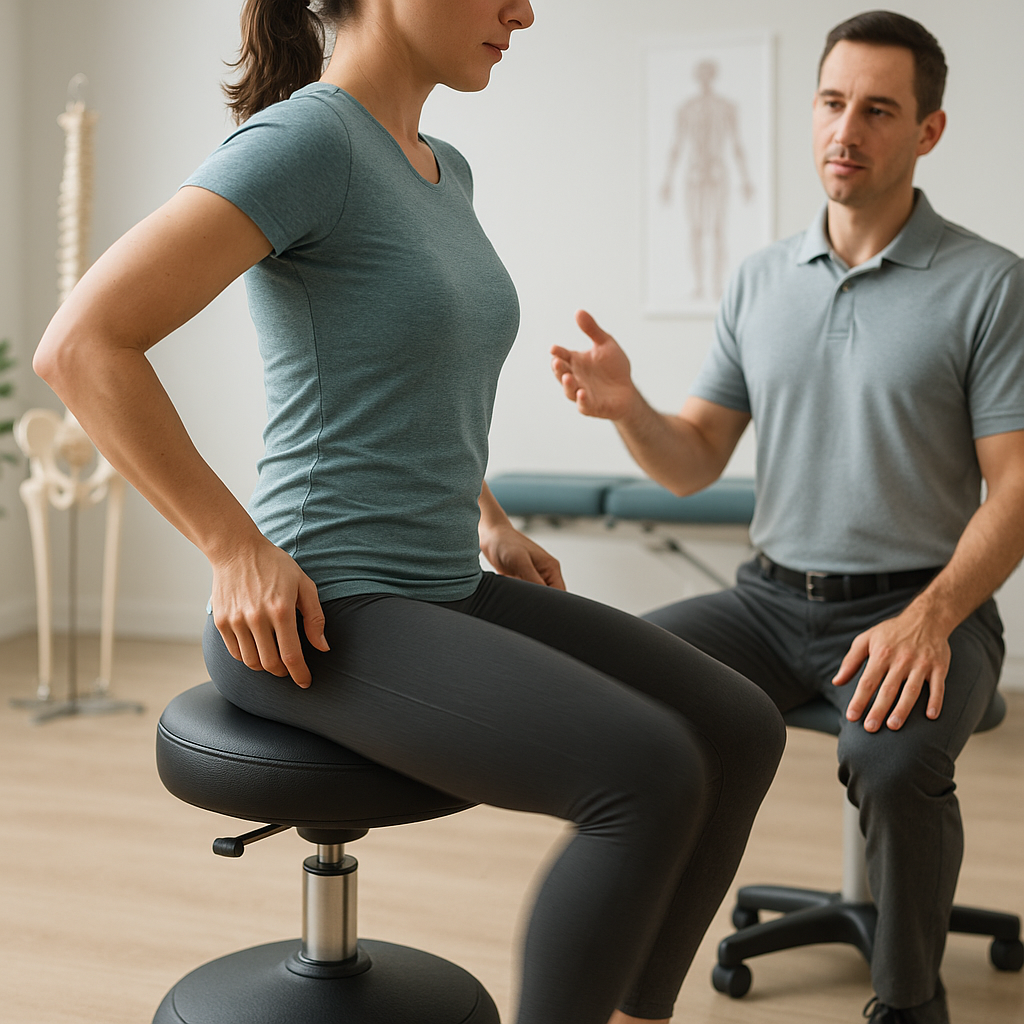
Understanding the Wobble Chair in Chiropractic Care
If you have ever visited a chiropractic clinic, you may have noticed an unusual-looking seat that allows the user to tilt, rotate, and shift in multiple directions. This device is known as a wobble chair, and it has become an increasingly valuable tool in modern chiropractic practice. Far from being a simple piece of office furniture, the wobble chair is a carefully engineered therapeutic instrument designed to support spinal health, improve mobility, and complement a wide range of chiropractic treatments.
In this article, we will explore what a wobble chair is, how it works, why chiropractors recommend it, and what benefits patients can expect from its regular use.
What Is a Wobble Chair?
A wobble chair is a specialized therapeutic seat featuring a rounded or spherical base that allows movement in all directions. Unlike a traditional chair, which keeps the user in a fixed, static position, the wobble chair encourages continuous, subtle movement of the pelvis, lumbar spine, and core muscles. This dynamic sitting experience mimics the natural motion the spine needs to stay healthy and well-lubricated.
The chair is often referred to by several names within the chiropractic community, including:
- Chiropractic wobble disc – referring to the disc-shaped base mechanism that enables multidirectional movement
- Spinal mobility chair – highlighting its primary function of promoting spinal range of motion
- Pettibon wobble chair – named after the Pettibon System, a well-established chiropractic technique that incorporates the chair as a core component of spinal rehabilitation
Regardless of the terminology used, all variations of the wobble chair share a common purpose: to introduce controlled, therapeutic motion to the spine in order to enhance disc health, restore alignment, and reduce pain.
The Role of the Wobble Chair in Chiropractic Practice
Chiropractors integrate the wobble chair into treatment plans for a broad spectrum of conditions. To understand why this device is so effective, it is important to first appreciate how spinal discs function and why movement is essential to their health.
The intervertebral discs that sit between each vertebra do not have a direct blood supply. Instead, they rely on a process called imbibition — the absorption of nutrients and fluids through movement and pressure changes. When a person remains sedentary for extended periods, this nutrient exchange is significantly reduced, leading to disc dehydration, stiffness, and increased vulnerability to injury.
The wobble chair directly addresses this problem. By engaging the spine in gentle, rhythmic movement, it stimulates imbibition, encouraging the discs to absorb the synovial fluid and nutrients they need to remain healthy and resilient. This is why chiropractors frequently use the wobble chair both as a preparatory tool before spinal adjustments and as a rehabilitative exercise following treatment.
The Pettibon Wobble Chair: A Systematic Approach
One of the most well-known applications of the wobble chair is within the Pettibon System, developed by Dr. Burl Pettibon. This comprehensive chiropractic rehabilitation system emphasizes the correction of spinal alignment through structured exercises, weighting devices, and rehabilitative tools — the wobble chair being among the most prominent.
Within the Pettibon framework, the wobble chair is used to perform a series of specific spinal exercises that target different regions of the spine. Patients are typically guided through the following movements:
- Anterior and posterior tilting – rocking forward and backward to engage the lumbar spine and hip flexors
- Lateral side-to-side movement – shifting weight from one side to the other to mobilize the lateral aspects of the spine
- Circular rotation – performing smooth, controlled circles to engage all planes of spinal movement simultaneously
- Figure-eight patterns – combining rotational and lateral movements to create more complex spinal engagement
These exercises are often performed while the patient wears additional Pettibon weighting devices, such as a cervical collar or weighted vest, to reinforce corrective postural positioning. The combination of dynamic movement and positional loading is designed to accelerate spinal remodeling and restore optimal curvature over time.
Conditions Commonly Addressed with the Wobble Chair
Chiropractors recommend the wobble chair for patients dealing with a variety of musculoskeletal and spinal conditions. Some of the most frequently treated conditions include:
- Chronic lower back pain – one of the most prevalent reasons patients seek chiropractic care, often exacerbated by prolonged sitting and reduced lumbar mobility
- Disc degeneration – the wobble chair’s ability to stimulate fluid exchange within the discs makes it particularly beneficial for patients with degenerative disc disease
- Sciatica – gentle spinal mobilization can help relieve pressure on the sciatic nerve and reduce radiating pain down the leg
- Poor posture – the chair helps retrain the body to adopt healthier spinal positioning through active engagement of postural muscles
- Spinal stiffness and reduced range of motion – regular use of the wobble chair gradually restores flexibility and movement to stiff spinal segments
- Sacroiliac joint dysfunction – pelvic movement exercises on the wobble chair can alleviate tension and dysfunction in the SI joints
It is important to note that the wobble chair is not intended as a standalone treatment.













