
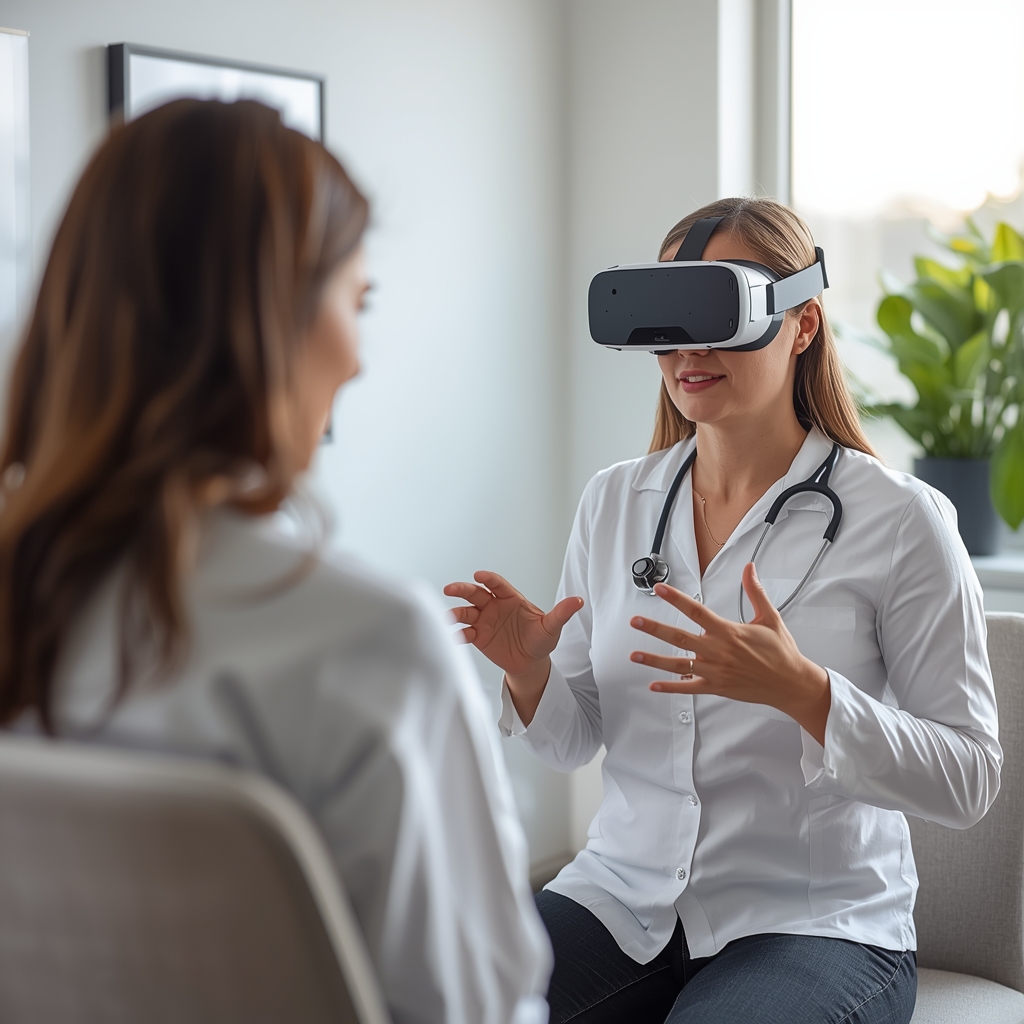
The Role of Virtual Reality in Telehealth
Virtual reality (VR) is transforming how chiropractors engage with patients during telehealth sessions, offering immersive tools to enhance understanding of spinal health. By simulating real-world scenarios, VR allows patients to visualize complex anatomical structures and treatment processes in 3D. This technology bridges the gap between abstract medical explanations and tangible experiences, making it easier for patients to grasp concepts like posture, joint mechanics, and nerve pathways. As telehealth becomes more prevalent, VR provides a dynamic way to maintain patient engagement and ensure clear communication. Chiropractors can use VR to demonstrate conditions, treatment goals, and self-care strategies, fostering a collaborative approach to care. While still emerging, its potential to improve patient education aligns with the growing demand for innovative, accessible healthcare solutions.
Visualizing Anatomy and Spinal Mechanics
One of the most powerful applications of VR in chiropractic telehealth is its ability to create interactive 3D models of the spine and musculoskeletal system. Patients can explore these models in real time, rotating, zooming, and dissecting layers to understand how vertebrae, discs, and nerves interact. This visual learning tool helps demystify conditions like herniated discs, spinal misalignments, or nerve compression, which can be challenging to explain through traditional methods. By seeing how adjustments might realign the spine, patients gain a clearer picture of their treatment plan. VR also enables chiropractors to simulate the effects of poor posture or repetitive strain, reinforcing the importance of preventive care. Such immersive experiences not only improve comprehension but also empower patients to take an active role in their recovery.
Interactive Patient Education and Simulations
VR allows chiropractors to design interactive scenarios that simulate real-life situations patients may encounter. For example, a patient recovering from a neck injury could use VR to practice proper lifting techniques or posture correction in a controlled environment. These simulations provide immediate feedback, helping patients refine movements and avoid harmful habits. Chiropractors can also use VR to demonstrate exercises tailored to individual needs, such as stretches for sciatica or strengthening routines for lower back pain. By engaging patients in hands-on learning, VR fosters better retention of information and encourages adherence to home care plans. This approach is particularly beneficial for patients who struggle with traditional written or verbal instructions, as it combines visual, auditory, and kinesthetic elements for a more comprehensive understanding.
Real-Time Feedback and Adjustments
During telehealth sessions, VR can offer real-time feedback to help patients perform exercises correctly. Using motion-tracking sensors, VR systems can analyze a patient’s movements and alert them to improper form or technique. For instance, if a patient’s posture during a stretch deviates from the recommended alignment, the VR interface might provide visual or auditory cues to correct it. This instant feedback reduces the risk of injury and ensures patients follow their prescribed routines effectively. Chiropractors can also use this data to monitor progress over time, adjusting treatment plans based on observed improvements or challenges. By integrating VR into virtual consultations, chiropractors can maintain a high level of oversight and support, even when not physically present.
Enhancing Patient Engagement and Motivation
VR’s immersive nature can significantly boost patient engagement during telehealth sessions. By transforming educational content into interactive experiences, chiropractors can capture and sustain patients’ attention more effectively than with static images or verbal explanations. Gamified elements, such as progress tracking or virtual rewards, can further motivate patients to complete exercises and adhere to their care plans. This increased engagement often leads to better outcomes, as patients are more likely to participate actively in their recovery. Additionally, VR can make complex concepts more relatable by placing patients in virtual environments that mirror their daily activities, helping them understand how their condition affects their lifestyle. Such personalized, interactive education strengthens the patient-provider relationship and fosters long-term compliance with chiropractic recommendations.
Challenges and Considerations for Implementation
While VR offers exciting possibilities, its integration into telehealth requires careful consideration. The initial cost of VR equipment and software may be a barrier for some chiropractors and patients. Additionally, not all patients may be comfortable using technology, necessitating training and support to ensure accessibility. Technical limitations, such as internet connectivity or device compatibility, could also hinder seamless virtual sessions. Chiropractors must also evaluate whether VR aligns with their practice’s goals and patient needs, avoiding the adoption of tools that do not add clear value. Despite these challenges, ongoing advancements in VR technology are likely to reduce costs and improve usability over time. As the field evolves, chiropractors can explore partnerships with tech providers or gradually introduce VR as a complementary tool within their telehealth offerings.













