
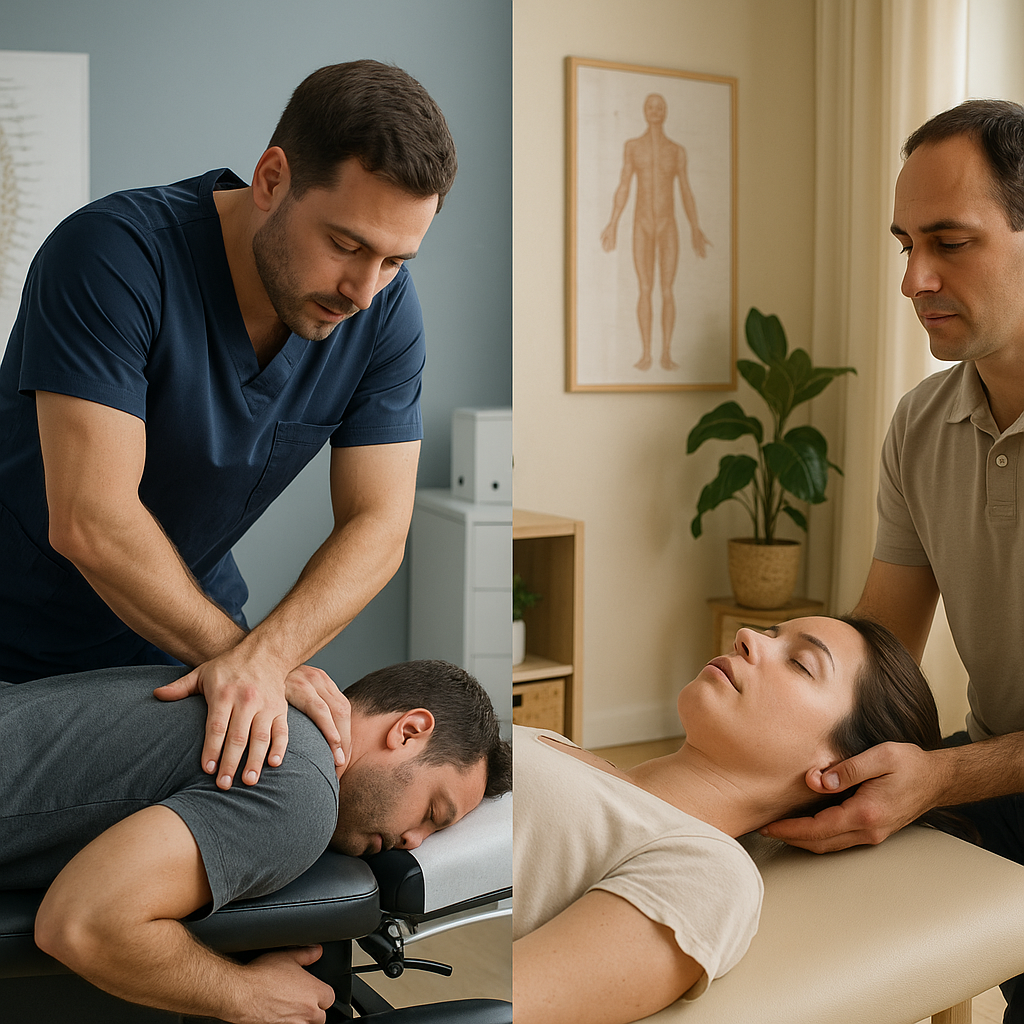
Chiropractor vs Osteopath: Understanding the Key Differences
When dealing with musculoskeletal pain, back problems, or general discomfort, many people find themselves choosing between two distinct healthcare professionals: a chiropractor and an osteopath. While both practitioners use hands-on techniques to treat patients and share a focus on the body’s structural integrity, there are meaningful differences in their philosophy, training, scope of practice, and treatment methods. Understanding these distinctions can help you make a more informed decision about which type of care is best suited to your needs.
Origins and Philosophical Foundations
The philosophical roots of chiropractic and osteopathic medicine diverge quite significantly, and these differences continue to shape how each profession approaches patient care today.
Chiropractic care was founded in 1895 by Daniel David Palmer in the United States. Palmer believed that misalignments of the spine — which he termed “subluxations” — were the primary cause of disease and dysfunction in the body. The central premise of traditional chiropractic philosophy is that correcting these spinal misalignments restores the nervous system’s ability to function optimally, thereby promoting overall health.
Osteopathic medicine, on the other hand, was established slightly earlier, in 1874, by Andrew Taylor Still, also an American physician. Still developed osteopathy as a reaction against the often harsh and ineffective medical practices of his era. His philosophy was broader and more holistic: he believed that the body is a self-healing organism and that all body systems — including the musculoskeletal, circulatory, lymphatic, and nervous systems — are interrelated. Osteopathic philosophy emphasises the body’s innate capacity to heal itself when its structure is properly aligned and functioning.
Education and Training: DC vs DO
One of the most significant differences between the two professions lies in the level and type of education each practitioner receives.
A Doctor of Chiropractic (DC) typically completes a four-year chiropractic programme after completing an undergraduate degree. Their training is heavily focused on the spine, nervous system, and musculoskeletal system. Chiropractic education includes courses in anatomy, physiology, radiology, and clinical diagnosis, with extensive hands-on training in spinal manipulation and adjustment techniques. However, chiropractors are not licensed to prescribe medication or perform surgery.
A Doctor of Osteopathic Medicine (DO), particularly in the United States, undergoes training that is equivalent to that of a conventional medical doctor (MD). DO students complete four years of osteopathic medical school, followed by residency programmes, and may specialise in any branch of medicine — from cardiology to paediatrics. In addition to standard medical training, DO students receive supplementary instruction in Osteopathic Manipulative Medicine (OMM). This means a DO can prescribe medications, perform surgery, and offer the full spectrum of conventional medical treatments, all while incorporating osteopathic principles.
It is worth noting that in countries such as the United Kingdom and Australia, the title “osteopath” does not necessarily carry the same full medical degree as in the United States. In these regions, osteopaths may hold a degree in osteopathy (typically a Bachelor’s or Master’s level qualification) but are not licensed to prescribe medication or perform surgery. Their scope of practice is more similar to that of a chiropractor.
Chiropractic Versus Osteopathic Manipulation: Treatment Approaches
Both chiropractors and osteopaths use manual, hands-on therapies, but their techniques and overall treatment philosophies differ in notable ways.
Chiropractic Treatment Methods
Chiropractic care places a strong emphasis on spinal manipulation, commonly referred to as “chiropractic adjustment.” The goal of these adjustments is to restore proper alignment to the vertebrae, reduce nerve interference, and improve the function of the spine and surrounding structures. Typical chiropractic techniques include:
- High-velocity, low-amplitude (HVLA) thrust: A precise and controlled force applied to a specific spinal joint, often producing the characteristic “cracking” sound.
- Activator method: The use of a small, handheld instrument to deliver a gentle impulse to the spine.
- Flexion-distraction: A gentle, rhythmic technique often used to treat disc-related problems and spinal stenosis.
- Soft tissue therapy: Techniques to address muscle tension and promote healing in the surrounding tissues.
Chiropractors may also provide guidance on posture, exercise, ergonomics, and lifestyle modifications. Some chiropractors incorporate additional therapies such as ultrasound, electrical stimulation, or cold laser therapy into their practice.
Osteopathic Treatment Methods
Osteopathic practitioners use a wider variety of manual techniques, collectively known as Osteopathic Manipulative Treatment (OMT) or Osteopathic Manipulative Medicine (OMM). While spinal manipulation is part of the osteopathic toolkit, it represents just one component of a broader therapeutic approach. Common osteopathic techniques include:
- Soft tissue manipulation: Stretching and pressure applied to muscles and connective tissue to improve circulation and reduce tension.
- Muscle energy technique (MET): A method in which the patient actively uses their muscles against a counterforce provided by the practitioner to mobilise joints and release tension.
- Counterstrain: Positioning the body to alleviate areas of strain and tenderness.
- Craniosacral therapy: A gentle technique focused on the movement of cerebrospinal fluid and the bones of the skull and sacrum.
- High-velocity, low-amplitude thrust: Similar to chiropractic adjustment but used more selectively within a broader treatment framework.
Additional Resources
- NIH overview of spinal manipulation
- MedlinePlus back pain resources
- NINDS low back pain information
- What is the difference between a straight chiropractor and a mixer chiropractor?
- What is the difference between a chiropractor and a physical therapist?
- What is the difference between a chiropractor and a medical doctor?












