
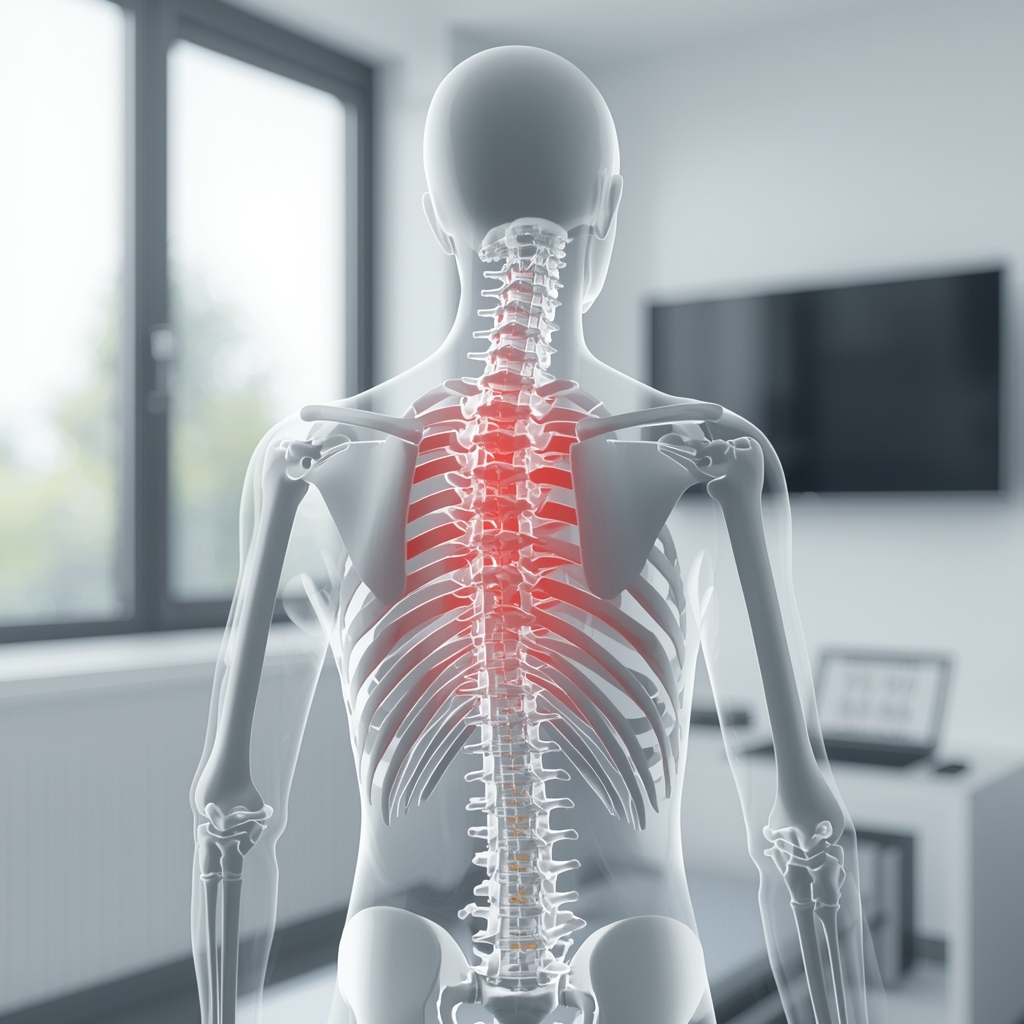
The Thoracic Spine and Its Role in Breathing Mechanics
The thoracic spine, located in the upper back, forms the core of the rib cage and plays a critical role in respiratory function. Its natural curvature, known as kyphosis, creates a protective structure for the heart, lungs, and major blood vessels. This curvature also provides attachment points for the ribs, enabling the expansion and contraction of the chest cavity during breathing. Proper alignment ensures the rib cage moves efficiently, allowing the diaphragm to function optimally. When the thoracic spine is misaligned or restricted, it can compromise this mechanical process, leading to reduced lung capacity and inefficient breathing patterns. Understanding this relationship highlights the importance of maintaining spinal health for overall respiratory efficiency.
Normal Thoracic Curvature and Rib Cage Function
A healthy thoracic spine maintains a gentle backward curve, which supports the rib cage’s structural integrity. This curvature allows the ribs to articulate smoothly with the thoracic vertebrae, facilitating the mechanical action of inhalation and exhalation. During inhalation, the rib cage expands outward and upward, increasing thoracic volume to draw air into the lungs. The thoracic spine’s alignment ensures this movement occurs without restriction. Abnormal curvatures, such as excessive kyphosis or hypokyphosis, can distort rib positioning, limiting the chest’s ability to expand. This disruption may lead to shallow breathing, reduced oxygen intake, and increased strain on the respiratory muscles. Maintaining proper spinal curvature is essential for sustaining optimal breathing mechanics.
Impact of Thoracic Misalignment on Breathing Efficiency
When the thoracic spine becomes misaligned—due to poor posture, injury, or degenerative changes—it can directly affect rib cage mobility. Misaligned vertebrae may restrict the movement of adjacent ribs, reducing the chest cavity’s ability to expand fully. This limitation forces the body to rely on accessory breathing muscles, such as those in the neck and shoulders, which are less efficient. Over time, this compensatory pattern can lead to fatigue, discomfort, and even chronic respiratory issues. Additionally, restricted rib movement may impair the diaphragm’s ability to contract and relax properly, further diminishing breathing efficiency. Addressing thoracic misalignments through professional evaluation can help restore natural breathing patterns and reduce respiratory strain.
Thoracic Spine Conditions and Their Effects
Several conditions can alter the thoracic spine’s curvature and impact breathing. Scoliosis, for example, involves an abnormal sideways curvature that may compress the rib cage and limit lung expansion. Kyphosis, an exaggerated forward curve, can also restrict chest movement by altering rib positioning. Conversely, a flattened thoracic curve (hypokyphosis) may reduce the structural support needed for efficient breathing. These conditions often coexist with musculoskeletal imbalances, further complicating respiratory function. While some variations are normal, significant deviations may require intervention. A chiropractor can assess spinal alignment and identify how these changes affect breathing mechanics, offering guidance on potential corrective measures.
Chiropractic Care and Thoracic Spine Optimization
Chiropractic care focuses on restoring proper spinal alignment, which can enhance thoracic spine function and improve breathing efficiency. Through targeted adjustments, chiropractors aim to correct misalignments that restrict rib movement or alter curvature. This approach may alleviate pressure on nerves and muscles involved in respiration, promoting more natural breathing patterns. Additionally, chiropractors often incorporate soft tissue techniques and rehabilitative exercises to support long-term spinal health. While individual results vary, many patients report improved respiratory function after addressing thoracic spine issues. It’s important to consult a qualified chiropractor to determine the most appropriate strategies for your specific condition.
When to Seek Professional Evaluation
If you experience persistent breathing difficulties, chest discomfort, or postural changes, consulting a healthcare professional is advisable. A chiropractor can evaluate the thoracic spine’s alignment and its impact on rib cage mechanics, ruling out structural abnormalities or nerve-related issues. They may also collaborate with other specialists to address underlying conditions affecting respiratory function. Early intervention can prevent complications and improve outcomes. Remember, while chiropractic care may support spinal health, it should complement—rather than replace—medical advice for diagnosed respiratory or musculoskeletal disorders. A comprehensive approach ensures safe and effective management of your symptoms.












