
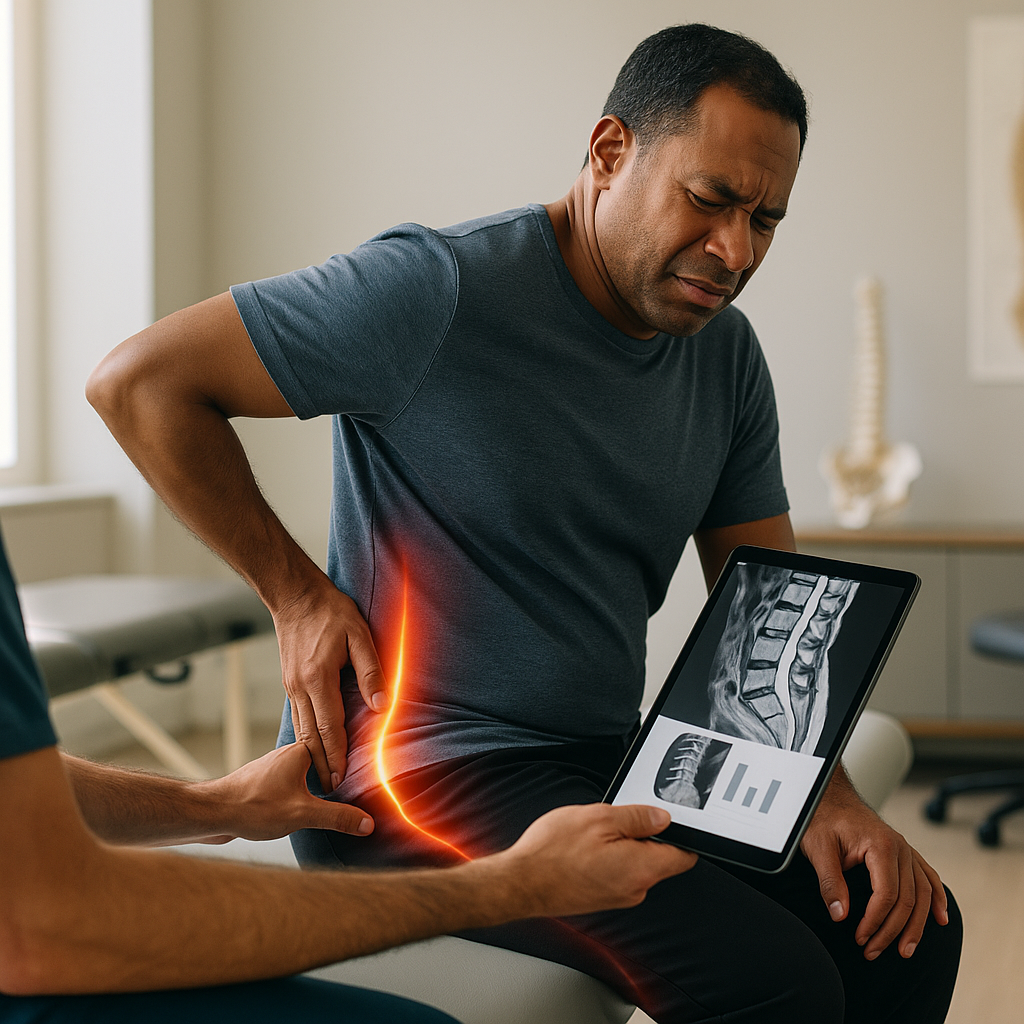
Understanding Sciatica and Its Impact on Daily Life
Sciatica is one of the most prevalent and debilitating musculoskeletal conditions affecting millions of individuals worldwide. Characterised by radiating pain that travels along the path of the sciatic nerve — from the lower back through the hips, buttocks, and down one or both legs — sciatica can significantly impair a person’s quality of life, mobility, and ability to perform everyday tasks.
The condition typically arises when the sciatic nerve becomes compressed or irritated, most commonly due to a herniated disc, bone spur, or spinal stenosis. Symptoms can range from a mild, intermittent ache to sharp, burning sensations and even numbness or weakness in the affected leg. Given the complexity and variability of the condition, patients and clinicians alike are increasingly seeking evidence-based, non-invasive treatment options — and chiropractic care has emerged as one of the more widely discussed alternatives.
What Does Chiropractic Care Involve?
Chiropractic care is a regulated healthcare discipline that focuses primarily on the diagnosis, treatment, and prevention of mechanical disorders of the musculoskeletal system, with particular emphasis on the spine. Chiropractors employ a range of techniques, the most well-known being spinal manipulation or “adjustment,” which involves applying controlled force to specific joints in the spine to restore movement, reduce nerve irritability, and improve function.
In the context of sciatica treatment, chiropractic care may include:
- Spinal manipulation: The primary technique used to realign vertebrae and relieve pressure on the sciatic nerve.
- Flexion-distraction technique: A gentle, non-thrusting manipulation designed specifically to treat disc-related conditions, including those contributing to sciatic nerve compression.
- Soft tissue therapy: Techniques such as trigger point therapy and myofascial release aimed at reducing muscle tension around the nerve.
- Rehabilitative exercises: Tailored exercise programmes designed to strengthen supporting musculature and improve spinal stability.
- Lifestyle and postural advice: Guidance on ergonomics, activity modification, and self-management strategies.
The goal of chiropractic intervention in sciatica is not merely symptomatic relief but the restoration of normal biomechanical function and the reduction of nerve impingement at its source.
Reviewing the Scientific Evidence: What Do Studies Tell Us?
The question of what the evidence says regarding sciatica chiropractic evidence is one that deserves a careful and balanced examination. Over recent decades, a growing body of research has investigated the efficacy of chiropractic care for leg pain and sciatic nerve conditions. While the overall evidence base is still evolving, several well-designed studies and systematic reviews provide meaningful insight.
Randomised Controlled Trials
One of the most cited sciatica treatment trials was published in the Journal of Manipulative and Physiological Therapeutics, which demonstrated that patients receiving active spinal manipulation experienced significantly greater relief from local and radiating leg pain compared to those receiving simulated (sham) manipulation. This study provided early empirical support for the use of chiropractic spinal manipulation in the management of sciatic symptoms.
A noteworthy randomised controlled trial conducted by Santilli, Beghi, and Finuoli (2006) found that active chiropractic manipulation was more effective than a placebo intervention in reducing pain and disability in patients with acute back pain and sciatica caused by disc herniation. Participants in the treatment group reported more pain-free days and experienced greater improvements in overall function — findings that contributed meaningfully to the sciatic nerve research landscape.
Systematic Reviews and Meta-Analyses
Systematic reviews represent the highest tier of scientific evidence, synthesising data from multiple studies to draw broader conclusions. Several such reviews have examined the role of spinal manipulation in managing low back-related leg pain.
A systematic review published in the Cochrane Database of Systematic Reviews assessed various treatments for sciatica and acknowledged that spinal manipulation may offer short-term relief comparable to other conservative interventions, including physiotherapy and non-steroidal anti-inflammatory drugs (NSAIDs). However, reviewers noted that the quality of available evidence varied and called for further high-quality, large-scale trials.
Another comprehensive review in the European Spine Journal specifically evaluated leg pain chiropractic study data and concluded that manual therapies, including chiropractic care, demonstrated clinically meaningful improvements in pain intensity and functional outcomes for patients suffering from lumbar radiculopathy — the technical term for nerve root compression that typically underlies sciatica.
Comparative Effectiveness Research
Beyond placebo-controlled trials, comparative effectiveness research has sought to position chiropractic care relative to other standard treatments for sciatica. Studies comparing chiropractic management with medical management (including medication, epidural steroid injections, and surgical referral) have shown that chiropractic care can produce equivalent or superior short-term outcomes for carefully selected patients — particularly those presenting with acute or subacute symptoms and no red flag indicators necessitating urgent medical intervention.
Importantly, several studies have also highlighted the safety profile of chiropractic treatment in this context. Serious adverse events following spinal manipulation for lumbar conditions are exceedingly rare when administered by a qualified practitioner following appropriate clinical assessment.
Limitations of the Current Evidence Base
While the available research is encouraging, it is important to acknowledge the limitations inherent within the current body of evidence. Many studies examining sciatica chiropractic evidence are limited by relatively small sample sizes, heterogeneous patient populations, and short follow-up periods. Blinding participants in manual therapy trials is inherently challenging, which can introduce performance and detection bias.
Furthermore, “sciatica” itself is not a single, uniform condition. The causes, severity, and clinical presentation of sciatic nerve dysfunction vary considerably between individuals, which makes it difficult to generalise findings across all patient groups.












