
Understanding Throwing Injuries in Athletes
Throwing injuries are among the most common and debilitating conditions affecting baseball players, softball athletes, quarterbacks, javelin throwers, and other overhead athletes. These injuries develop through repetitive stress placed on the shoulder, elbow, and surrounding structures during the throwing motion. Over time, this mechanical overload leads to inflammation, joint dysfunction, muscle imbalances, and soft tissue damage that can significantly impair performance and overall quality of life.
For many athletes, finding an effective and long-lasting solution means looking beyond conventional rest and medication. An experienced throwing injury chiropractor offers a comprehensive, non-invasive approach that addresses the root causes of these conditions rather than simply managing the symptoms. Chiropractic care has become an increasingly respected component of the treatment plan for competitive and recreational athletes alike.
Why Overhead Athletes Are Particularly Vulnerable
The throwing motion is one of the most mechanically demanding movements the human body can perform. During a single pitch, the shoulder can rotate at speeds exceeding 7,000 degrees per second, generating enormous forces across the joint. This places extraordinary stress on the rotator cuff muscles, the glenohumeral joint, the labrum, and the surrounding ligaments and tendons.
When this motion is repeated thousands of times across a season — or over the course of a career — cumulative microtrauma begins to accumulate. Common overhead athlete injuries that result from this repetitive stress include:
- Rotator cuff tears and tendinopathy
- SLAP (Superior Labrum Anterior to Posterior) tears
- Shoulder impingement syndrome
- Glenohumeral internal rotation deficit (GIRD)
- Ulnar collateral ligament (UCL) sprains
- Medial epicondylitis (thrower’s elbow)
- Biceps tendon pathology
- Thoracic and cervical spine dysfunction
These conditions rarely occur in isolation. In most cases, a dysfunction in one area of the kinetic chain creates compensatory patterns elsewhere, making a whole-body evaluation essential to effective treatment.
How a Throwing Injury Chiropractor Approaches Assessment
Before any treatment begins, a qualified throwing arm chiropractic specialist will conduct a thorough assessment to understand the full scope of the injury. This evaluation typically includes a detailed medical history, a review of the athlete’s training and competition schedule, and a comprehensive physical examination of the shoulder, elbow, wrist, cervical spine, and thoracic spine.
Chiropractors trained in sports biomechanics will also assess movement patterns during the throwing motion itself. By analyzing the athlete’s mechanics, they can identify faulty movement patterns that may be contributing to the injury and placing excessive load on vulnerable structures. This functional assessment provides a roadmap for treatment and helps to prevent recurrence.
Diagnostic imaging, including X-rays or MRI, may be ordered or reviewed if necessary to rule out fractures, significant structural damage, or conditions that may require surgical intervention. Chiropractors are trained to recognize when a referral to an orthopedic specialist is warranted and will coordinate care accordingly.
Chiropractic Techniques Used in Pitcher Shoulder Treatment
Effective pitcher shoulder treatment through chiropractic care involves a combination of manual therapies, rehabilitative exercise, and adjunct modalities tailored to the individual athlete’s needs. The following are the primary techniques commonly employed:
Spinal and Joint Manipulation
Chiropractic manipulation — often referred to as an adjustment — involves the precise application of controlled force to a joint that has become restricted in its movement. For throwing athletes, restrictions in the thoracic spine and cervical spine are particularly significant, as these regions directly influence shoulder blade mechanics, nerve function, and overall upper extremity performance. Restoring proper joint mobility in these areas can reduce compensatory strain on the shoulder and elbow, improving both comfort and function.
Glenohumeral joint mobilization is also commonly utilized to address shoulder joint restrictions, particularly in athletes presenting with GIRD — a condition in which the shoulder loses internal rotation range of motion due to posterior capsule tightness. Restoring this range of motion is critical to reducing impingement and labral stress during the throwing motion.
Soft Tissue Therapy
Chiropractic soft tissue techniques target the muscles, tendons, fascia, and ligaments surrounding the injured area. Methods commonly used for throwing injuries include:
- Active Release Technique (ART): A patented soft tissue protocol that breaks up adhesions and scar tissue in overworked muscles and tendons, restoring normal tissue quality and movement.
- Graston Technique: A form of instrument-assisted soft tissue mobilization that uses specially designed stainless steel instruments to detect and treat fibrotic tissue changes.
- Myofascial Release: A hands-on approach that gently stretches and releases restrictions in the fascial network, improving tissue flexibility and reducing pain.
- Trigger Point Therapy: The application of sustained pressure to hyperirritable muscle knots that can refer pain and contribute to muscle dysfunction throughout the shoulder girdle.
Dry Needling
Many chiropractic clinics now offer dry needling as part of a comprehensive treatment plan for overhead athlete injuries. This technique involves inserting thin, filiform needles into myofascial trigger points within affected muscles. Dry needling has been shown to reduce muscle tension, decrease pain, and improve local circulation — all of which contribute to faster recovery from throwing-related muscle overuse.
Kinesiology Taping
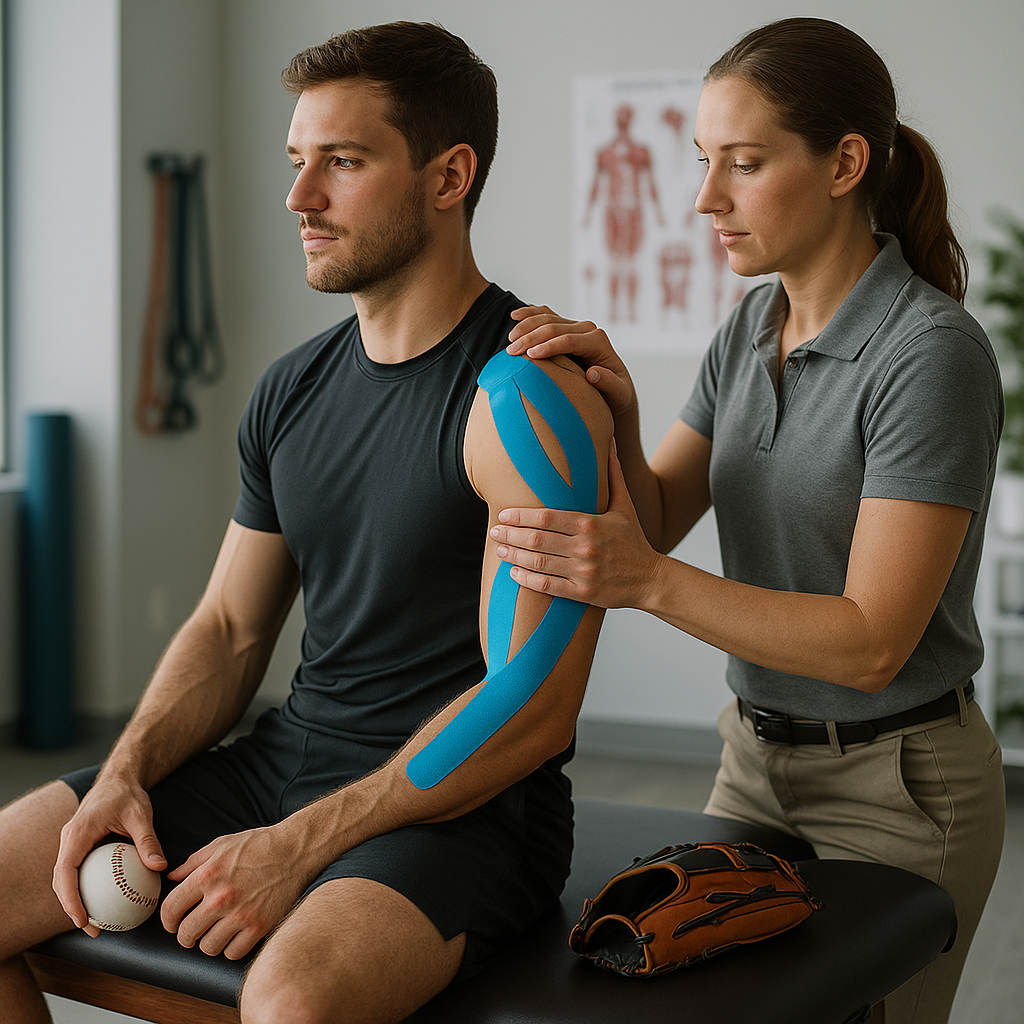
Elastic therapeutic tape is frequently applied to the shoulder, upper arm, or elbow to provide proprioceptive feedback, reduce swelling, and support injured structures without limiting range of motion.















