
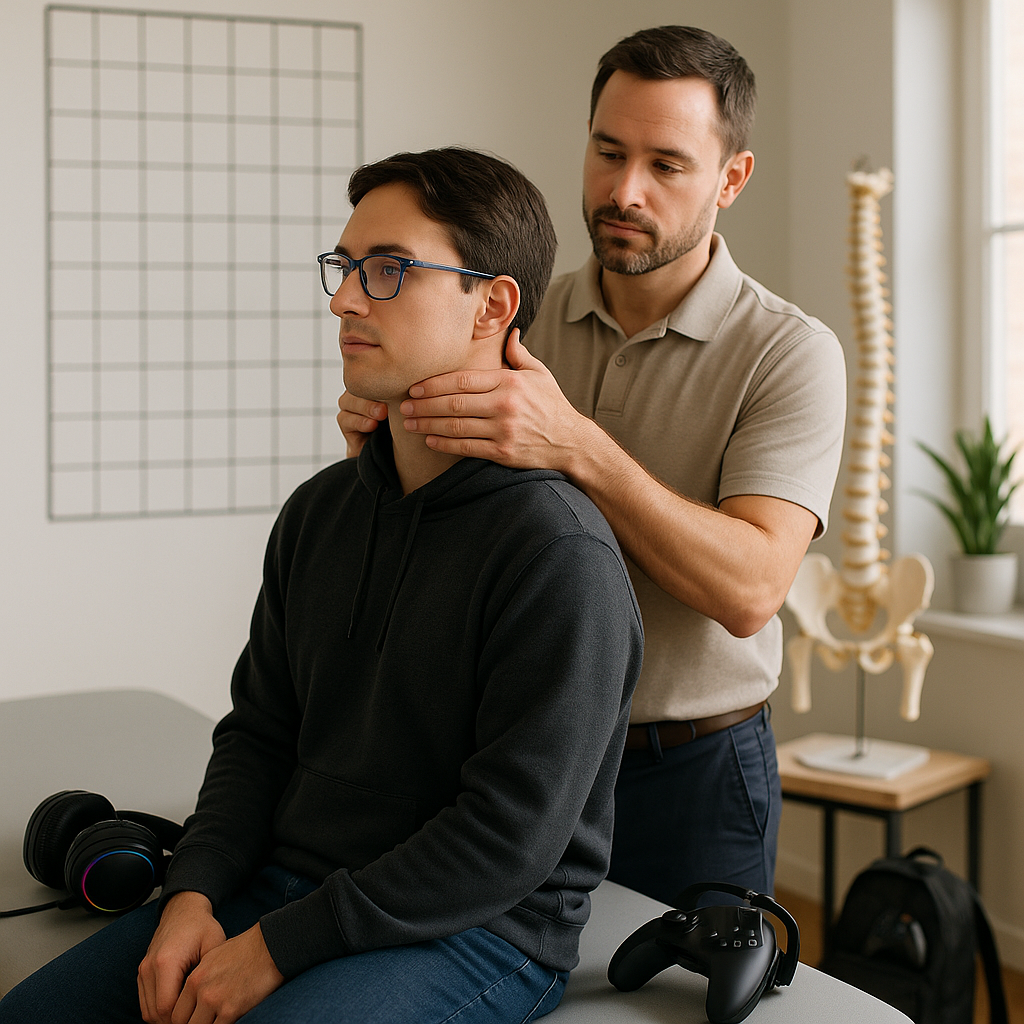
Understanding Forward Head Carriage in Gamers
The modern gaming lifestyle has introduced a range of physical challenges that many players simply overlook. Among the most prevalent is gamer forward head posture, a condition that develops gradually as players lean toward their screens during extended gaming sessions. What begins as a slight head tilt can evolve into a structural postural imbalance that affects the entire cervical spine, causing pain, stiffness, and long-term musculoskeletal complications.
Forward head carriage occurs when the head shifts anteriorly beyond its natural alignment with the shoulders. For every inch the head moves forward from its neutral position, the effective weight placed upon the cervical spine increases by approximately 10 pounds. For a competitive gamer spending eight or more hours per day in front of a screen, this cumulative stress is far from negligible. Understanding the root causes of this condition is the first step toward seeking appropriate care, including chiropractic intervention.
Why Gamers Are Particularly Susceptible
The esports head carriage phenomenon has grown alongside the rise of competitive gaming culture. Professional and recreational gamers alike share behavioral patterns that contribute directly to postural dysfunction. These include:
- Prolonged static postures during gameplay without adequate breaks
- Monitors positioned too low or too far away, encouraging the head to project forward
- High levels of concentration and visual engagement that override awareness of body positioning
- Use of gaming chairs that, while ergonomically marketed, may not always support healthy spinal curvature
- Lack of structured physical activity to counterbalance sedentary habits
Esports athletes, in particular, face a unique occupational hazard. Unlike traditional sports where physical training is embedded into performance culture, the esports industry has only recently begun to address physical wellness as a component of peak performance. As awareness grows, more players are turning to chiropractic care to address the postural consequences of their profession.
How Forward Head Carriage Affects the Body
The consequences of poor gamer cervical posture extend well beyond neck discomfort. The cervical spine is the foundational structure supporting head movement and protecting the spinal cord. When misaligned, it can trigger a cascade of physiological responses throughout the body. Common symptoms and complications include:
- Chronic neck and upper back pain caused by overstretched posterior cervical muscles and compressed anterior structures
- Tension headaches originating at the base of the skull and radiating toward the temples
- Reduced range of motion in the neck, making natural head rotation difficult
- Nerve compression and radiating pain that may extend into the shoulders, arms, or hands
- Fatigue and reduced respiratory efficiency, as the forward head position can compromise thoracic expansion
- Jaw pain and temporomandibular joint dysfunction, which is often connected to cervical misalignment
In adolescent gamers whose musculoskeletal systems are still developing, early intervention is especially critical. Structural changes to spinal curvature can become more difficult to address once the spine has adapted to habitual poor alignment over a prolonged period.
The Role of a Gaming Neck Chiropractor
A gaming neck chiropractor is a licensed chiropractic professional who assesses and treats postural dysfunction specifically associated with sedentary, screen-intensive activities. While all chiropractors are trained in spinal assessment and manipulation, those familiar with gaming-related presentations bring a more targeted understanding of the biomechanical demands gamers face. Their approach is comprehensive, beginning with a thorough structural evaluation before any treatment is administered.
Initial assessments typically include postural analysis, range of motion testing, orthopedic and neurological examinations, and, in many cases, diagnostic imaging such as X-rays to evaluate the degree of cervical lordosis loss or vertebral displacement. These findings guide the individualized treatment plan developed for each patient.
Chiropractic Treatment Approaches for Forward Head Posture
Chiropractic care for gamer forward head posture involves a multi-faceted treatment strategy. Rather than simply addressing immediate pain symptoms, the goal is to restore proper cervical alignment, retrain postural habits, and prevent future recurrence. The following treatment modalities are commonly employed:
Cervical Spinal Manipulation
Spinal manipulation, also known as chiropractic adjustment, is the cornerstone of chiropractic treatment. For gamers with forward head carriage, the chiropractor applies controlled, precise force to specific cervical vertebrae to restore normal joint mobility and correct alignment. This technique can immediately reduce stiffness, improve range of motion, and alleviate nerve irritation caused by vertebral misalignment. Adjustments to the upper thoracic spine are also frequently incorporated, as the thoracic region plays a significant role in supporting cervical posture.
Cervical Traction and Decompression
Many gamers who develop forward head carriage experience a reduction or reversal of the natural cervical lordotic curve — the gentle inward curve of the neck that distributes load efficiently across the spine. Cervical traction techniques, including manual traction applied by the chiropractor or mechanical traction devices, help to gently elongate the cervical spine, restore lordotic curvature, and reduce pressure on intervertebral discs and nerve roots. This approach is particularly beneficial for patients presenting with radiating arm symptoms or disc involvement.
Soft Tissue Therapy
The muscular imbalances associated with poor gamer cervical posture require targeted soft tissue intervention. Chronically shortened anterior neck muscles, such as the sternocleidomastoid and scalenes, can perpetuate forward head positioning even after spinal adjustments are made.













