
Understanding Jaw Clicking and Popping: A Common Yet Misunderstood Condition
If you have ever noticed a clicking, popping, or grinding sound coming from your jaw when you eat, speak, or yawn, you are certainly not alone. Millions of people worldwide experience these jaw joint noises, which are often associated with a condition known as temporomandibular joint dysfunction, commonly referred to as TMJ disorder. While many individuals dismiss these sounds as harmless quirks, they can sometimes signal underlying structural or functional problems that merit professional attention.
Increasingly, people are turning to chiropractic care as a natural, non-invasive approach to managing jaw joint noise and the discomfort that often accompanies it. Understanding how a jaw clicking chiropractor works — and what to expect from TMJ clicking treatment — can help you make a more informed decision about your care.
What Causes Jaw Clicking and Popping?
The temporomandibular joint connects your lower jaw (mandible) to the temporal bones of your skull, one on each side of your head. This complex joint allows for the wide range of movements necessary for chewing, speaking, and yawning. When this joint functions properly, these movements occur smoothly and silently.
However, several factors can disrupt the normal mechanics of the jaw joint, resulting in audible clicking or popping sounds. The most common causes include:
- Disc displacement: A small cartilage disc sits between the bones of the jaw joint. When this disc becomes displaced or moves out of its proper position, it can cause clicking or popping sounds during jaw movement.
- Muscle tension and imbalance: Tightness or imbalance in the muscles surrounding the jaw can alter the movement patterns of the joint, producing noise and sometimes pain.
- Teeth grinding (bruxism): Habitual grinding or clenching of the teeth, often occurring during sleep, places excessive pressure on the jaw joint and surrounding tissues.
- Poor posture: Forward head posture and misalignment of the cervical spine can directly affect the position and function of the jaw joint.
- Trauma or injury: A blow to the jaw, whiplash injury, or prolonged dental procedures can disturb the delicate balance of the temporomandibular joint.
- Arthritis: Degenerative joint changes due to osteoarthritis or rheumatoid arthritis can affect the smooth surfaces of the jaw joint, resulting in noise and reduced mobility.
Understanding the root cause of your jaw joint noise is the first and most critical step toward effective treatment. This is where a thorough chiropractic assessment can be particularly valuable.
The Chiropractic Perspective on TMJ Dysfunction
Chiropractic care operates on the foundational principle that the body is a highly interconnected system, and that proper alignment and function of the musculoskeletal system are essential to overall health and wellbeing. From a chiropractic perspective, jaw clicking and popping are rarely isolated problems. Instead, they are frequently symptomatic of broader musculoskeletal imbalances that extend beyond the jaw itself.
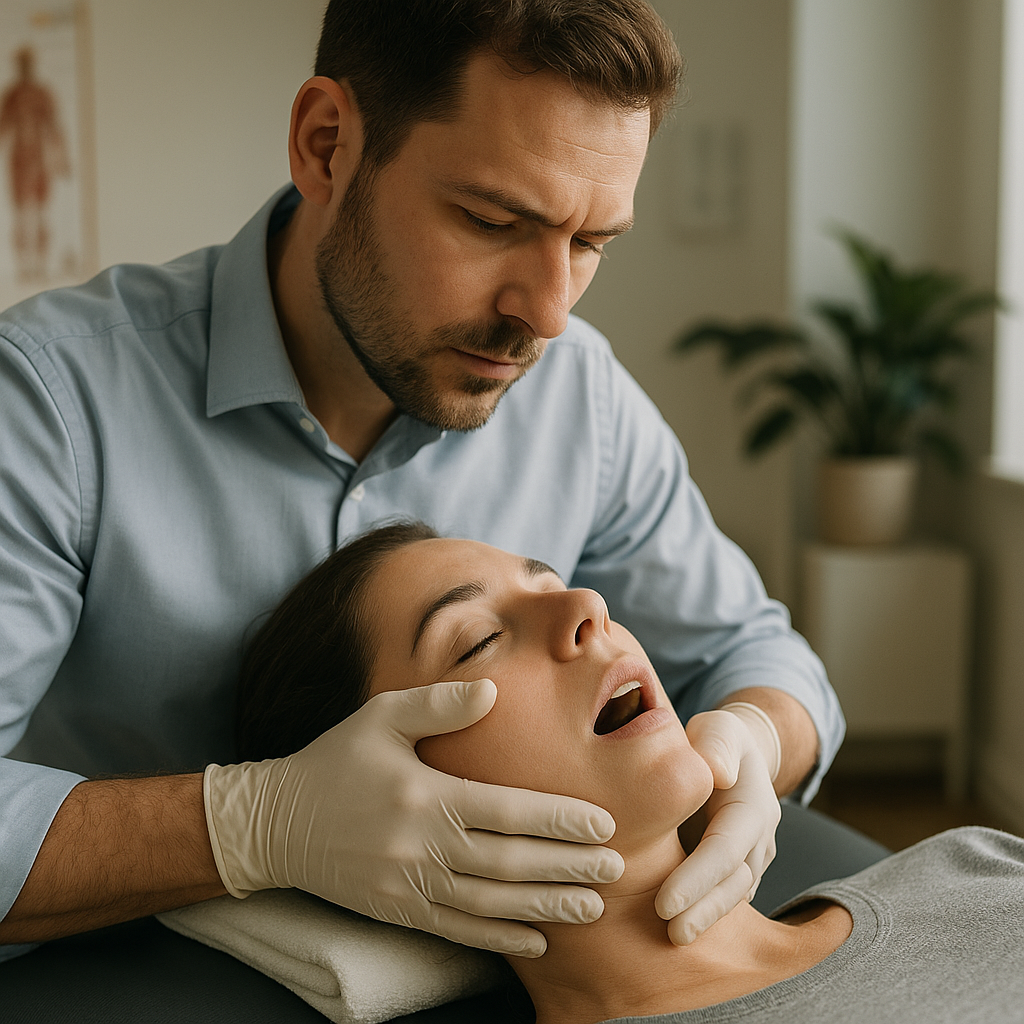
A jaw clicking chiropractor will typically assess not only the temporomandibular joint but also the cervical spine (neck), the upper thoracic spine, and the surrounding soft tissues. This holistic view allows the practitioner to identify contributing factors that a more narrowly focused approach might overlook.
Research has increasingly supported the relationship between cervical spine dysfunction and temporomandibular joint disorders. The muscles, nerves, and connective tissues of the neck and jaw are intimately connected. Misalignments or restrictions in the upper cervical vertebrae can alter the mechanics of the jaw joint, contributing to clicking, popping, pain, and restricted movement.
How Does a Chiropractor Assess Jaw Joint Problems?
When you visit a chiropractor for jaw popping chiropractic care, you can expect a thorough and systematic assessment. A qualified practitioner will typically begin with a detailed case history, asking questions about:
- The onset and duration of your jaw joint noise
- Any associated symptoms such as headaches, neck pain, ear pain, or facial discomfort
- Your dental history, including any history of teeth grinding or orthodontic treatment
- Previous injuries to the head, neck, or jaw
- Your posture habits and daily activities
- Stress levels, as emotional tension is a well-recognised contributor to jaw dysfunction
Following the case history, the chiropractor will conduct a physical examination that may include:
- Observing the range of motion of your jaw and noting any deviations or restrictions
- Palpating (feeling) the muscles of the jaw, face, and neck for areas of tenderness or tightness
- Assessing the alignment and mobility of the cervical and upper thoracic spine
- Evaluating your posture, particularly the position of your head relative to your shoulders
- Listening to and feeling the jaw joint during movement to characterise any joint noise
In some cases, the chiropractor may recommend additional diagnostic imaging, such as X-rays or an MRI, to gain a clearer picture of the joint structures and rule out more serious pathology.
Chiropractic Techniques Used for TMJ Clicking Treatment
Once a comprehensive assessment has been completed, the chiropractor will develop an individualised treatment plan tailored to the specific needs and goals of the patient. The approach to TMJ clicking treatment in chiropractic practice typically incorporates a combination of the following techniques:













