
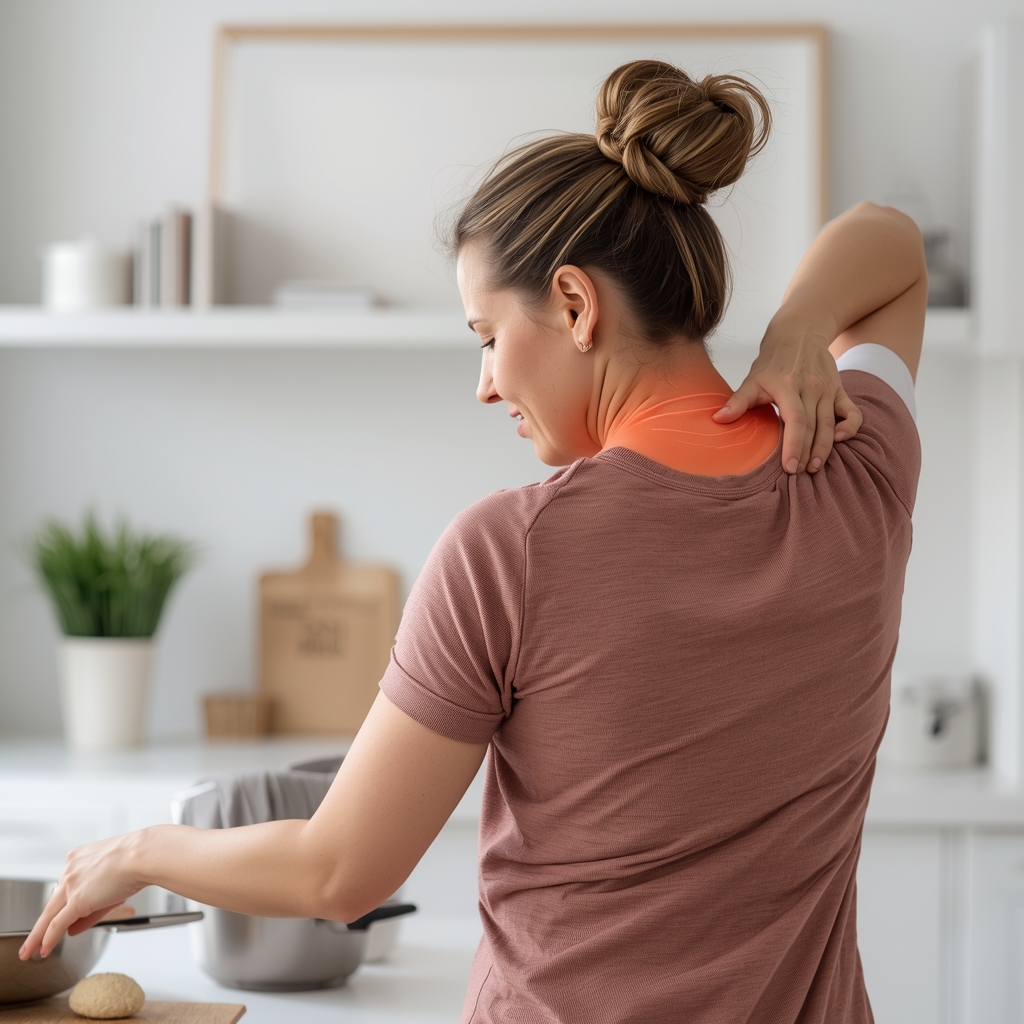
What Ergonomic Strategies Can Prevent Shoulder and Neck Strain During Holiday Cooking and Baking Sessions?
### Proper Stance and Posture During Cooking
Maintaining a neutral spine and relaxed shoulders is critical when performing repetitive kitchen tasks. Avoid hunching over counters or leaning to one side, as this strains the neck and shoulder muscles. Stand with feet shoulder-width apart to distribute weight evenly, and engage core muscles for stability. When reaching for items, keep elbows close to the body to reduce strain on the rotator cuff. A chiropractor may recommend practicing these postural adjustments during short, frequent breaks to reinforce muscle memory. Simple awareness of body positioning can prevent cumulative stress on the upper back and neck, especially during prolonged cooking sessions.
### Tool and Equipment Adjustments
Using ergonomically designed tools can significantly reduce physical strain. Opt for utensils with cushioned grips to minimize hand and wrist fatigue, and choose knives that fit comfortably in your hand to avoid overgripping. Adjust the height of your work surfaces so your forearms remain parallel to the floor when chopping or mixing. If using a standing workstation, consider a height-adjustable counter or a cutting board riser. These modifications help maintain a natural arm position, reducing the risk of shoulder and neck strain. A chiropractic professional can provide personalized recommendations for tools suited to your specific needs.
### Work Surface Heights and Layout
The height of your kitchen work surfaces directly impacts posture and muscle engagement. Ideal counter heights allow your elbows to bend at a 90-degree angle when working, preventing excessive reaching or slouching. If your kitchen lacks adjustable surfaces, use a step stool or platform to raise the work area. Organize frequently used items within easy reach to avoid twisting or stretching. For example, place mixing bowls and ingredients on the same level as your dominant hand. A chiropractor may suggest assessing your kitchen layout to identify adjustments that align with your body’s natural movement patterns.
### Frequent Breaks and Movement
Prolonged static postures during cooking can lead to muscle stiffness and fatigue. Take short, regular breaks to stretch and move, even if just for 30 seconds every 20 minutes. Simple movements like shoulder rolls, neck tilts, or arm circles can alleviate tension. If possible, alternate between standing and seated positions to vary muscle engagement. A chiropractic care plan may include guidance on incorporating these micro-breaks into daily routines. Prioritizing movement helps maintain blood flow and reduces the risk of overuse injuries, ensuring you stay comfortable throughout the holiday season.
### Lifting Techniques for Heavy Items
Lifting heavy pots, bags, or appliances requires proper technique to avoid strain. Always bend at the knees, not the waist, and keep the object close to your body when lifting. Use your leg muscles for power rather than relying on your back or shoulders. If an item is too heavy, ask for assistance or use a dolly. A chiropractor can demonstrate safe lifting practices tailored to your physical condition. These strategies not only protect your shoulders and neck but also support overall spinal health, especially during high-intensity cooking periods.
### Ergonomic Kitchen Organization
A well-organized kitchen minimizes unnecessary movement and strain. Store frequently used tools and ingredients at eye level or within easy reach to avoid excessive bending or stretching. Use wall-mounted racks or drawer dividers to keep items accessible without overreaching. For baking, position ovens and countertops to reduce the need for repetitive motions. A chiropractic professional may suggest ergonomic assessments to identify workflow improvements. By optimizing your kitchen layout, you can reduce physical stress and enjoy holiday cooking with greater ease and comfort.












