
Research Overview
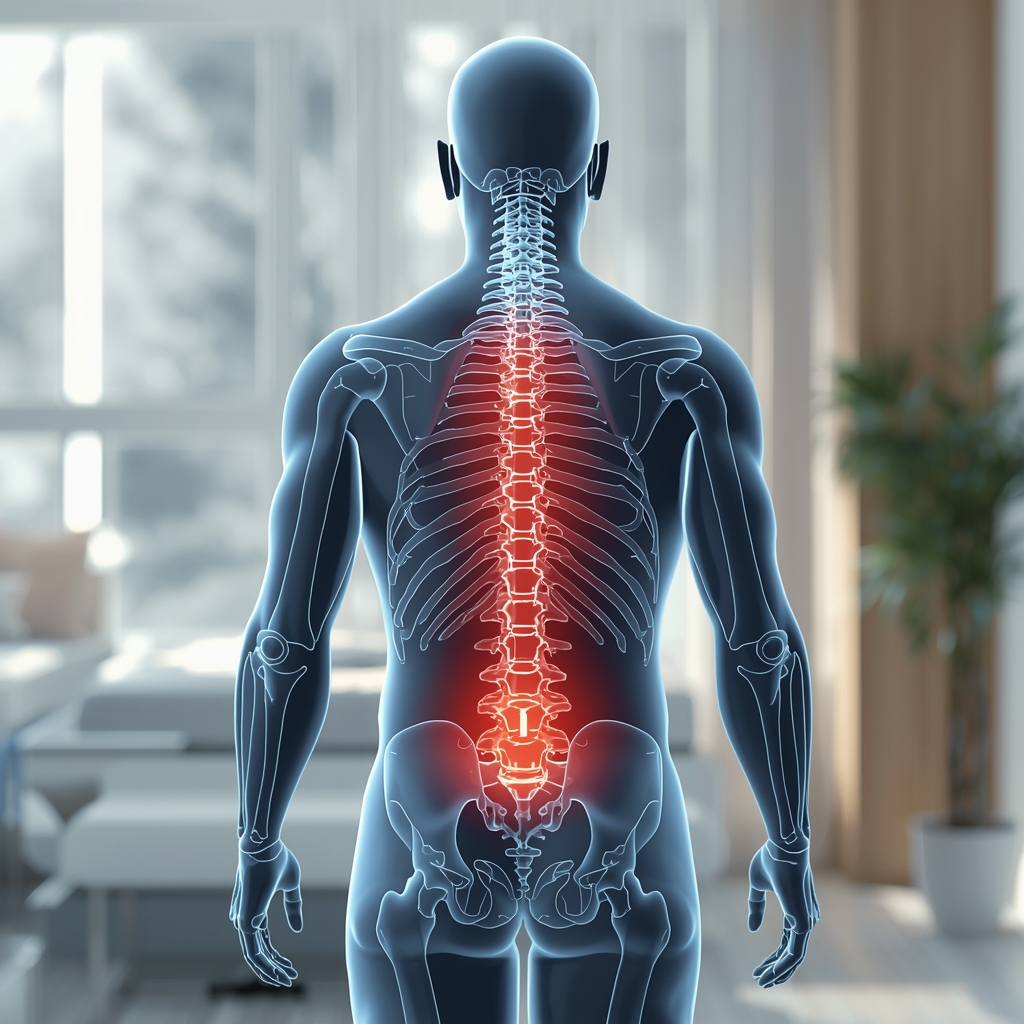
The University of Miami College of Engineering has launched a five-year, $3 million National Institutes of Health-funded project to address chronic back pain through advanced biomedical research. Led by associate professor Charles Huang, the initiative focuses on developing predictive models for spinal disc degeneration using artificial intelligence. The research team aims to create tools that can forecast how a patient's spine will change over time, enabling more personalized treatment strategies. This effort builds on Huang's work in biomechanics and his collaboration with Weiyong Gu, a professor of mechanical and aerospace engineering, to refine mathematical models of intervertebral disc behavior. The project also involves neurosurgeon Dr. Timur Urakov from UHealth, who provides clinical expertise and access to patient data through surgical disc tissue samples.
Biological Drivers of Disc Degeneration
Traditional research on spinal disc degeneration has primarily focused on inflammation and tissue breakdown. However, Huang's team is investigating an alternative factor: the nutritional supply to disc cells. Spinal discs lack blood vessels, relying instead on nutrients like glucose diffusing from surrounding tissues. Huang emphasizes that insufficient nutrient delivery impairs the discs' ability to produce structural molecules that maintain their cushioning and flexibility. This process, he argues, may be a more critical driver of degeneration than previously recognized inflammatory responses. The research highlights the role of cellular metabolism in disc health, suggesting that addressing nutrient deficiencies could offer new therapeutic avenues. By focusing on the cellular-level mechanics of disc function, the project seeks to shift the paradigm of diagnosing and treating spinal conditions.
Mathematical Modeling and Simulations
Huang and Gu have developed a mathematical model to simulate nutrient transport and cellular responses within intervertebral discs. This model incorporates variables such as aging, mechanical stress, and biochemical processes to predict disc degeneration under different conditions. The researchers can isolate specific factors to observe their impact on disc health, providing insights into the complex interactions that contribute to spinal deterioration. The model's flexibility allows for testing various scenarios, from normal aging to pathological changes, offering a framework for understanding disc behavior at a mechanistic level. By integrating data from both experimental and clinical sources, the team aims to create a comprehensive tool that bridges basic science and clinical application. This approach enables the study of disc mechanics in ways that traditional imaging alone cannot achieve, offering a deeper understanding of the biological processes involved.
Validation with Human Data
The research team is validating their mathematical model using human data from MRI and PET-CT scans, as well as disc tissue samples collected during surgery. This clinical data provides critical insights into real-world disc conditions, allowing the model to be calibrated for patient-specific applications. Dr. Timur Urakov's collaboration ensures access to surgical tissue, which is analyzed to confirm the model's predictions about cellular behavior and nutrient dynamics. By comparing imaging results with the model's simulations, researchers can assess the accuracy of their theoretical framework. This validation process is essential for translating laboratory findings into practical clinical tools. Once confirmed, the model will generate large datasets to train an AI system, which could eventually assist physicians in analyzing patient scans and predicting disc progression more efficiently.
AI Application and Future Implications
The validated model will serve as the foundation for an AI system designed to analyze patient scans and forecast spinal changes. This tool, developed in collaboration with Rush University's John Martin, aims to reduce the need for time-consuming simulations by providing rapid, data-driven predictions. Physicians could use the AI to estimate how a patient's disc is likely to degenerate, enabling earlier interventions and personalized treatment plans. The project's long-term goal is to improve diagnostic accuracy and treatment outcomes for chronic back pain, a condition that affects millions globally. By integrating computational modeling with clinical data, the research represents a significant step toward precision medicine for spinal disorders. If successful, this approach could transform how spinal conditions are managed, offering a more proactive and individualized approach to patient care.